

Over half of global employers now expect event managers to master hybrid event strategies, a skill prized by both Indian and British recruiters. In a world where international collaboration is key, knowing how to blend in-person and virtual experiences sets you apart from other candidates. This guide shows how clear objectives and thoughtful planning can turn your hybrid events into professional achievements recognized from Mumbai to London.
Table of Contents
- Step 1: Define Event Objectives And Audience
- Step 2: Select And Integrate Hybrid Technology Tools
- Step 3: Design Engaging In-Person And Virtual Experiences
- Step 4: Implement Seamless Communication Strategies
- Step 5: Verify Event Quality And Measure Outcomes
Quick Summary
| Key Insight | Explanation |
|---|---|
| 1. Define clear objectives and audience | Determining event goals and understanding your audience is essential for a successful hybrid event. |
| 2. Choose effective hybrid technology | Selecting suitable technology ensures seamless interaction between in-person and virtual attendees. |
| 3. Design parallel experiences | Create engaging content for both physical and digital participants to enhance overall event experience. |
| 4. Implement robust communication strategies | Establish clear communication protocols to keep all event participants informed and engaged. |
| 5. Measure event outcomes comprehensively | Assess success through detailed metrics to improve future hybrid events and participant satisfaction. |
Step 1: Define event objectives and audience
Defining clear event objectives and understanding your target audience represent the critical foundation for creating a successful hybrid event. Your initial strategy will determine the entire event’s trajectory and potential impact.
Start by conducting a comprehensive analysis using the 5-W framework to crystallise your event’s purpose. This approach helps you systematically explore who your audience is, what specific outcomes you desire, when and where the event will occur, and most importantly why you are organising this hybrid gathering. For instance, your objectives might include extending international reach, increasing participant inclusivity, or fostering meaningful networking opportunities across physical and digital spaces.
Carefully segment your audience by considering demographics, professional backgrounds, learning preferences, and technological comfort levels. Map out personas representing different attendee types to ensure your hybrid event design accommodates diverse participation needs. This might mean providing simultaneous translation services, ensuring robust digital interaction platforms, or creating flexible engagement options that cater to both on-site and remote participants.
Expert Advice: Always validate your event objectives with potential attendees through preliminary surveys to confirm alignment with their expectations and interests.
Step 2: Select and integrate hybrid technology tools
Choosing the right technology platform is fundamental to creating a seamless and engaging hybrid event experience. Your technological infrastructure will determine how effectively participants can interact and access content across different physical and digital spaces.
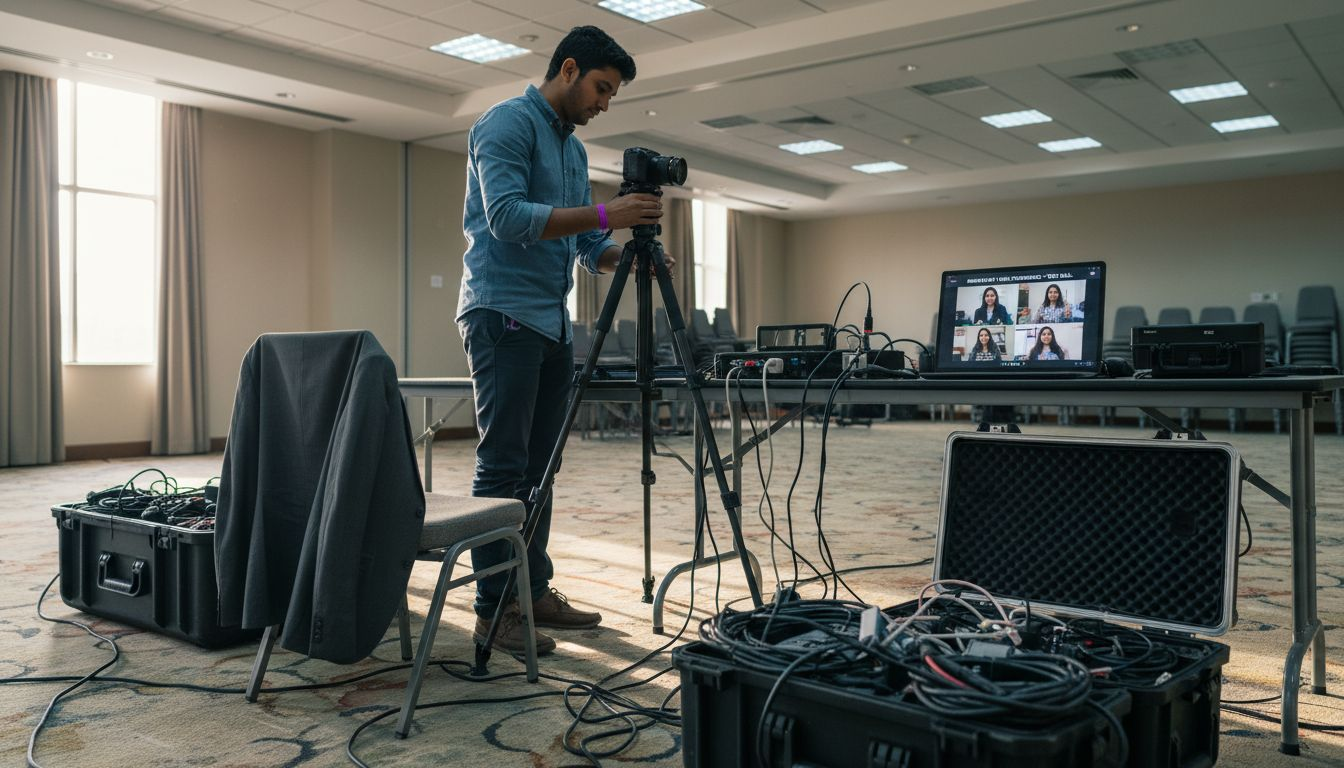
Begin by identifying robust streaming platforms with interactive capabilities. Look for solutions that support multiple engagement formats, such as live Q&A sessions, polling, breakout rooms, and real-time chat functionalities. Consider tools that offer synchronisation across different locations, ensuring both in-person and virtual attendees receive a cohesive experience. Critical technical considerations include reliable internet bandwidth, high-quality audio visual equipment, and compatibility across various devices and operating systems.
Prioritise platforms that provide comprehensive technical support and flexible licensing options. Evaluate each technology solution based on its ability to manage abstract submissions, facilitate digital poster presentations, and enable seamless content recording and playback. Test the platforms thoroughly before the event to identify and address potential connectivity or user experience challenges.
Expert Advice: Always conduct a comprehensive technical rehearsal with your entire team to validate the technological setup and identify potential integration challenges.
Step 3: Design engaging in-person and virtual experiences
Crafting a compelling hybrid event experience requires a nuanced approach that simultaneously addresses the unique needs of in-person and virtual participants. Your goal is to create two parallel yet interconnected event journeys that feel equally immersive and valuable.
Start by mapping the customer journey to understand the different interaction touchpoints for both audience segments. Virtual participants will need interactive elements like live polling, real-time Q&A sessions, and networking breakout rooms that compensate for the lack of physical proximity. Meanwhile, on-site attendees should experience rich social programming, spontaneous interactions, and tactile engagement opportunities that cannot be replicated digitally.
Ensure technological platforms and content delivery methods create seamless transitions between physical and digital spaces. This might involve providing virtual participants with exclusive digital content, live streaming of keynote presentations, and dedicated online networking sessions that mirror the spontaneity of in-person connections. Consider time zone flexibility, provide multiple engagement channels, and design content that feels equally compelling whether accessed from a conference hall or a home office.
The table below compares the needs of in-person and virtual attendees at hybrid events:
| Aspect | In-Person Attendees | Virtual Attendees |
|---|---|---|
| Networking | Face-to-face interactions | Digital breakout rooms |
| Content Access | Live presentations | Live or on-demand streaming |
| Interaction Type | Immediate, spontaneous | Moderated, structured |
| Engagement Tools | Physical resources | Polls, online Q&A |
| Flexibility | Fixed room schedules | Join from any location |
Expert Advice: Conduct pre-event surveys with both virtual and in-person attendee groups to understand their specific expectations and design experiences that feel personalised and inclusive.
Step 4: Implement seamless communication strategies
Creating a robust communication framework is essential for delivering a cohesive hybrid event experience that keeps all participants fully engaged and informed, regardless of their physical location.
Begin by developing clear communication protocols that establish consistent information channels for both in-person and virtual attendees. This involves preparing detailed guidelines that outline communication expectations, including preferred platforms, response times, and interaction mechanisms. Implement multi-channel networking tools that allow real-time interactions between physical and digital participants, such as integrated chat systems, live polling, and simultaneous Q&A sessions that bridge geographical boundaries.
Ensure your technical infrastructure supports seamless information distribution across different time zones and platforms. This means providing advance communication materials, maintaining a centralised information hub accessible to all participants, and training speakers and moderators to effectively engage both in-room and online audiences. Consider creating dedicated communication support teams that can provide immediate technical assistance and help participants navigate potential communication barriers.
Expert Advice: Conduct a comprehensive communication rehearsal before the event to identify and resolve potential technical or logistical communication challenges.
Step 5: Verify event quality and measure outcomes
Evaluating the success of your hybrid event requires a comprehensive approach to gathering and analysing performance metrics that capture the nuanced experiences of both in-person and virtual participants.
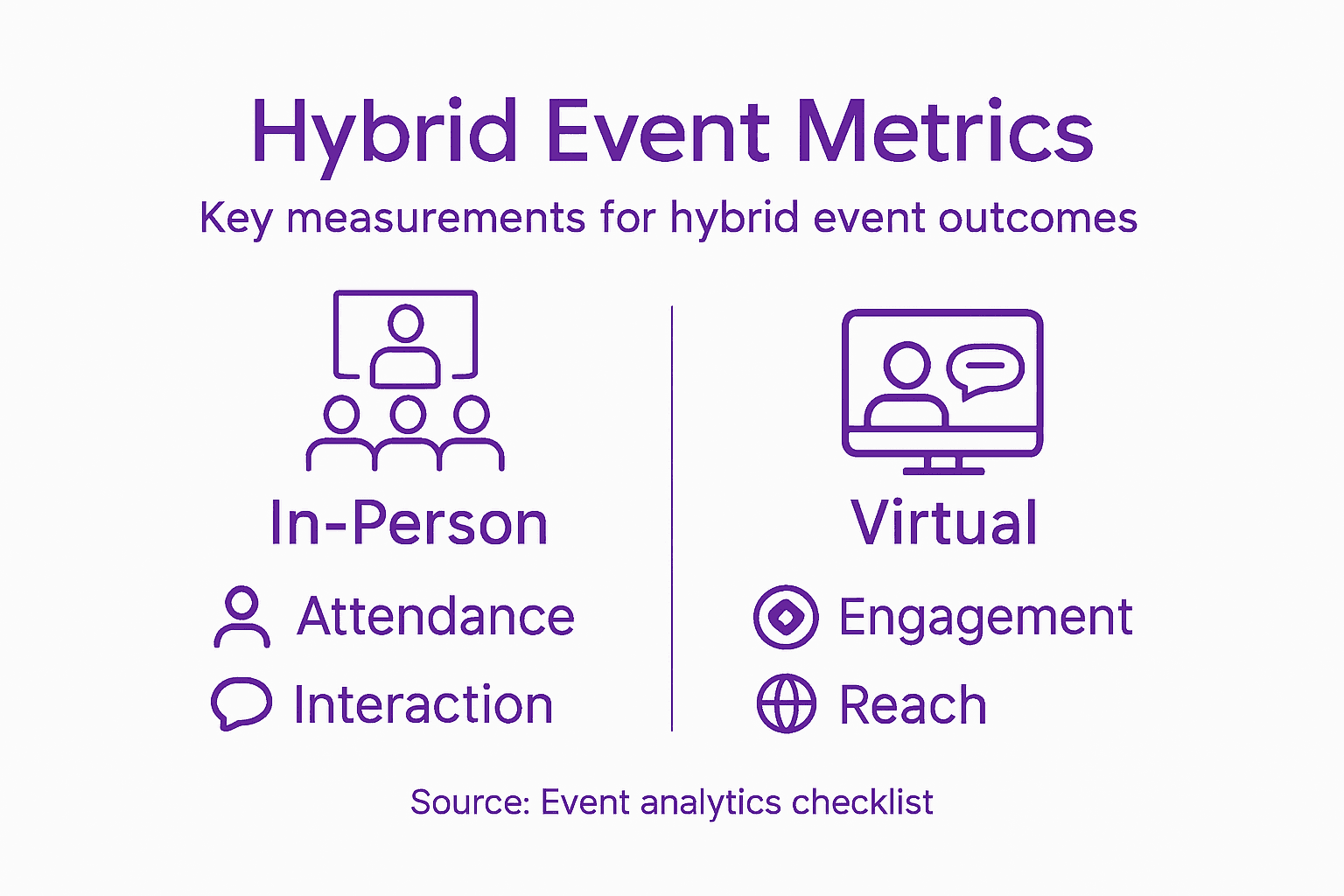
Begin by implementing robust data collection strategies that capture detailed engagement metrics across different platforms. This involves tracking attendance numbers, session participation rates, interaction levels, and participant feedback from both physical and digital environments. Develop a multi dimensional assessment framework that considers technical performance, content quality, networking effectiveness, and overall participant satisfaction.
Utilise advanced analytics tools to quantify your event’s return on investment and identify specific areas for improvement. Create comparative analyses between in-person and virtual participant experiences, examining metrics such as session attendance, interaction duration, knowledge retention, and networking connections made. Conduct comprehensive post-event surveys that provide granular insights into participant perceptions, technical experience, and the perceived value of the hybrid event format.
Here is a summary of key metrics for measuring hybrid event success:
| Metric | In-Person Measurement | Virtual Measurement |
|---|---|---|
| Attendance Rate | Number of registered on-site | Unique virtual logins |
| Session Engagement | Audience questions asked | Chat/posts within sessions |
| Networking Success | Connections exchanged | Virtual meetings held |
| Content Retention | Post-event survey responses | Download and replay numbers |
| Satisfaction | On-site feedback forms | Online evaluation scores |
Expert Advice: Design your evaluation metrics before the event to ensure you capture the most relevant and actionable performance data.
Elevate Your Hybrid Event Expertise with Industry-Leading Training
Mastering hybrid event best practices means overcoming challenges like seamless technology integration and creating engaging experiences for both in-person and virtual attendees. This article highlights key pain points such as selecting the right streaming platforms, designing inclusive interaction formats, and measuring event success through robust metrics. If you seek to turn these complexities into your strengths and deliver outstanding event results continue reading.
teami.org offers practical, specialised training that equips you with the exact skills and knowledge essential for excelling in hybrid event management. Benefit from 24 years of industry experience, hands-on projects, and expert guidance tailored to real-world scenarios. Whether you want to sharpen your understanding of technology tools or master communication strategies for hybrid formats explore our certification programmes designed for aspiring and practising event professionals.
Ready to transform your event planning career and confidently lead hybrid events Visit teami.org today to discover course options and industry partnership benefits Take the first step towards becoming a sought-after event manager by connecting with us through https://team-i-app-code-production.up.railway.app/api/go/wa?src=hybrid-event-best-practices-guide. Your journey to delivering flawless hybrid experiences starts here.
Frequently Asked Questions
How can I define clear objectives for my hybrid event?
To define clear objectives for your hybrid event, start by using the 5-W framework to analyse your goals related to audience, outcomes, timing, location, and rationale. Clearly outline what you want to achieve, such as expanding your reach or fostering networking opportunities, and validate these objectives through preliminary surveys with potential attendees.
What technology should I consider for a successful hybrid event?
Select robust streaming platforms that support interactive features like live Q&A, polling, and breakout rooms to create a seamless experience. Ensure the technology allows for real-time communication between in-person and virtual attendees, and conduct comprehensive technical rehearsals to address any issues ahead of time.
How do I design engaging experiences for both in-person and virtual attendees?
Craft unique experiences for both audiences by mapping their customer journeys and incorporating interactive elements for virtual participants and tactile opportunities for those attending in person. Regularly communicate with both groups pre-event to tailor experiences that meet their specific expectations and preferences.
What communication strategies should I implement for my hybrid event?
Develop clear communication protocols for both in-person and virtual attendees to ensure consistent information flow. Use multi-channel networking tools for real-time interactions and train your team to handle technology and communication challenges effectively.
How do I measure the success of a hybrid event?
Implement data collection strategies that capture key performance metrics such as attendance rates, engagement levels, and participant satisfaction for both groups. After the event, analyse this data to identify areas for improvement and evaluate your event’s return on investment, aiming to collect insights within a week of event completion.
What common challenges might I face when planning a hybrid event?
Common challenges include ensuring seamless integration of technology for both audiences, managing time zone differences, and providing equal engagement opportunities. To mitigate these risks, thoroughly test technology platforms, gather feedback through surveys, and be flexible in your engagement approach.