
Stepping into the vibrant world of event management in Bangalore can feel both exciting and uncertain. For young professionals eager to make their mark in social and corporate events, the right start means blending your ambitions with strategic self-reflection and market awareness. Knowing how to align personal dreams with industry demands will help shape a career built on clear objectives and meaningful growth. Here you will discover practical steps to assess your strengths, pursue essential certifications, and truly stand out in this dynamic field.
Table of Contents
- Step 1: Assess Your Aspirations And Industry Requirements
- Step 2: Identify Relevant Skills And Training Opportunities
- Step 3: Define Precise, Actionable Career Objectives
- Step 4: Develop A Realistic Personal Timeline
- Step 5: Monitor Progress And Revise Your Goals
Quick Summary
| Key Point | Explanation |
|---|---|
| 1. Assess your skills and industry needs | Conduct a personal skills assessment to identify strengths and weaknesses relevant to the event management sector. |
| 2. Focus on critical skills development | Identify essential technical and interpersonal skills, then pursue relevant certification and training opportunities. |
| 3. Set SMART career objectives | Use the SMART framework to create specific, measurable, attainable, relevant, and time-bound goals for your career advancement. |
| 4. Create a personal career timeline | Develop a structured timeline outlining short-term, intermediate, and long-term milestones to help guide your career path. |
| 5. Regularly monitor and adjust your goals | Implement systematic progress tracking through self-reviews and feedback to ensure effective career development and adapt to changes in the industry. |
Step 1: Assess your aspirations and industry requirements
Navigating your career in event management requires strategic self-reflection and market awareness. This step is about understanding your professional dreams and aligning them with the dynamic landscape of event planning.
Begin by conducting a comprehensive personal skills assessment. Examine your current strengths, identifying areas where you excel and those requiring development. Setting career goals strategically helps create a roadmap that bridges personal ambition with industry expectations.
Key areas to evaluate include:
- Technical skills like budget management
- Soft skills such as communication and leadership
- Specific event management domains (corporate, social, wedding)
- Technology proficiency
- Network and relationship-building capabilities
Research the current event management market to understand emerging trends and skill requirements. This involves:
- Analysing job descriptions in your preferred event sectors
- Speaking with experienced professionals
- Attending industry conferences and webinars
- Following thought leaders on professional networks
Your career trajectory depends on understanding both your potential and the industry’s evolving needs.
Pro tip: Create a dynamic career vision board that combines your personal goals with industry benchmarks, allowing flexible adaptation as your skills and market demands change.
Step 2: Identify relevant skills and training opportunities
Building a successful event management career requires strategic skill development and continuous learning. This step focuses on identifying the critical competencies that will distinguish you in a competitive industry landscape.
Begin by understanding the essential skills for event managers. Professionals must develop a comprehensive skill set that encompasses both technical and interpersonal capabilities. These include:
- Project management techniques
- Creative vision and strategic planning
- Advanced communication and negotiation skills
- Digital technology proficiency
- Budget and financial management
- Team leadership and stakeholder engagement
To enhance your skill portfolio, consider exploring targeted training opportunities such as:
- Professional certification programmes
- Specialised workshops in event technology
- Online courses covering emerging industry trends
- Networking events and industry conferences
Continuous skill enhancement is the cornerstone of long-term success in event management.
The Event Management Course offers comprehensive training covering critical areas like event planning fundamentals, logistics, marketing, and risk mitigation. These programmes provide structured pathways to develop your professional capabilities systematically.
Professional advice: Create a personalised learning roadmap that aligns your current skills with industry demands, prioritising areas that offer the most significant career advancement potential.
Step 3: Define precise, actionable career objectives
Crafting a successful event management career requires more than ambition – it demands strategic and meticulously planned objectives. This step will help you transform vague aspirations into concrete, achievable goals that will propel your professional journey forward.
Start by implementing the SMART goal framework to crystallise your career vision. SMART objectives are Specific, Measurable, Attainable, Relevant, and Time-bound. For event managers, this means developing goals that are not just dreams, but actionable roadmaps.
Consider the following approaches to defining your career objectives:
- Short-term goals (6-12 months)
- Medium-term goals (1-3 years)
- Long-term career milestones (3-5 years)
Key areas to focus on include:
- Client satisfaction targets
- Event attendance growth
- Professional certification achievements
- Specialisation in specific event types
- Leadership skill development
Precision in goal-setting transforms career aspirations from wishful thinking to strategic planning.
Using the 5-Ws framework can help clarify your objectives by answering critical questions: Who are you targeting? What specific achievements do you want? When will you accomplish these goals? Where do you see yourself professionally? Why are these objectives important to your career?
Professional advice: Break down each career objective into smaller, manageable tasks and regularly review your progress, adjusting your strategy as the event management landscape evolves.
Step 4: Develop a realistic personal timeline
Charting your event management career requires strategic planning and a methodical approach to timeline development. This step will help you transform abstract career aspirations into a structured, achievable roadmap that adapts to your professional growth.

Begin by creating a comprehensive personal timeline that maps out your career trajectory. Effective timelines break down your journey into manageable segments that align with your professional objectives.
Your timeline should encompass multiple career stages:
- Short-term milestones (0-6 months)
- Intermediate goals (6-18 months)
- Long-term career objectives (18-36 months)
Key elements to include in your timeline:
- Skill acquisition targets
- Professional certification plans
- Networking and industry engagement
- Potential career advancement opportunities
- Personal development workshops
A well-constructed timeline is your career compass, guiding you through professional landscapes.
Using the strategic goal-setting approach, break down each milestone into specific, actionable steps. Consider your individual circumstances, industry trends, and potential pivots that might emerge in the dynamic event management sector.
Professional advice: Review and recalibrate your timeline quarterly, treating it as a living document that evolves with your professional insights and changing industry dynamics.
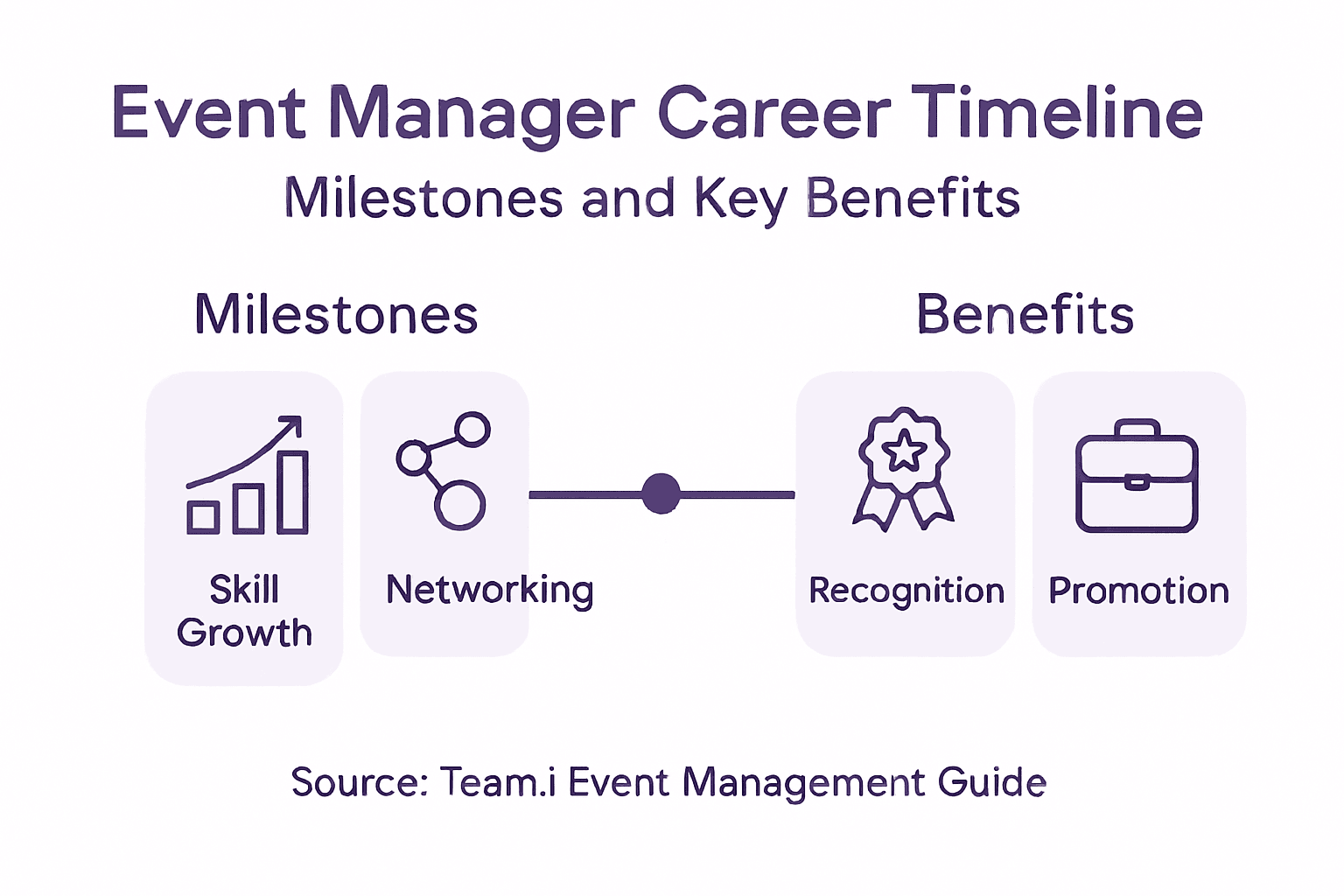
Here is a comparison of typical event management career timelines with their benefits and potential challenges:
| Timeline Stage | Key Benefits | Common Challenges |
|---|---|---|
| Short-term (0-6 months) | Fast skill growth, early networking | Limited experience, high learning curve |
| Intermediate (6-18 months) | Expanding professional network, portfolio | Balancing training and real projects |
| Long-term (18-36 months) | Leadership opportunities, industry recognition | Market shifts, maintaining motivation |
Step 5: Monitor progress and revise your goals
Successful event management careers are built on continuous self-assessment and adaptive goal-setting. This step focuses on developing a systematic approach to tracking professional development and making informed adjustments to your career strategy.
Career progression monitoring requires consistent evaluation of your performance, skills, and objectives. Regular feedback collection becomes your strategic compass for navigating professional growth.
Implement a comprehensive tracking mechanism through:
- Quarterly self-performance reviews
- Feedback sessions with mentors
- Client and peer evaluations
- Skills gap analysis
- Professional portfolio updates
Key monitoring strategies include:
- Documenting achieved milestones
- Identifying skill development opportunities
- Comparing actual performance against initial goals
- Reflecting on unexpected challenges
- Adjusting future objectives accordingly
Continuous improvement is not about perfection, but persistent refinement of your professional journey.
The performance management cycle emphasises regular check-ins and constructive feedback. This approach enables early identification of potential roadblocks and supports timely strategic pivots in your career development.
Professional advice: Create a dedicated digital or physical career journal to track your progress, ensuring transparent and objective self-assessment that drives meaningful professional growth.
A summary of effective career progress monitoring strategies in event management:
| Strategy | Purpose | Practical Example |
|---|---|---|
| Quarterly self-reviews | Assess personal achievement | Rate progress on key objectives |
| Mentor feedback sessions | Gain external perspective | Schedule biannual mentor meetings |
| Skills gap analysis | Identify areas to improve | Use online assessment tools |
| Portfolio updates | Demonstrate growth | Add new successful event case studies |
Elevate Your Event Management Career with Expert Training
Setting precise and achievable career goals is vital for success in event management as highlighted in the article. You may face challenges like identifying the right skills, creating a realistic timeline, or continuously monitoring your progress. Understanding concepts such as SMART goals and strategic skill development is essential but having access to the right training and practical experience is equally crucial.
team.i.org bridges this gap by offering comprehensive certification programmes tailored to your aspirations. With 23 years of industry expertise and strong partnerships like DNA Entertainment Networks, their courses cover key areas including corporate, social, sports, and wedding events while providing hands-on projects and internships for real-world exposure.
Take the first step towards transforming your goals into reality by exploring the Event Management Certification that aligns with your career timeline and development needs. Don’t wait to start crafting your future with guidance from industry leaders. Connect now through team.i.org to secure your place and accelerate your professional growth.
Frequently Asked Questions
What initial steps should I take to set career goals as an Event Manager?
Begin by conducting a personal skills assessment to identify your strengths and areas for improvement. Outline your professional dreams and research current market trends to align your aspirations with industry demands.
How can I ensure my career goals as an Event Manager are achievable?
Use the SMART goal framework to create Specific, Measurable, Attainable, Relevant, and Time-bound objectives. For instance, set a goal to complete a professional certification within the next 12 months.
What skills should I focus on developing for my Event Management career?
Focus on both technical and interpersonal skills such as project management, communication, and digital technology proficiency. Identify at least three key skills you want to enhance and find appropriate training or workshops within the next six months.
How often should I review and adjust my career goals in Event Management?
Regularly review your goals at least once every quarter to assess your progress and adapt to any changes in the industry. This practice helps you stay on track and responsive to new opportunities and challenges.
What specific milestones should I include in my personal career timeline?
In your timeline, include short-term milestones like skill acquisition targets, intermediate goals like networking events, and long-term objectives such as leadership roles. Set clear deadlines for each milestone to stay motivated and accountable.
How can I track my progress effectively in my Event Management career?
Implement a tracking system that includes quarterly self-performance reviews and feedback from mentors. Document your achievements and identify skill gaps to ensure continuous improvement throughout your career journey.