

More than half of professional conference planners in Bangalore report that understanding british event standards dramatically increases career opportunities. For aspiring event managers eager to build credibility in the industry, mastering every step from defining objectives to flawless execution is a clear advantage. This guide unpacks the essential strategies and practical insights you need to plan successful conferences with confidence and global professionalism.
Table of Contents
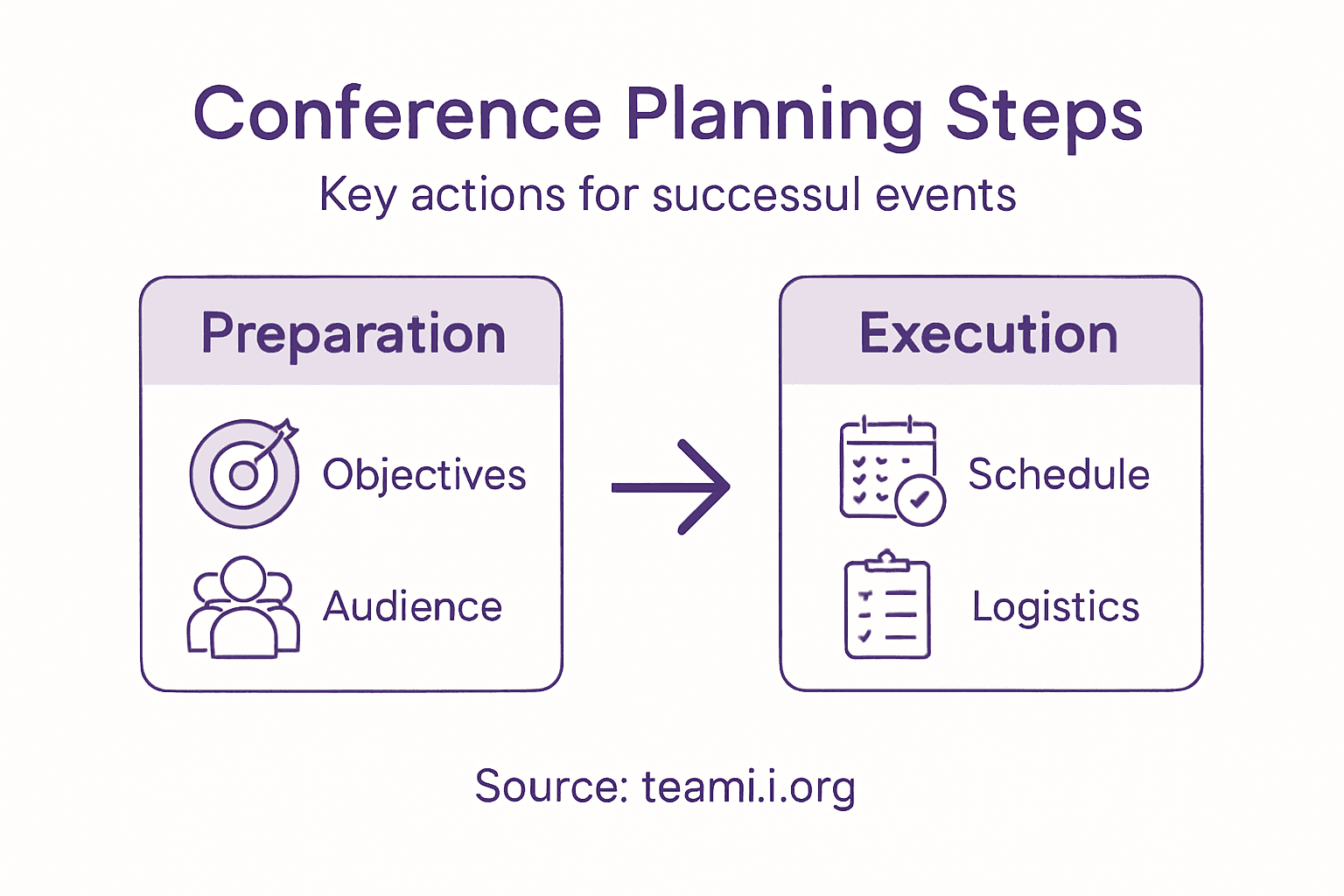
- Step 1: Define Conference Objectives And Audience
- Step 2: Develop The Event Schedule And Content
- Step 3: Secure Venue And Logistics Arrangements
- Step 4: Coordinate Participants And Speaker Engagement
- Step 5: Verify Event Details And Final Preparations
Quick Summary
| Main Insight | Description |
|---|---|
| 1. Clearly Define Objectives and Audience | Understanding your conference’s purpose and target demographics sets a solid foundation for all planning decisions. |
| 2. Strategically Develop Event Schedule | Create a cohesive timetable that combines various session formats to enhance engagement and knowledge retention among participants. |
| 3. Secure the Right Venue and Logistics | Assess venue capabilities and logistics thoroughly to ensure a smooth operational environment that aligns with conference goals. |
| 4. Facilitate Effective Speaker and Participant Communication | Establish clear guidelines and communication channels to foster meaningful connections and engagement during the conference. |
| 5. Conduct Thorough Final Checks | Verify all details and conduct rehearsals to eliminate uncertainties and enhance event execution, ensuring all team members are informed. |
Step 1: Define conference objectives and audience
Successfully planning a conference begins with crystal clear objectives and a well-defined target audience. This initial step sets the foundation for every subsequent decision in your event planning journey.
Start by conducting a strategic assessment of your conference’s core purpose. Defining conference scope requires understanding precisely what knowledge or experience you want attendees to gain. Are you aiming to showcase cutting edge research? Facilitate professional networking? Provide specialised training? Your objectives must be specific measurable and aligned with your broader organisational goals.
To pinpoint your ideal audience, consider demographics professional backgrounds and learning motivations. Crafting learner-centred objectives means understanding who will benefit most from your event. For instance a technology conference targeting software engineers will look dramatically different from an academic symposium for researchers. Develop detailed personas representing your typical attendee identifying their professional interests skill levels and potential learning outcomes.
Carefully map out your audience segments determining their precise needs expectations and potential engagement strategies. This granular approach ensures your conference delivers maximum value and attracts the right participants.
Here’s a summary of common conference audience segments and their unique needs:
| Audience Segment | Key Needs | Engagement Style |
|---|---|---|
| Academic Researchers | Access to research | Peer discussions |
| Industry Professionals | Practical insights | Networking sessions |
| Students | Skill development | Hands-on workshops |
| Policy Makers | Strategic outlook | Panel debates |
Practical Insight: Invest time in comprehensive audience research before finalising your conference design to guarantee meaningful engagement and participant satisfaction.
Step 2: Develop the event schedule and content
Crafting a compelling conference schedule requires strategic planning and thoughtful content curation. Your goal is to create an engaging programme that delivers maximum value to attendees while maintaining a dynamic and informative flow.
Effective event design begins with establishing a clear thematic framework that connects all sessions. Start by mapping out your core conference themes and identifying key topics that will resonate with your target audience. Consider the progression of sessions ensuring a logical narrative arc that builds knowledge incrementally. This means carefully sequencing presentations workshops and panel discussions to create a cohesive learning experience.
Structure your content strategy by diversifying session formats to maintain participant engagement. Mix keynote speeches interactive workshops panel discussions and networking opportunities. Conference planning timelines typically recommend allocating different time slots for various session types with breaks strategically placed to prevent mental fatigue. Pay special attention to session duration timing and the overall rhythm of your programme to keep energy levels high and participants motivated.
While developing your schedule consider the balance between theoretical insights and practical applications. Aim to provide a mix of academic research industry case studies and hands on learning experiences that cater to different learning preferences and professional backgrounds.
Practical Insight: Create a provisional schedule at least six months in advance and remain flexible enough to accommodate last minute speaker changes or emerging industry trends.
Step 3: Secure venue and logistics arrangements
Securing the perfect venue and managing intricate logistics form the critical backbone of any successful conference. Your goal is to create a seamless operational environment that supports your event objectives while ensuring participant comfort and safety.

Venue security enhancements require meticulous planning and strategic risk assessment. Begin by conducting a comprehensive venue evaluation that considers capacity technical requirements accessibility and potential security challenges. Examine the space critically understanding how different areas will support your conference flow examining aspects such as registration zones breakout session rooms networking spaces and technical infrastructure.
Your logistics strategy should encompass multiple dimensions beyond physical space. Consider transportation arrangements for attendees technical equipment requirements catering needs accommodation options and contingency planning. Detailed coordination with venue management will help you address potential challenges proactively. Pay special attention to technological capabilities ensuring robust internet connectivity audiovisual support and backup systems that can handle your conference demands.
Evaluate potential venues against multiple criteria including location technological capabilities professional staff reputation safety measures and alignment with your conference theme. Negotiate contract terms carefully understanding cancellation policies technical support inclusions and potential additional charges that might impact your budget.
Here is a comparison of venue selection criteria and their practical impact on event success:
| Selection Criteria | Description | Positive Impact |
|---|---|---|
| Location | Accessibility | Higher attendance |
| Technical Support | Audiovisual & IT resources | Smooth presentations |
| Safety Measures | Security protocols | Enhanced participant safety |
| Staff Reputation | Experience & professionalism | Efficient event management |
Practical Insight: Request a comprehensive site inspection at least three months before your conference and prepare a detailed checklist of technical and logistical requirements to ensure nothing gets overlooked.
Step 4: Coordinate participants and speaker engagement
Successful conference coordination hinges on creating meaningful connections between speakers participants and event content. Your primary objective is to design an interactive environment that maximises knowledge sharing and professional networking opportunities.
Strategies for participant engagement begin with understanding diverse learning preferences and communication styles. Develop a comprehensive communication plan that starts well before the conference ensuring speakers and participants receive clear expectations guidelines and preparatory materials. This approach helps build anticipation and provides participants with context about session structures presentation requirements and networking opportunities.
Prepare speakers with detailed briefing packages including audience demographics session objectives technical requirements and specific expectations. Encourage interactive presentation formats that move beyond traditional lectures such as panel discussions collaborative workshops Q and A sessions and roundtable discussions. These formats promote active participation and create dynamic learning environments where knowledge flows multilaterally rather than in a unidirectional manner.
Establish robust communication channels including pre conference webinars speaker orientation sessions and digital platforms that facilitate ongoing dialogue. Provide speakers with clear guidelines about presentation length technical support available presentation submission deadlines and expectations regarding audience interaction.
Practical Insight: Create a comprehensive speaker and participant handbook at least six weeks prior to the conference detailing all logistical information communication protocols and engagement expectations.
Step 5: Verify event details and final preparations
The final stages of conference planning require meticulous attention to detail and systematic verification of every critical element. Your objective is to eliminate potential uncertainties and ensure a flawless event execution.
Event preparation involves comprehensive verification across multiple operational dimensions. Systematically review all logistical arrangements including venue setup technical infrastructure catering requirements staffing plans and communication protocols. Confirm that each department and team member understands their specific responsibilities and has received appropriate briefing materials. Double check registration systems audiovisual equipment presentation materials and communication channels to guarantee smooth functionality.
Conduct multiple rehearsals and walkthroughs with key team members to identify and resolve potential operational challenges. Create contingency plans for unexpected scenarios such as technical failures speaker cancellations or sudden schedule modifications. Develop a robust communication strategy that enables rapid problem solving and ensures all stakeholders can respond quickly to emerging situations.
Prepare comprehensive documentation including final event schedules speaker briefings technical requirements emergency contact lists and backup plans. Ensure all team members have digital and physical copies of essential information and understand the escalation protocols for addressing unexpected challenges during the conference.
Practical Insight: Create a centralised digital dashboard or shared document that provides real time updates and allows all team members to track final preparation progress and immediately identify potential issues.
Elevate Your Conference Planning with Expert Training and Real-World Experience
Planning a conference involves overcoming challenges like defining clear objectives, creating engaging schedules, managing logistics and coordinating diverse participants. These crucial steps highlighted in the guide demand specialised knowledge in event design, audience engagement, and operational precision. If you want to master these skills and eliminate uncertainties when planning your next event, structured education and hands-on practice are essential.
At team.i.org, we transform your ambition into expertise through certification programmes tailored for aspiring event managers. Benefit from 23 years of industry experience and partnerships that connect you with real event opportunities and internships. Learn to craft impactful conference agendas, secure top venues, and manage participant engagement like a pro. Don’t wait for the next event to test your skills. Take charge now with team.i.org’s comprehensive training. Visit our platform to explore courses that align with your goals and get personalised guidance on your event management career path. Your successful conference starts with the right knowledge and industry connections.
Frequently Asked Questions
How can I effectively define my conference objectives?
Start by clearly identifying what you want attendees to learn or experience. Conduct a strategic assessment of your conference’s core purpose and align it with your broader organisational goals.
What steps should I take to develop an engaging event schedule?
Craft a compelling conference schedule by mapping out core themes and sequencing sessions logically. Incorporate a mix of presentation formats and allow for breaks to maintain energy and engagement.
How do I select the right venue for my conference?
Evaluate potential venues based on criteria such as location, technical support, and safety measures. Conduct a comprehensive venue evaluation at least three months prior to the event to ensure it meets your conference’s needs.
What elements should be included in a participant and speaker communication plan?
Your communication plan should outline expectations, guidelines, and preparatory materials for both speakers and participants. Prepare detailed briefing packages for speakers, encouraging interactive formats that promote engagement.
What final preparations are essential before the conference?
Verify all logistical arrangements, including venue setup and technical infrastructure, to ensure a smooth operation. Conduct multiple rehearsals with your team to identify potential challenges and prepare contingency plans.
How can I enhance participant engagement during the conference?
Encourage interactive session formats, such as workshops and panel discussions, to foster active participation. Develop engaging content that caters to diverse learning preferences and facilitates meaningful networking opportunities.