
Every collaborative event team faces the challenge of combining diverse skills, personalities, and working styles into a unified driving force. For aspiring event managers across India, mastering this process is the difference between smooth project delivery and repeated setbacks. By focusing on a clear understanding of your team’s unique strengths, effective role definition, and deliberate teamwork strategies, you set the stage for seamless execution and measurable professional growth.
Table of Contents
- Step 1: Assess Current Team Strengths And Challenges
- Step 2: Establish Clear Roles And Responsibilities
- Step 3: Implement Effective Communication Methods
- Step 4: Foster Shared Goals And Accountability
- Step 5: Review Progress And Adapt Strategies
Quick Summary
| Key Point | Explanation |
|---|---|
| 1. Assess Team Strengths and Challenges | Conduct a detailed skills mapping to identify individual competencies and gaps, including technical and soft skills essential for event success. |
| 2. Define Clear Roles and Responsibilities | Create a role matrix to clarify duties and expectations for each team member, enhancing accountability and reducing overlap in responsibilities. |
| 3. Implement Effective Communication Methods | Develop a communication strategy that incorporates appropriate tools, fostering a culture of active listening and transparency within the team. |
| 4. Foster Shared Goals and Accountability | Set collective objectives with measurable targets, ensuring team members feel invested in the project and are responsible for their contributions. |
| 5. Review Progress and Adapt Strategies | Establish a performance tracking system with regular reviews to identify improvements and ensure an agile response to project changes. |
Step 1: Assess current team strengths and challenges
Assessing your event management team’s current capabilities is fundamental to improving collaboration and overall performance. In this crucial first step, you will systematically analyse your team’s unique strengths, identify potential challenges, and establish a baseline for future growth.
Start by conducting a comprehensive skills mapping exercise that goes beyond surface level evaluations. Deliberate teamwork strategies require understanding each team member’s psychological profile, communication style, and technical expertise. Create a detailed skills matrix that documents individual competencies across areas like technical knowledge, interpersonal skills, project management capabilities, and creative problem solving. This approach allows you to recognise complementary skills and potential gaps within your team.
During this assessment, focus on uncovering not just technical capabilities but also soft skills critical for event success. Research collaboration approaches emphasise the importance of understanding team dynamics and individual contributions. Conduct confidential one-on-one interviews or anonymous surveys to gather honest insights about team members’ perceptions of their strengths, challenges, and areas for potential improvement. Pay close attention to communication patterns, trust levels, and shared understanding of team goals.
Expert Advice: Schedule regular team reflection sessions to continuously update your skills assessment and maintain an evolving understanding of your team’s collaborative capabilities.
The following table summarises key categories to assess within your event management team:
| Assessment Area | Why It Matters | Common Signs of Strength |
|---|---|---|
| Technical Knowledge | Enables efficient event setup | Quick troubleshooting, high standards |
| Interpersonal Skills | Fosters positive teamwork | Effective collaboration, less conflict |
| Project Management | Maintains structure and pace | On-time delivery, clear priorities |
| Creative Problem Solving | Drives innovation | Unique ideas, adaptable planning |
Step 2: Establish clear roles and responsibilities
Defining precise roles and responsibilities is a critical foundation for successful event management team collaboration. By creating a structured framework that outlines each team member’s specific duties and expectations, you will minimise potential confusion and maximise overall team efficiency.
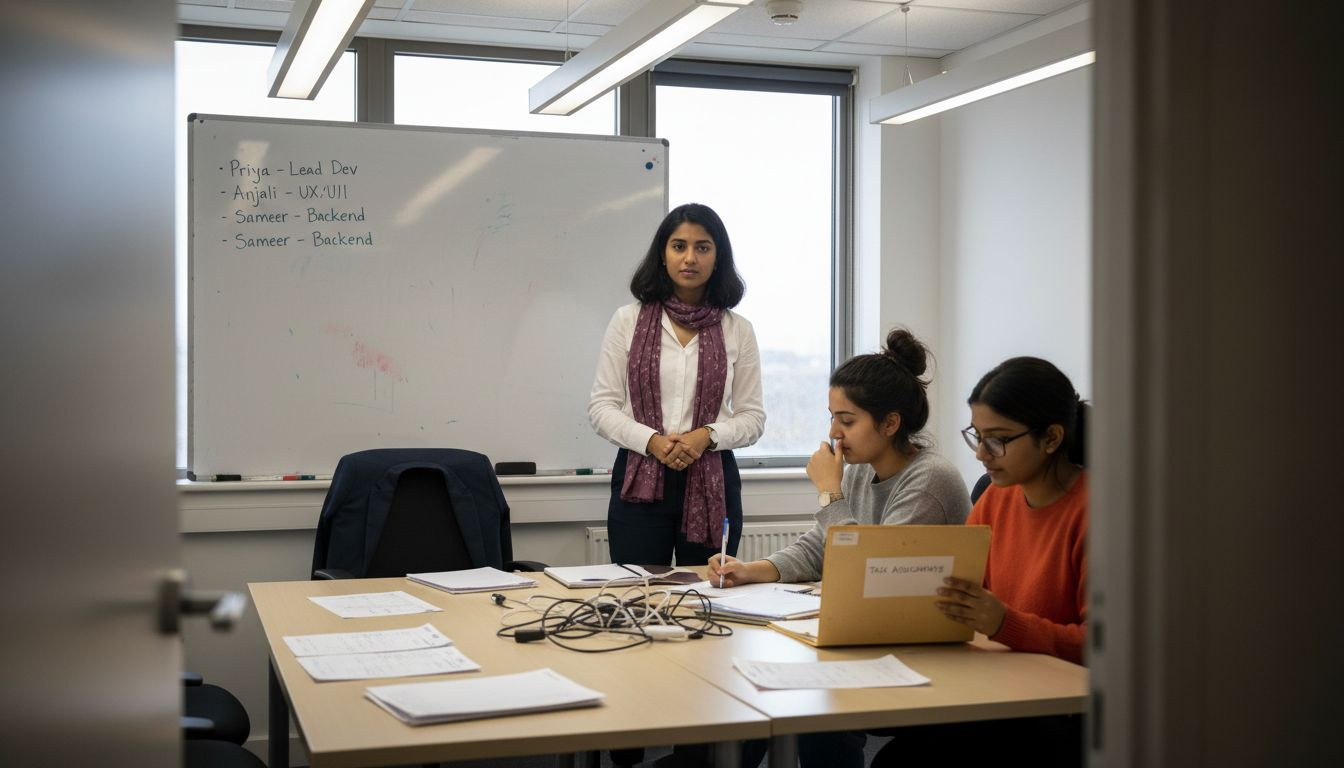
Role clarity increases productivity by establishing transparent accountability and reducing potential overlap in responsibilities. Begin by developing a comprehensive role matrix that maps each team member’s core responsibilities, areas of expertise, and specific event management tasks. Break down roles into granular details for each event phase such as planning, execution, and post-event evaluation. This matrix should clearly delineate who is responsible for critical activities like vendor coordination, budget management, logistical planning, creative design, and stakeholder communication.
When defining roles, consider both technical competencies and interpersonal strengths. Align individual team members with responsibilities that not only match their professional skills but also leverage their unique psychological profiles and communication styles. Encourage open dialogue during this process, allowing team members to provide input and express preferences. Implement a flexible role assignment approach that allows for skill development and occasional role rotation to prevent stagnation and promote continuous learning.
Expert Advice: Review and update your team’s role matrix quarterly to ensure alignment with evolving project requirements and individual professional growth trajectories.
Step 3: Implement effective communication methods
Establishing robust communication channels is fundamental to ensuring seamless collaboration and successful event management. Your goal in this step is to create a comprehensive communication strategy that enables transparent information sharing, quick problem solving, and team alignment across all project stages.
Effective event team communication requires a multifaceted approach that leverages both technological platforms and interpersonal strategies. Select communication tools that suit your team’s specific needs, such as project management software, instant messaging platforms, and video conferencing solutions. Establish clear protocols for different communication scenarios such as daily check ins, emergency updates, and formal reporting. Create a centralised digital workspace where all team members can access shared documents, track progress, and contribute updates in real time.
Beyond technological solutions, focus on developing a communication culture that emphasises active listening, constructive feedback, and psychological safety. Encourage team members to share insights, raise potential challenges early, and collaborate on solutions. Implement regular team meetings that allow for both structured updates and open dialogue. Develop communication guidelines that outline expected response times, preferred communication channels for different types of messages, and protocols for escalating urgent issues. By creating a transparent and inclusive communication environment, you will foster trust, reduce misunderstandings, and enhance overall team performance.
Expert Advice: Conduct periodic communication effectiveness surveys to continuously refine and improve your team’s information sharing strategies and identify potential areas of improvement.
Here is a comparison of popular communication tools and their primary uses for event teams:
| Tool Type | Typical Usage | Benefit to Team |
|---|---|---|
| Project Management Platform | Task assignment and tracking | Increased transparency |
| Instant Messaging | Quick updates and quick queries | Faster decision-making |
| Video Conferencing | Remote meetings and strategy reviews | Enhances engagement |
| Shared Document Workspace | Collaborative document editing | Reduces version errors |
Step 4: Foster shared goals and accountability
Creating a unified team vision and establishing robust accountability mechanisms are crucial for transforming individual efforts into collective event management success. Your objective is to align team members around common objectives while ensuring each person takes genuine ownership of their responsibilities.
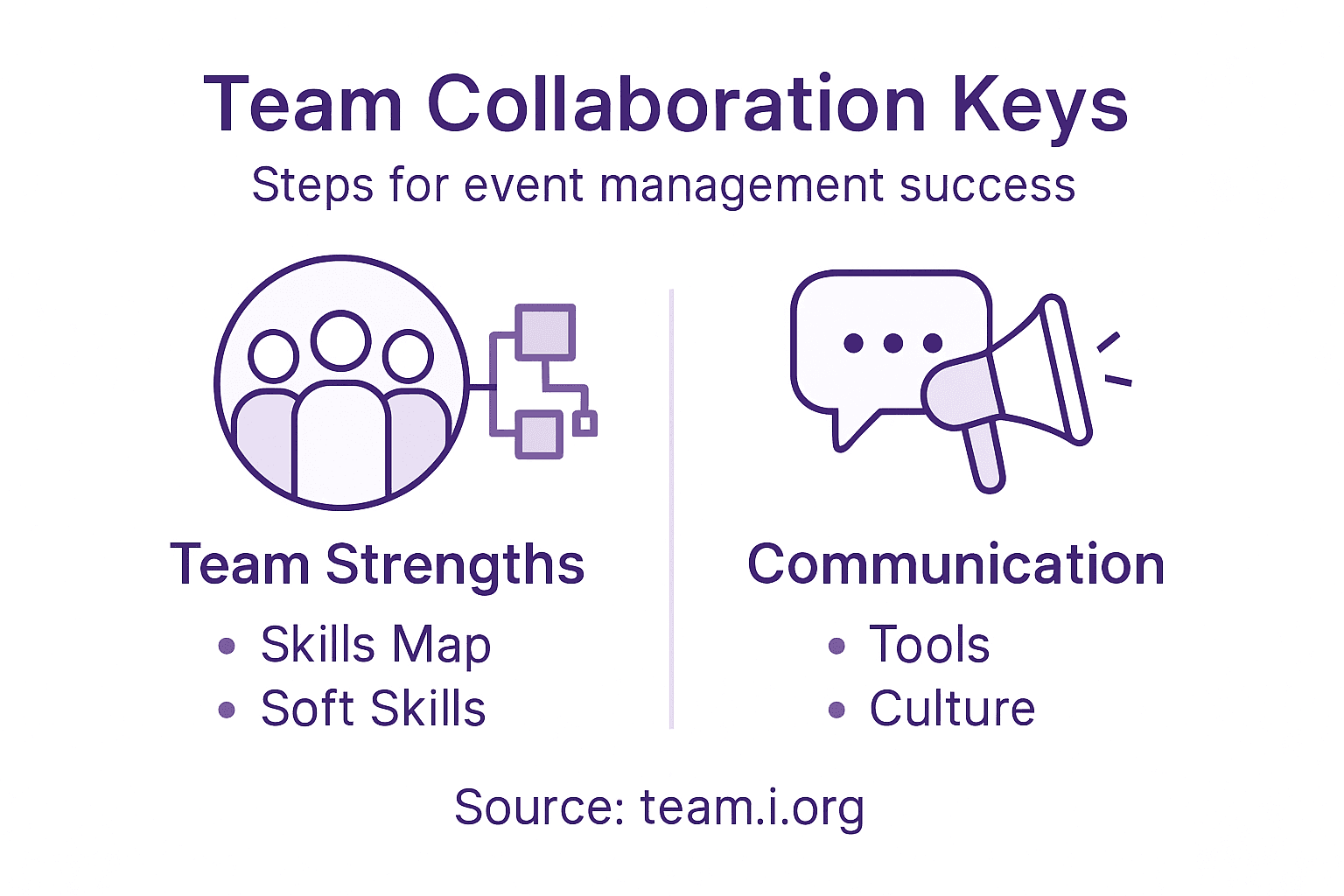
Fostering teamwork involves creating shared goals that transcend individual roles and promote collective achievement. Begin by facilitating a collaborative goal-setting workshop where team members collectively define project objectives, key performance indicators, and success metrics. Encourage open dialogue to ensure everyone understands and feels emotionally invested in the team’s mission. Break down overarching event goals into specific, measurable targets that each team member can directly contribute towards and track.
Establishing accountability requires creating a transparent environment where individual contributions are recognised and measured objectively. Accountability in teams means taking ownership aligned with organisational goals. Implement a regular performance review process that focuses on constructive feedback, mutual support, and continuous improvement. Develop a shared tracking system where team members can visualise progress, celebrate collective achievements, and identify areas requiring collaborative intervention. By creating a culture of mutual responsibility and transparent communication, you will transform individual talents into a cohesive, high-performing event management team.
Expert Advice: Conduct quarterly team alignment sessions to reassess shared goals, celebrate achievements, and recalibrate strategies based on evolving project dynamics.
Step 5: Review progress and adapt strategies
Successful event management requires continuous evaluation and strategic adaptation. Your primary objective in this stage is to establish a systematic approach for monitoring team performance, identifying potential improvements, and maintaining flexibility in your project execution.
Team success requires continuous progress review and proactive strategy adjustment. Implement a comprehensive performance tracking system that includes both quantitative metrics and qualitative feedback mechanisms. Schedule regular review meetings where team members can openly discuss project progress, challenges, and potential innovative solutions. Create a structured assessment framework that evaluates individual and collective performance against predefined key performance indicators, allowing for transparent and constructive dialogue.
Adaptive leadership emphasises flexibility and responsive strategy development. Encourage a learning culture where team members view challenges as opportunities for growth and innovation. Develop a dynamic strategy adjustment protocol that allows for quick pivots when project circumstances change. This might involve creating contingency plans, establishing clear decision making processes for strategy modifications, and maintaining an agile approach that values rapid learning and continuous improvement. By fostering an environment of open communication and strategic adaptability, you will ensure your event management team remains resilient and effective throughout the project lifecycle.
Expert Advice: Implement a monthly retrospective session where the team critically analyses performance data, shares insights, and collaboratively designs strategy refinements.
Elevate Your Event Management Team Collaboration with Expert Training
Improving team collaboration is essential for event success as this article highlights. From assessing team strengths and clarifying roles to fostering shared goals and maintaining open communication these critical challenges often hold back even the most talented teams. If you are seeking to overcome these pain points and build a high-performing event management team equipped with practical skills and industry insights you need targeted education rooted in 24 years of expertise.
At teami.org you can access specialised certification programmes designed to sharpen your project management abilities enhance interpersonal skills and master effective communication methods all vital concepts emphasised in this guide. Benefit from hands-on projects real event exposure and expert mentorship created in collaboration with DNA Entertainment Networks to prepare you for immediate success. Do not wait for opportunities to pass. Empower your career and team today by exploring detailed course options and start transforming your event management capabilities now at teami.org. Take the next step towards seamless collaboration and event excellence by connecting with us directly here.
Frequently Asked Questions
How can I assess my event management team’s strengths and challenges?
Start by conducting a comprehensive skills mapping exercise to identify individual competencies and areas for improvement. Create a detailed skills matrix within the next month to map out the technical knowledge, interpersonal skills, and project management capabilities of your team.
What are effective strategies for establishing clear roles and responsibilities?
Develop a role matrix that outlines each team member’s specific duties and expectations. Break down responsibilities into detailed tasks for each event phase, and implement this within 30 days to minimise confusion and enhance team efficiency.
How can I improve communication methods within my event team?
Implement robust communication channels using both technological solutions and interpersonal strategies. Set up a communication protocol within the next two weeks, outlining response times and preferred channels for different types of messages to ensure transparency and quick problem-solving.
What steps should I take to foster shared goals and accountability in my team?
Facilitate a collaborative workshop to define project objectives and success metrics that everyone can contribute to. Aim to establish shared goals within the next month, ensuring each team member understands their role in achieving collective success.
How often should I review my team’s progress and adapt strategies?
Conduct regular review meetings to evaluate team performance against key performance indicators. Schedule these meetings monthly to ensure ongoing improvements and the ability to pivot strategies based on team feedback and project dynamics.
What should I include in my performance tracking system for event management?
Your performance tracking system should encompass both quantitative metrics and qualitative feedback mechanisms. Develop this system within the next three months to provide a comprehensive view of progress and identify areas for collaboration and improvement.
Recommended
- What Makes a Successful Event: Real Impact Revealed – team I
- How to Evaluate Event Success for Career Growth – team I
- How to Organise Events for Maximum Impact: Step-by-Step Guide – team I
- Negotiation Skills for Managers: Achieve Event Success – team I
- Incident Response: Build Effective Cybersecurity Teams