

Landing your first role in the Indian event industry often depends on how well you present your ideas and personality to future employers. Strong presentation skills help you stand out in interviews and client meetings, making every impression count. By focusing on honest self-assessment and targeted improvement, you will discover practical strategies to develop the clarity, confidence, and connection needed for success as an aspiring event manager.
Table of Contents
- Step 1: Assess Your Current Presentation Abilities
- Step 2: Plan and Structure Engaging Content
- Step 3: Practise Verbal and Non-Verbal Delivery Techniques
- Step 4: Incorporate Audience Feedback for Refinement
- Step 5: Evaluate Progress and Set Improvement Goals
Quick Summary
| Essential Insight | Detailed Explanation |
|---|---|
| 1. Conduct Regular Self-Assessments | Regular self-assessments help identify strengths and areas for improvement in presentation skills. This lays the groundwork for effective development. |
| 2. Structure Content Logically | A well-structured presentation framework keeps audience interest and ensures key messages are conveyed clearly and memorably. |
| 3. Practice Both Verbal and Non-Verbal Skills | Focusing on both verbal delivery and body language enhances communication, boosts confidence, and improves audience engagement. |
| 4. Incorporate Audience Feedback | Actively seeking and integrating audience feedback fosters growth and improves presentation effectiveness over time. |
| 5. Set Measurable Improvement Goals | Establishing specific, quantifiable goals for presentation skills encourages ongoing development and accountability in your practice. |
Step 1: Assess your current presentation abilities
Mastering presentation skills requires an honest evaluation of your current capabilities. This step will help you identify your strengths and opportunities for growth, setting the foundation for significant improvement in event management communication.
To conduct a comprehensive self-assessment, follow these strategic approaches:
- Record yourself presenting and analyse the footage critically
- Request honest feedback from colleagues or mentors
- track your audience engagement metrics during practice sessions
- Compare your performance against professional benchmarks
Start by creating a detailed self-assessment checklist that covers multiple dimensions of presentation effectiveness. Focus on evaluating key areas such as:
To better understand the areas of presentation effectiveness, here is a summary of key skill domains and their desired outcomes:
| Skill Domain | Desired Outcome | Business Impact |
|---|---|---|
| Verbal Clarity | Message understood easily | Enhances audience trust |
| Body Language | Confident and dynamic presence | Boosts engagement |
| Content Organisation | Logical and smooth flow | Supports information recall |
| Visual Aid Usage | Clear and relevant visuals | Reinforces main points |
| Audience Interaction | Two-way engagement | Deepens connection |
- Verbal communication clarity
- Body language and stage presence
- Content organisation
- Visual aid usage
- Audience interaction techniques
During your self-review, pay special attention to non-verbal communication signals and energy transmission. Event managers must convey confidence and enthusiasm, which often matters more than perfect content delivery.
Understanding your baseline performance allows you to develop targeted strategies for skill enhancement. By objectively assessing your current abilities, you create a personalised roadmap for professional development.
Professional Recommendation: Conduct your self-assessment quarterly to track continuous improvement and adapt your presentation strategies.
Step 2: Plan and structure engaging content
Crafting compelling presentations requires strategic content planning that captures and maintains audience attention. This step focuses on developing a robust presentation framework that communicates your message effectively and leaves a lasting impact.
To design an engaging presentation structure, begin by establishing clear presentation goals and understanding your audience’s expectations. Your content architecture should include:
- A powerful opening that hooks audience attention
- Logical progression of key messages
- Strategic use of storytelling and data
- Clear visual and narrative transitions
- Memorable concluding statements
Follow these essential steps for structuring your presentation:
- Define your core message
- Outline primary and supporting points
- Create a narrative flow
- Develop supporting visual materials
- Rehearse and refine content sequence
Remember that effective communication relies on simplicity. Avoid overwhelming your audience with excessive technical details or cluttered slides. Instead, focus on delivering crisp, meaningful insights that resonate with your listeners.
Practice logical sequencing and use signposting techniques to guide your audience through complex information. This helps maintain engagement and ensures your key messages are understood and retained.
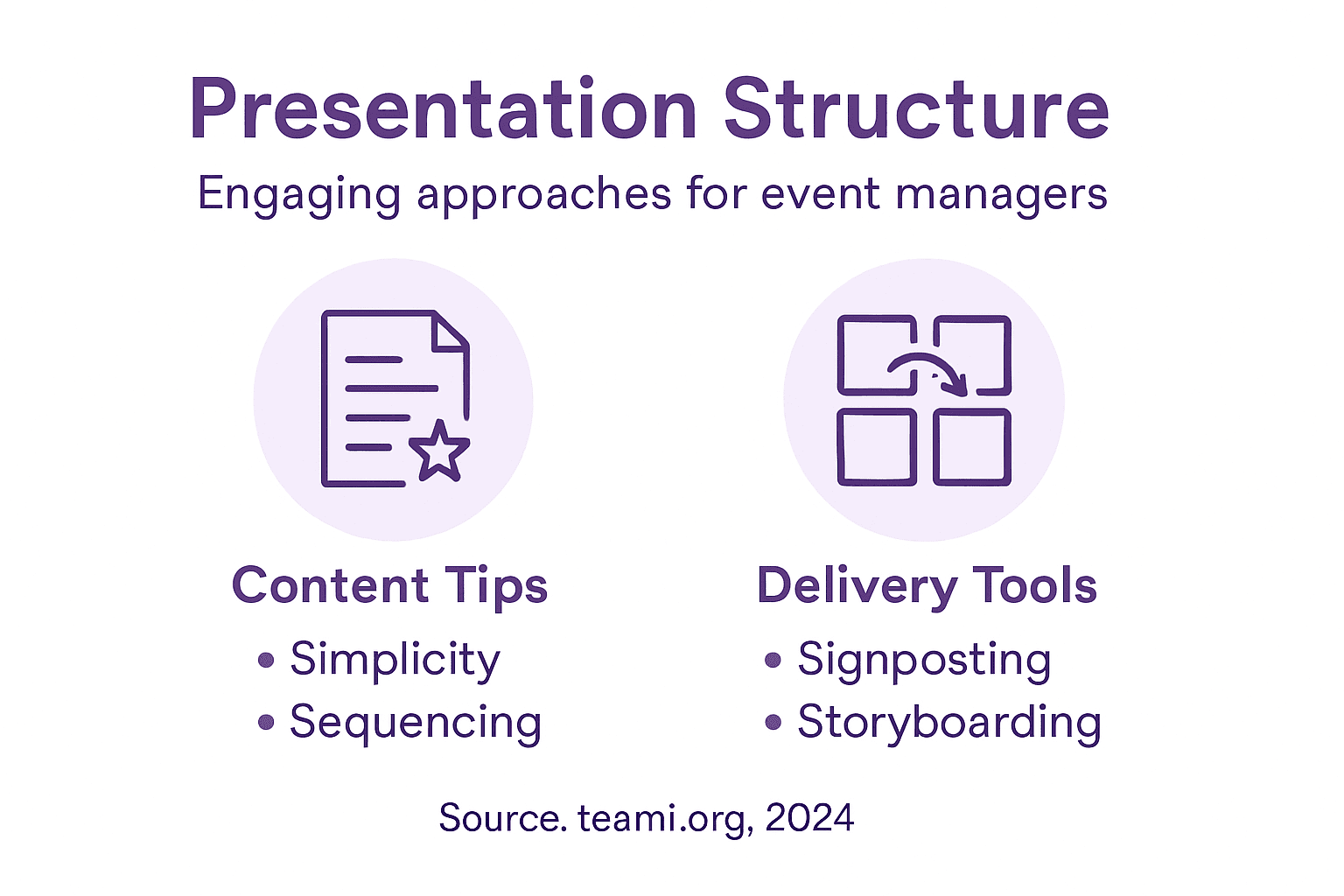
Professional Recommendation: Use storyboarding techniques to visualise and streamline your presentation structure before final development.
The following table compares two approaches to presentation content structuring:
| Approach | Strengths | Weaknesses | Best Use Case |
|---|---|---|---|
| Storytelling-led | Creates emotional impact | May lack data depth | Motivating audiences |
| Data-centric | Delivers factual precision | Risk of overwhelming detail | Sharing research findings |
Step 3: Practise verbal and non-verbal delivery techniques
Transforming your presentation skills requires dedicated practice in both verbal communication and body language. This step will help you develop a powerful and engaging delivery style that captivates your audience and communicates confidence.
Mastering communication techniques involves deliberate practice across multiple dimensions. Your delivery should focus on:
- Vocal clarity and modulation
- Purposeful body movements
- Natural and expressive gestures
- Consistent eye contact
- Appropriate facial expressions
Break down your practice into specific components:
- Record your presentations
- Analyse verbal elements separately from non-verbal
- Identify specific areas for improvement
- Practice targeted techniques
- Seek constructive feedback
Vocal dynamics play a crucial role in audience engagement. Experiment with volume, pace, and emotional tone to maintain listener interest. Your voice should convey enthusiasm and authority without appearing forced or artificial.
Non-verbal communication speaks volumes. Pay attention to your posture, hand movements, and facial expressions. These subtle signals can significantly enhance or undermine your message’s impact.

Professional Recommendation: Video record your practice sessions and review them objectively, focusing on one communication aspect at a time.
Step 4: Incorporate audience feedback for refinement
Mastering presentation skills requires developing an adaptive mindset that welcomes constructive critique. This step will help you transform audience insights into meaningful improvements for your event management presentations.
Understanding feedback dynamics is crucial for professional growth. Your approach to feedback should encompass:
- Listening without becoming defensive
- Recognising patterns in comments
- Distinguishing between subjective opinions and objective suggestions
- Prioritising actionable recommendations
- Maintaining your presentation’s core message
Implement a systematic feedback review process:
- Collect feedback from diverse sources
- Create a structured feedback analysis document
- Categorise suggestions by impact and relevance
- Develop a targeted improvement strategy
- Track and measure subsequent presentation performance
Emotional intelligence plays a significant role in feedback incorporation. Maintain professional composure while critically evaluating suggestions, understanding that each comment represents an opportunity for refinement.
Remember that not all feedback requires implementation. Carefully evaluate each suggestion’s merit and alignment with your presentation objectives, ensuring you preserve your unique communication style.
Professional Recommendation: Create a personal feedback log to track recurring themes and monitor your progressive improvement over time.
Step 5: Evaluate progress and set improvement goals
Continuous professional development requires strategic reflection and goal setting. This step will help you systematically track your presentation skills and create a roadmap for ongoing improvement in event management communication.
Developing effective performance goals involves creating a structured approach to personal growth. Your evaluation framework should include:
- Quantifiable performance metrics
- Periodic skill assessments
- Comparative benchmarking
- Targeted skill development plans
- Regular self-reflection intervals
Implement a comprehensive goal-setting process:
- Document current presentation capabilities
- Identify specific skill enhancement areas
- Establish measurable and time-bound objectives
- Create actionable development strategies
- Schedule regular progress review sessions
Performance tracking requires honest self-assessment. Break down complex goals into smaller, achievable milestones that provide clear evidence of progression.
Remember that goal setting is an iterative process. Be flexible and willing to adjust your objectives as you gain more experience and insights into your presentation capabilities.
Professional Recommendation: Maintain a quarterly skills development journal to document your growth and maintain accountability.
Elevate Your Presentation Skills with Expert Event Management Training
Mastering presentation skills is a critical challenge for event managers who aim to confidently engage their audiences and convey messages with clarity and impact. The process of assessing your verbal clarity, body language, and audience interaction can be daunting without specialised guidance. If you are seeking to overcome these hurdles and turn feedback into actionable improvement strategies, the right education and hands-on experience are essential.
At team.i.org, we combine 23 years of industry expertise with accredited certification programmes designed to sharpen your presentation and event management skills. Benefit from our practical training, real event participation, and industry partnerships including DNA Entertainment Networks that actively enhance your career opportunities. Don’t let the fear of imperfect delivery hold you back from becoming a compelling event professional.
Ready to transform your presentations and make a memorable impact at every event Explore our comprehensive course offerings today and take your first step towards mastering event communication. Connect with us now and start building your confident presentation style with expert support at team.i.org. Opportunities for growth and success await those who act promptly.
Frequently Asked Questions
How can I assess my current presentation skills as an event manager?
To assess your current presentation skills, record yourself while presenting and review the footage critically. Additionally, seek honest feedback from colleagues or mentors to identify strengths and areas for improvement.
What are the key components to structure my presentation effectively?
An effective presentation structure includes a strong opening, logical progression of key messages, storytelling, clear transitions, and a memorable conclusion. Outline your core message and supporting points to create a cohesive narrative flow.
How can I improve my verbal and non-verbal delivery techniques?
Practice vocal clarity, modulation, and purposeful body movements while maintaining eye contact and expressive gestures. Record your practice sessions and focus on one aspect each time to enhance your overall delivery.
What strategies should I use to incorporate audience feedback into my presentations?
To effectively incorporate audience feedback, collect insights from diverse sources and analyse them for patterns. Prioritise actionable suggestions that align with your core message, ensuring you continuously refine your presentation style.
How do I set measurable goals for improving my presentation skills?
Set measurable goals by documenting your current capabilities and establishing specific objectives for improvement. Review your progress regularly, and aim to achieve small milestones within a clear timeframe, such as every quarter.
How often should I conduct self-assessments of my presentation abilities?
Conduct self-assessments quarterly to track your continuous improvement and adapt your presentation strategies. This regular evaluation helps you stay focused on your growth and identify new areas for enhancement.