
An event coordinator intern is a working team member who supports the planning and execution of events by managing logistics, vendor relations, and promotional tasks while gaining hands-on experience. This is not a coffee-fetching role. In India’s booming events industry, covering everything from Bangalore tech conferences and Mumbai weddings to Delhi college festivals, the intern is often the person holding the entire operation together behind the scenes. You will use tools like Canva and Adobe Creative Suite, juggle multiple deadlines, and learn faster than any classroom can teach you. This guide tells you exactly what the role involves, what skills you need, and how to land and excel in your first event planning internship.
What does an event coordinator intern actually do?
An event coordinator intern, known in the industry as an event management intern position, is responsible for four core pillars: logistics, vendor liaison, pre-event administration, and marketing support. Each pillar is equally demanding. Logistics means you are tracking venue bookings, equipment lists, and transport schedules. Vendor liaison means you are on the phone confirming caterers, AV technicians, and décor suppliers. Marketing support means you are creating social media posts, drafting attendee communications, and updating event pages.
Modern interns also carry a heavy administrative load. Data entry and CRM updates form the backbone of event success, and no senior coordinator has time to do them alone. That is where you come in. Think of it as controlled chaos with a spreadsheet.

What skills and tools do you need as an event coordinator intern?
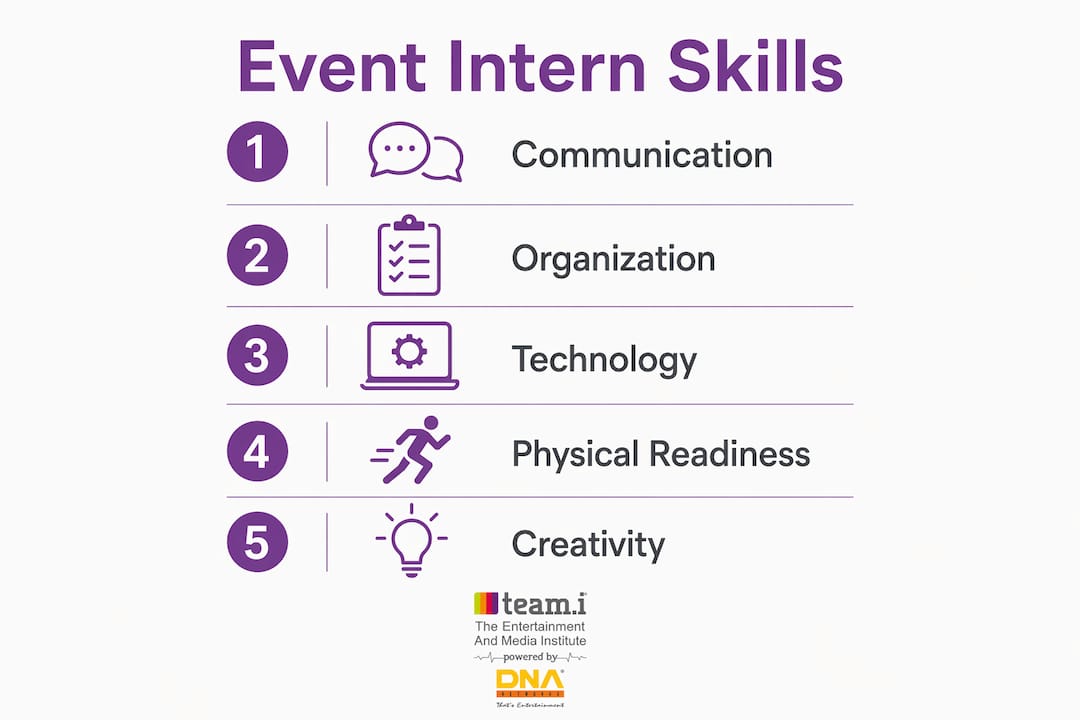
Effective communication, organisation, and the ability to work under pressure are the non-negotiable soft skills for this role. These are not buzzwords. At a wedding in Hyderabad with 800 guests, when the florist arrives two hours late, your ability to stay calm and redirect the team is what separates a good intern from a great one.
The technical toolkit is equally specific:
- Communication and coordination: WhatsApp groups, email chains, and face-to-face briefings with vendors
- Design and content: Canva, Adobe Creative Suite, CapCut, and Premiere Pro for promotional materials
- Office and data management: Microsoft 365 for budgets, trackers, and run-of-show documents
- Social media: Instagram, LinkedIn, and YouTube for event promotion and live coverage
- CRM and admin: Updating attendee databases, managing RSVPs, and filing vendor contracts
Physical readiness matters too. Event internships in India involve setup, inventory management, and long event-day hours. You will carry things, stand for hours, and problem-solve on your feet. That is the job.
Pro Tip: Start building your Canva and Adobe skills before your internship begins. Interns who arrive with ready-made design templates for social media posts immediately add visible value to the team.
How to find and apply for an event coordinator internship in India
The best internship opportunities in event management are rarely advertised in one place. You need to look across multiple channels simultaneously. Here is a practical approach:
- Search dedicated platforms. Sites like Internshala, LinkedIn, and Naukri list event management intern positions in Bangalore, Mumbai, Delhi, and Hyderabad regularly. Filter by city and duration.
- Go direct to companies. DNA Entertainment Networks, Wizcraft, and Percept Live all take interns. Visit their websites and email HR directly with a tailored CV.
- Use your university career centre. Many colleges have formal tie-ups with event companies. Check academic credit requirements before accepting any role to confirm it qualifies for your programme.
- Attend industry events. College festivals like Mood Indigo at IIT Bombay or Rendezvous at IIT Delhi are attended by event professionals. Introduce yourself. Hand over a card.
- Network on LinkedIn. Connect with event managers in your city. Comment on their posts. Send a short, specific message explaining what you want to learn.
Your CV must highlight any relevant experience, even if it is organising a college cultural event or managing a student society. Tailor your cover letter to each company. Generic applications go straight to the bin.
Pro Tip: Follow up on your application after five to seven days with a short, polite email. Recruiters notice candidates who demonstrate genuine enthusiasm without being pushy.
What does a typical day look like during an event coordinator internship?
No two days are identical. That is the honest answer. But here is what a realistic day during a corporate conference internship in Bangalore might look like:
| Time | Activity |
|---|---|
| 8:30 AM | Arrive at venue. Check equipment delivery against the master inventory list. |
| 10:00 AM | Attend briefing with the senior coordinator. Update the run-of-show document. |
| 12:00 PM | Coordinate lunch arrangements with the catering vendor. Handle last-minute dietary requests. |
| 2:00 PM | Manage delegate registration desk. Update the CRM with attendance data. |
| 4:00 PM | Assist with stage setup. Liaise with the AV team on microphone checks. |
| 7:00 PM | Support post-event breakdown. File vendor receipts and update the budget tracker. |
Hybrid event coordination is now standard. You will balance on-site presence with digital tasks like updating event apps, monitoring live social media feeds, and coordinating with remote speakers. Internship durations typically span 3 to 6 months, with summer placements often running a fixed 12 weeks at 20–40 hours per week.
The physical demands are real. Early starts, late finishes, and manual tasks are part of the deal. Arrive ready for all of it.
Pro Tip: Use a prioritisation method like the Eisenhower Matrix to manage multiple deadlines. On a busy event day, knowing which tasks are urgent versus which can wait is a genuine superpower.
How to maximise your growth during your event management internship
The interns who get hired after their placement are not the ones who waited to be told what to do. Proactivity and a “do whatever it takes” attitude are what recruiters remember. Here is how to make every week count:
- Ask for feedback actively. After each event, ask your supervisor what you did well and what you could improve. Write it down. Act on it.
- Document everything. Build a portfolio of every event you contribute to. Screenshots of social media posts you designed, photos from setup, budget trackers you managed. This becomes your proof of experience.
- Learn the cultural nuances. Indian events have specific protocols. A corporate event in Chennai runs differently from a wedding in Jaipur. Pay attention to how senior coordinators adapt their approach for each client and context.
- Build relationships, not just contacts. The vendor you treat well today is the one who answers your call at 11 PM on event night. Relationships in this industry are currency.
- Understand the business side. Ask how budgets are structured. Learn how proposals are written. The career paths post-internship open up dramatically when you understand how the business works, not just how the event runs.
Pro Tip: Create a dedicated folder for every event you work on. Include your contributions, challenges you solved, and outcomes. When you apply for your first full-time role, this portfolio speaks louder than any CV.
What I have learnt from watching interns succeed and fail in India’s event industry
The interns who struggle are almost always the ones who expected glamour before graft. Event management in India is a physically and mentally demanding profession. A three-day wedding in Udaipur sounds spectacular until you are on your feet for 14 hours managing a florist meltdown while the baraat is 45 minutes late. The ones who thrive are the ones who find energy in that chaos rather than being drained by it.
The most important thing I have seen? Confidence built through doing, not through knowing. Hands-on experience and a proactive mindset matter more to hiring managers than a perfect academic record. The intern who volunteers to manage the registration desk, stays back to help with breakdown, and sends a thoughtful follow-up email gets remembered. The one who waits to be assigned tasks does not.
India’s event industry rewards people who are genuinely curious about how things work. Ask questions. Take notes. Show up early. The internship advantages you gain in those months are the foundation of everything that follows.
— Teami
Start your event management career with Teami
Teami has 24 years of experience placing students into real event roles across India, with direct industry connections through DNA Entertainment Networks. The event management course covers everything from vendor negotiation and budgeting to live event execution, with internship placement support built into the programme. You do not just study events. You work them. Whether you are aiming for a summer event coordinator internship or a full assistant event coordinator internship, Teami’s practical training model means you arrive on day one ready to contribute. Explore the full course details and take the first step towards a career that starts on the ground, not in a textbook.
FAQ
What does an event coordinator intern do day to day?
An event coordinator intern handles logistics, vendor coordination, administrative tasks, and marketing support such as social media and attendee communication. On event days, duties extend to on-site setup, registration management, and post-event breakdown.
How long does a typical event planning internship last?
Most event planning internships run for 3 to 6 months, with summer placements typically lasting 12 weeks at 20–40 hours per week, often including a minimum of three days on-site.
What tools should I know before starting an event coordinator internship?
Proficiency with Canva, Adobe Creative Suite, Microsoft 365, and basic CRM or data management tools gives you a strong foundation. Video editing skills using CapCut or Premiere Pro are increasingly valued for marketing support tasks.
How do I become an event coordinator intern in India?
Search platforms like Internshala and LinkedIn, apply directly to event companies like DNA Entertainment Networks or Wizcraft, and use your university career centre. Tailor your CV to each role and follow up after applying.
Do event coordinator internships in India pay a stipend?
Compensation varies widely. Stipends range from a daily rate to a monthly allowance depending on the company, city, and level of responsibility. Confirm payment terms and academic credit eligibility before accepting any offer.
Recommended
- Event Management Internships in 2025: Your Guide to Success – team I
- Events Management Work Experience: Pathways to Career Success – team I
- Job roles after event management course: your 2026 guide – team I
- Event internship advantages that accelerate your career – team I
Thinking about a career in event management?
team I is Bangalore’s only EEMA-certified event management institute, running for 24 years, where students work on real live events with real budgets and real deadlines rather than classroom simulations. See the full range of event management courses in Bangalore, or go straight to the flagship Certificate Program in Event Management (CPEM).