Misunderstandings in the workplace can turn promising projects into chaotic situations, especially for aspiring event managers in India working with diverse teams and clients. Success in event management depends on more than just creativity, as effective communication in the workplace shapes collaboration, morale, and client satisfaction. With practical strategies backed by recent research, this guide highlights how communication skills can help you build stronger teams and create seamless client interactions essential for thriving in the competitive Indian event industry.
Table of Contents
- Defining Effective Communication In The Workplace
- Types Of Communication In Event Management
- Key Skills For Successful Team Interactions
- Overcoming Barriers To Workplace Communication
- Common Mistakes And How To Avoid Them
Key Takeaways
| Point | Details |
|---|---|
| Effective communication is vital | It transforms interactions into collaborations, influencing productivity and decision-making. |
| Types of communication vary | Verbal, written, non-verbal, and electronic communication are essential for effective information exchange. |
| Emotional intelligence enhances teamwork | Skills like active listening and empathy are crucial for fostering strong team dynamics. |
| Overcoming barriers is essential | Addressing obstacles like language differences and psychological biases can enhance overall communication effectiveness. |
Defining Effective Communication in the Workplace
Effective communication represents the foundational skill that transforms workplace interactions from simple exchanges to meaningful collaborations. At its core, workplace communication is a dynamic process of sharing information, ideas, and perspectives across various channels and hierarchical levels.
In the context of professional environments, effective communication involves strategic exchange of information that goes beyond mere verbal or written transmission. This sophisticated interaction encompasses multiple dimensions:
- Verbal communication: Spoken conversations, presentations, meetings
- Written communication: Emails, reports, documentation, messaging
- Non-verbal communication: Body language, facial expressions, gestures
- Electronic communication: Video conferences, instant messaging, collaborative platforms
The primary objectives of workplace communication extend far beyond information transfer. According to research, communication directly influences organizational performance and decision-making, creating a complex ecosystem of interactions that drive business outcomes.
To clarify the real impact of effective communication in the workplace, here is a summary of its key business benefits:
| Benefit | Description | Example Outcome |
|---|---|---|
| Enhanced productivity | Facilitates faster task completion | Reduced project delays |
| Better decision-making | Enables informed choices across teams | Improved strategic results |
| Higher morale | Fosters trust and job satisfaction | Decreased turnover rates |
| Stronger collaboration | Builds cohesive teams and partnerships | Successful team projects |
Successful communication requires understanding that each interaction involves multiple stakeholders with unique perspectives, communication styles, and objectives. Professionals must develop nuanced skills to navigate these intricate interpersonal dynamics, recognising that effective communication is both an art and a strategic competency.
Pro tip: Practice active listening by focusing completely on the speaker, asking clarifying questions, and paraphrasing their message to ensure comprehensive understanding.
Types of Communication in Event Management
Event management communication is a multifaceted discipline that encompasses diverse strategies and channels for effective information exchange. Stakeholder communication requires professionals to navigate complex interactions across multiple platforms and audience segments.
Effective communication strategies in event management involve sophisticated approaches that extend beyond traditional communication methods. These strategies include:
- Verbal communication: Live presentations, keynote speeches, panel discussions
- Written communication: Event briefs, proposals, reports, email correspondence
- Digital communication: Social media engagement, virtual event platforms, webinars
- Non-verbal communication: Body language, stage presence, visual storytelling
- Multimedia communication: Video content, interactive presentations, live streaming
Digital technologies have revolutionised event communication, enabling event managers to create immersive and interactive experiences. Professionals now leverage advanced tools to craft engaging narratives that transcend physical boundaries, connecting audiences through innovative communication techniques.
Successful event communication requires a strategic approach that balances technical proficiency with emotional intelligence. Event managers must understand the nuanced communication needs of different stakeholders, adapting their communication style to create meaningful and impactful interactions across various event formats and platforms.
For a quick reference, here is a comparison of workplace vs event management communication:
| Aspect | Workplace Communication | Event Management Communication |
|---|---|---|
| Typical Channels | Email, meetings, reports | Live events, social media, video platforms |
| Stakeholder Focus | Employees, managers, clients | Guests, sponsors, organisers, media |
| Goals | Performance, teamwork, efficiency | Engagement, experience, publicity |
| Skill Emphasis | Active listening, transparency | Adaptability, storytelling, stage presence |
Pro tip: Develop a comprehensive communication plan that anticipates potential stakeholder questions and prepares tailored communication strategies for different event stages.
Key Skills for Successful Team Interactions
Successful team interactions require a complex blend of interpersonal abilities, communication prowess, and emotional intelligence. Collaborative skills form the cornerstone of effective workplace dynamics, enabling teams to transform individual talents into collective achievements.
Emotional intelligence fundamentally enhances team effectiveness, creating a robust framework for high-performing teams. The critical skills that drive successful team interactions include:
- Active listening: Understanding colleagues’ perspectives without interruption
- Empathy: Recognising and validating team members’ emotions and experiences
- Conflict resolution: Addressing disagreements constructively and professionally
- Adaptability: Flexibility in approach and willingness to adjust strategies
- Transparent communication: Sharing information openly and honestly
Research demonstrates that leadership plays a pivotal role in cultivating these skills. Team leaders must create an environment that encourages open dialogue, mutual respect, and collaborative problem-solving. High-performing teams require consistent feedback and inclusive behaviours, which help build trust and cohesion.
The most successful teams understand that interaction is not about individual brilliance but collective synergy. Professionals must continuously develop their interpersonal skills, learning to balance assertiveness with empathy, technical expertise with emotional understanding.
Pro tip: Practice active listening by paraphrasing colleagues’ statements and asking clarifying questions to demonstrate genuine understanding and engagement.
Overcoming Barriers to Workplace Communication
Workplace communication barriers are complex challenges that can significantly impede organisational effectiveness and team performance. Communication obstacles emerge from multiple interconnected factors, ranging from linguistic differences to organisational hierarchies and psychological dynamics.
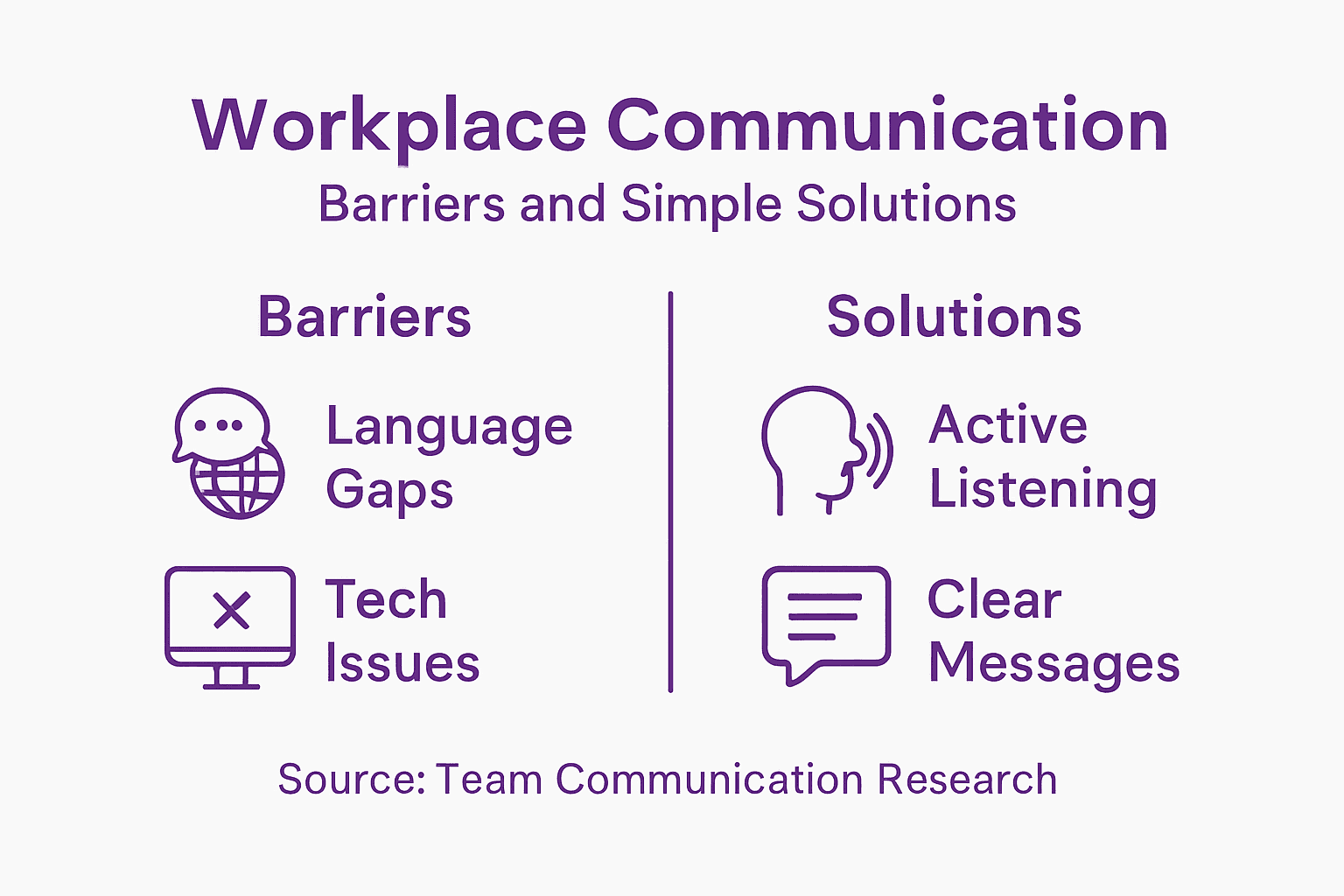
Workplace communication barriers encompass diverse challenges, which require strategic and multifaceted approaches to address effectively. The primary barriers include:
- Language differences: Semantic misunderstandings and linguistic complexity
- Hierarchical structures: Power dynamics limiting open dialogue
- Cultural gaps: Varied communication styles and interpretations
- Technological limitations: Inadequate communication infrastructure
- Psychological obstacles: Personal biases and perceptual filters
Strategies to overcome communication barriers involve developing comprehensive skills and creating supportive organisational environments. Successful organisations invest in communication training, adaptive leadership, and creating psychologically safe spaces that encourage transparent interactions.
Effective communication requires continuous learning and intentional practice. Professionals must cultivate awareness of their communication patterns, actively seek feedback, and remain committed to developing nuanced interpersonal skills that transcend traditional organisational boundaries.
Pro tip: Regularly conduct communication audits within your team, identifying potential barriers and developing targeted strategies to improve mutual understanding.
Common Mistakes and How to Avoid Them
Workplace communication is a delicate art that requires continuous refinement and self-awareness. Communication pitfalls can significantly undermine professional relationships and organisational effectiveness, making it crucial to identify and address potential errors proactively.
Common communication mistakes often stem from unintentional behaviours, which can be systematically addressed through mindful practices. The most prevalent communication errors include:
- Assuming understanding: Failing to verify message comprehension
- Delayed communication: Withholding critical information
- Vague messaging: Using ambiguous or unclear language
- Emotional reactivity: Responding defensively during challenging conversations
- Neglecting non-verbal cues: Ignoring body language and tone
Successful communication requires emotional intelligence and adaptive strategies to navigate complex workplace interactions. Professionals must develop the capacity to listen actively, communicate transparently, and adjust their communication style to different audiences and contexts.
Overcoming communication mistakes demands continuous learning and self-reflection. By cultivating empathy, practicing active listening, and maintaining transparency, individuals can transform potential communication barriers into opportunities for deeper understanding and more effective collaboration.
Pro tip: Implement a ‘pause and clarify’ strategy by periodically summarising key points during conversations to ensure mutual understanding.
Elevate Your Communication Skills to Transform Team Performance
Effective communication lies at the heart of thriving teams and successful workplaces. If you find yourself struggling with team interactions, overcoming communication barriers, or enhancing collaboration as highlighted in the article “Effective Communication at Work – Elevating Team Performance” then specialised training is the key to unlocking your full potential. Understanding concepts like active listening, emotional intelligence and transparent communication can dramatically improve decision-making, morale and productivity.
At team.i.org we offer comprehensive certification courses designed to refine these crucial skills with a practical focus on event and workplace management. With over 23 years of industry experience and partnerships like DNA Entertainment Networks, we prepare you not just to learn but to excel in real-world environments. Take control of your career growth by exploring our event management training programs and gain the confidence to engage effectively with all stakeholders. Don’t wait for challenges to slow you down engage with us now and start transforming your communication abilities today.
Frequently Asked Questions
What is effective communication in the workplace?
Effective communication in the workplace involves the strategic exchange of information, ideas, and perspectives across various channels, enhancing collaboration and decision-making.
How can I improve communication within my team?
Improving team communication can be achieved through practices like active listening, fostering an open environment, and employing various communication methods that cater to diverse stakeholders.
What are some common barriers to effective workplace communication?
Common barriers include language differences, hierarchical structures, cultural gaps, technological limitations, and psychological obstacles that affect understanding and interaction.
What skills are essential for successful team interactions?
Essential skills for successful team interactions include active listening, empathy, conflict resolution, adaptability, and transparent communication, all of which enhance collaboration and organisational dynamics.
Recommended
- How to Improve Team Collaboration for Event Success – team I
- How You Can Be Effective And Efficient In The Times Of Crisis – team I
- Public Speaking Essentials for Event Professionals – team I
- Communicating to Succeed by Vineeth Kumar – Session Highlights – team I
- Tips for Building and Maintaining a Good Relationship with Your Partne – The World Game