
Planning successful events in Bangalore today means more than creating impressive schedules and inviting speakers. The world of event management now demands a solid grasp of digital marketing strategies, which open new possibilities for creative audience engagement and measurable impact. For aspiring professionals eager to advance their careers, mastering these skills will help you stand out and build memorable experiences that truly connect with your audience.
Table of Contents
- Defining Digital Marketing for Event Careers
- Digital Marketing Channels and Approaches
- Event Promotion Strategies and Tools
- Essential Skills and Industry Requirements
- Common Pitfalls and Emerging Trends
Key Takeaways
| Point | Details |
|---|---|
| Embrace Digital Marketing Skills | Event managers need to develop a digital skill set, including SEO, analytics, and social media management, to enhance audience engagement. |
| Utilise Diverse Channels | Leverage multiple digital marketing channels such as social media, email, and content marketing for cohesive event promotion strategies. |
| Focus on Data-Driven Strategies | Implement analytical tools to monitor performance and adapt marketing efforts based on audience behaviour and preferences. |
| Stay Ahead of Emerging Trends | Keep abreast of advancements like AI and hybrid event models to enhance event experiences and broaden participation. |
Defining Digital Marketing for Event Careers
Digital marketing represents a transformative approach for event management professionals, offering dynamic strategies to connect, engage, and expand audience reach. Event digital marketing strategies have become essential tools in creating compelling experiences that transcend traditional promotional methods.
At its core, digital marketing for event careers involves leveraging online platforms and technologies to design, promote, and analyse event experiences. This encompasses a range of activities including social media campaigns, targeted email marketing, content creation, search engine optimisation, and data-driven audience engagement techniques. Event managers must now possess a sophisticated digital skill set that goes beyond traditional event planning, integrating technological literacy with creative communication approaches.
The digital landscape offers event professionals multiple channels for audience interaction. Social media platforms like Instagram and LinkedIn enable direct engagement, while analytics tools provide insights into audience behaviour and preferences. Event managers can now track registration patterns, measure attendee sentiment, and create personalised marketing experiences through sophisticated digital techniques. These capabilities transform events from one-time gatherings into interactive, data-informed experiences.
Pro tip: Invest time in learning digital marketing analytics tools like Google Analytics and Hootsuite to track your event’s digital performance and demonstrate measurable professional value.
Digital Marketing Channels and Approaches
Event managers today have access to a diverse array of digital marketing channels that enable sophisticated audience engagement strategies. Digital marketing communication methods encompass multiple platforms designed to create targeted, interactive experiences that transform traditional event promotion approaches.
The primary digital marketing channels for event professionals include social media marketing, search engine optimisation, content marketing, and email marketing. Social media platforms like Instagram, Facebook, and LinkedIn offer dynamic opportunities for visual storytelling and direct audience interaction. Search engine strategies help events gain visibility, while targeted content marketing allows managers to showcase event value through blogs, videos, and interactive media. Email marketing remains a powerful tool for personalised communication, enabling segmented messaging and direct attendee engagement.
Successful digital marketing approaches require strategic integration across channels. Event managers must develop skills in audience segmentation, analytics tracking, and cross-platform content creation. By understanding each channel’s unique strengths and audience preferences, professionals can design cohesive marketing strategies that not only promote events but also create meaningful connections with potential attendees. Advanced techniques like retargeting, programmatic advertising, and data-driven personalisation enable more sophisticated audience outreach.
Here’s a comparison of major digital marketing channels for event managers and their unique benefits:
| Channel | Primary Benefit | Best Use Case |
|---|---|---|
| Social Media | Real-time audience engagement | Visual event promotion |
| Email Marketing | Targeted communication | Personalised attendee outreach |
| Content Marketing | Builds event credibility | Sharing expert knowledge |
| Search Engine Optimisation (SEO) | Enhances online visibility | Attracting new registrants |
Pro tip: Create a comprehensive digital marketing dashboard that consolidates analytics from multiple channels to track performance and identify the most effective engagement strategies for your specific event audience.
Event Promotion Strategies and Tools
Event promotion requires a strategic, multi-channel approach that combines creativity with targeted outreach techniques. Comprehensive event promotion tactics involve understanding audience dynamics, setting clear objectives, and leveraging diverse digital platforms to maximise visibility and engagement.

Key strategies for event managers include developing a strategic marketing mix that integrates multiple communication channels. Social media platforms offer powerful tools for visual storytelling and direct audience interaction, while targeted email campaigns enable personalised communication. Professional networking sites like LinkedIn can be particularly effective for business and academic events, allowing precise audience targeting through professional demographic filters. Content marketing strategies such as creating engaging event teasers, behind-the-scenes glimpses, and speaker highlight reels can generate anticipation and drive registrations.
Successful event promotion demands a data-driven approach that continuously monitors and adapts marketing efforts. Advanced tools like Google Analytics, social media insights, and specialised event management platforms provide real-time performance metrics. Event managers must develop skills in audience segmentation, tracking conversion rates, and optimising marketing spend. This includes understanding how to use retargeting techniques, create compelling landing pages, and develop integrated marketing campaigns that create a cohesive narrative across different digital channels.
Pro tip: Develop a comprehensive digital marketing dashboard that tracks key performance indicators across all promotional channels, enabling real-time strategy adjustments and maximising event marketing effectiveness.
Essential Skills and Industry Requirements
Event managers pursuing digital marketing careers must develop a comprehensive skill set that combines technical proficiency with strategic thinking. Key competencies for digital marketing professionals encompass a wide range of technical and creative abilities that are crucial for success in the rapidly evolving event management landscape.
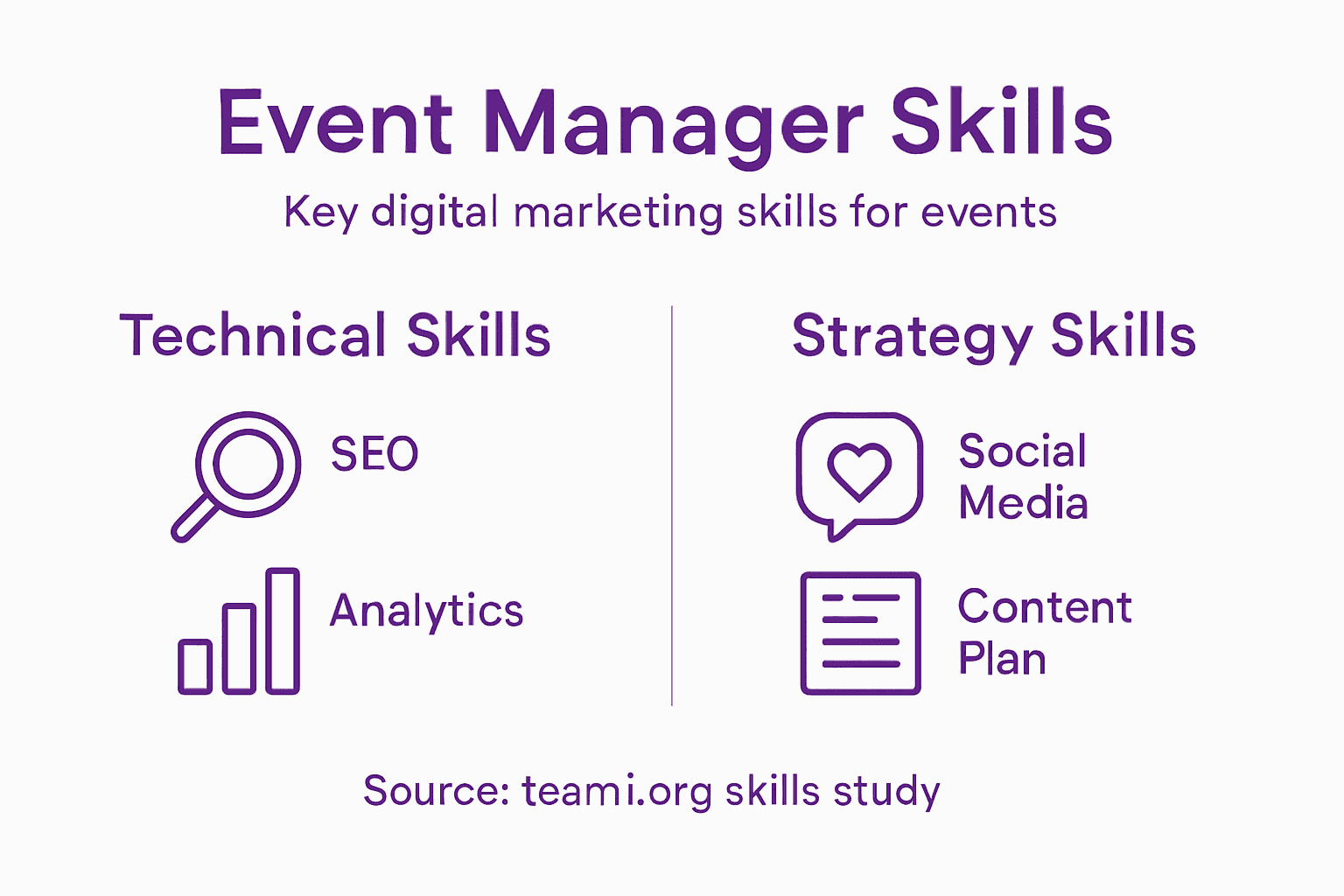
The essential skills for modern event managers include technical proficiencies and strategic capabilities. Technical skills such as search engine optimisation (SEO), data analytics, content creation, and social media management form the foundation of digital marketing expertise. Professionals must become proficient in using advanced tools like Google Analytics, social media insights platforms, and marketing automation software. Strategic skills involve understanding audience segmentation, developing targeted marketing campaigns, and creating compelling content that resonates with specific event demographics.
Digital marketing in event management requires continuous learning and adaptability. Event managers must stay current with emerging technologies, including artificial intelligence, machine learning, and advanced data analytics tools. This involves developing skills in interpreting complex data sets, creating personalised marketing experiences, and understanding how technological innovations can enhance event promotion and audience engagement. Soft skills are equally important, including creative problem-solving, communication abilities, and the capacity to develop innovative marketing strategies that cut through the digital noise.
Pro tip: Create a personal digital marketing portfolio that showcases your technical skills, demonstrating practical experience with analytics tools, content creation, and successful marketing campaigns.
Common Pitfalls and Emerging Trends
Event marketing professionals must navigate a complex landscape of challenges and technological shifts that can significantly impact their success. Common digital marketing challenges reveal critical areas where aspiring event managers must develop strategic awareness and adaptability.
The most prevalent pitfalls in digital event marketing include strategic overextension and insufficient audience research. Many event managers make critical errors by spreading resources too thin across multiple digital channels without a cohesive strategy. This approach leads to inconsistent messaging, diluted brand presence, and ineffective audience engagement. Successful professionals must focus on targeted, data-driven approaches that prioritise quality over quantity. Key mistakes include neglecting comprehensive audience segmentation, failing to leverage analytics effectively, and creating generic content that does not resonate with specific event demographics.
Emerging trends are reshaping the event marketing landscape, with technological innovations driving significant transformations. Artificial intelligence and machine learning are revolutionising audience targeting, enabling more personalised and predictive marketing strategies. Hybrid event models, combining physical and digital experiences, are becoming increasingly sophisticated. Event managers must develop skills in integrating emerging technologies, understanding complex data analytics, and creating seamless multi-platform experiences that meet evolving audience expectations. The ability to adapt quickly, embrace technological innovations, and maintain authentic audience connections will distinguish successful digital marketing professionals in the event management industry.
This summary outlines key emerging trends in event marketing with their impact on event careers:
| Trend | Impact on Events | Required Skillset |
|---|---|---|
| Artificial Intelligence | Advanced audience targeting | Data analysis, automation skills |
| Hybrid Event Models | Expanded global participation | Technical integration expertise |
| Predictive Analytics | Improved attendee personalisation | Statistical thinking |
| Multi-Platform Experiences | Increased engagement opportunities | Adaptability and communication |
Pro tip: Develop a quarterly skill audit that identifies technological gaps in your digital marketing capabilities, ensuring you remain proactive in learning and adapting to emerging industry trends.
Elevate Your Digital Marketing Skills for a Thriving Event Career
Mastering digital marketing skills is essential for aspiring event managers who want to stand out in today’s competitive landscape. The article highlights key challenges such as strategic audience segmentation, effective use of analytics tools, and creating targeted campaigns across social media, SEO, and email marketing. If you find yourself overwhelmed by the rapid pace of technological change or unsure how to design impactful, data-driven event promotions, you are not alone. Many event professionals struggle with integrating emerging trends like artificial intelligence and hybrid event models into their marketing strategies.
At team.i.org, we understand these challenges and have crafted specialised certification programs that provide practical training in digital marketing techniques tailored for event management. With over 23 years of industry experience and partnerships with DNA Entertainment Networks, our courses focus on hands-on projects, real event participation, and the latest tools such as Google Analytics and marketing automation software. Develop your skills in audience segmentation, content creation, and predictive analytics while getting industry-relevant exposure to accelerate your career growth. Explore our event management course offerings and discover how you can bridge the gap between theory and practice.
Don’t let digital marketing challenges hold you back from creating unforgettable event experiences and building a successful career. Take the first step today by connecting with us through team.i.org. Learn more about how our specialised training and placement support can help you master the essential skills and stand out in the event management industry.
Frequently Asked Questions
What are the essential digital marketing skills for aspiring event managers?
Aspiring event managers should develop skills in search engine optimisation (SEO), data analytics, content creation, social media management, and email marketing. These skills are crucial for effective audience engagement and promotion in the digital landscape.
How can I use social media effectively for event marketing?
Social media can be used for real-time audience engagement through visual storytelling and interactions. Event managers can create posts that highlight event features, share behind-the-scenes content, and engage with potential attendees to increase registrations.
What role does data analytics play in event digital marketing?
Data analytics helps event managers track audience behaviour, measure engagement, and refine marketing strategies. By understanding metrics such as registration patterns and attendee sentiment, event professionals can create more personalised marketing experiences.
What are common pitfalls to avoid in digital marketing for events?
Common pitfalls include spreading resources too thin across multiple channels, neglecting audience segmentation, and failing to leverage analytics effectively. Focus on a cohesive strategy that prioritises quality engagement over quantity.
Recommended
- Essential Event Marketing Strategies for Career Success – team I
- Top Event Management Skills for Success in 2025 – team I
- Future Workplace Skills: What Event Managers Need Now – team I
- 7 Jobs After Event Management to Boost Your Career – team I
- Die Neue Art Der DJ-Buchung: Digitale Revolution Für Unvergessliche Events