

More than 80 percent of british companies now invest in corporate wellness initiatives to boost staff well-being and drive performance. With workplace stress and mental health challenges on the rise, employers are realising that long-term success depends on supporting employees across every dimension of health. Discover how smart wellness programmes shape more engaged teams, reduce absenteeism, and help organisations thrive in today’s changing business environment.
Table of Contents
- Defining Corporate Wellness Programmes
- Types of Corporate Wellness Initiatives
- Benefits For Organisations And Employees
- Implementing Successful Wellness Strategies
- Measuring ROI And Overcoming Challenges
Key Takeaways
| Point | Details |
|---|---|
| Holistic Approach | Corporate wellness programmes focus on improving employee overall health through initiatives targeting physical, mental, and financial well-being. |
| Strategic Benefits | These programmes not only enhance employee satisfaction and retention but also drive organisational productivity and reduce healthcare costs. |
| Data-Driven Implementation | Successful wellness strategies leverage data analytics to create personalised programmes that align with the needs of individual employees. |
| Continuous Improvement | Regular assessment and adaptation of wellness initiatives are crucial to maintain engagement and effectiveness within the workplace. |
Defining Corporate Wellness Programmes
Corporate wellness programmes represent strategic, collaborative initiatives designed to support and enhance employee health and organisational performance. Workplace health promotion involves comprehensive efforts by employers, employees, and broader societal stakeholders to cultivate mental and physical well-being within professional environments.
These programmes extend far beyond traditional healthcare approaches. According to Wikipedia, they are structured initiatives targeting specific health concerns such as physical activity, stress management, smoking cessation, and nutrition. The core objective is promoting positive lifestyle and behaviour changes that simultaneously benefit individual employees and organisational productivity.
Typical corporate wellness programmes often incorporate multiple strategic elements:
- Comprehensive health screenings
- Mental health support services
- Fitness and exercise challenges
- Nutrition counselling
- Stress management workshops
- Work-life balance initiatives
By investing in holistic employee well-being, organisations create environments that nurture personal growth, reduce healthcare costs, and enhance overall workforce engagement.
 Corporate Training: Everything You Need to Know provides additional insights into developing effective workplace development strategies that complement wellness initiatives.
Successful programmes recognise that employee health is multidimensional, requiring integrated approaches that address physical, mental, and emotional dimensions of workplace wellness. This comprehensive perspective transforms wellness from a peripheral benefit to a core organisational strategy.
Types of Corporate Wellness Initiatives
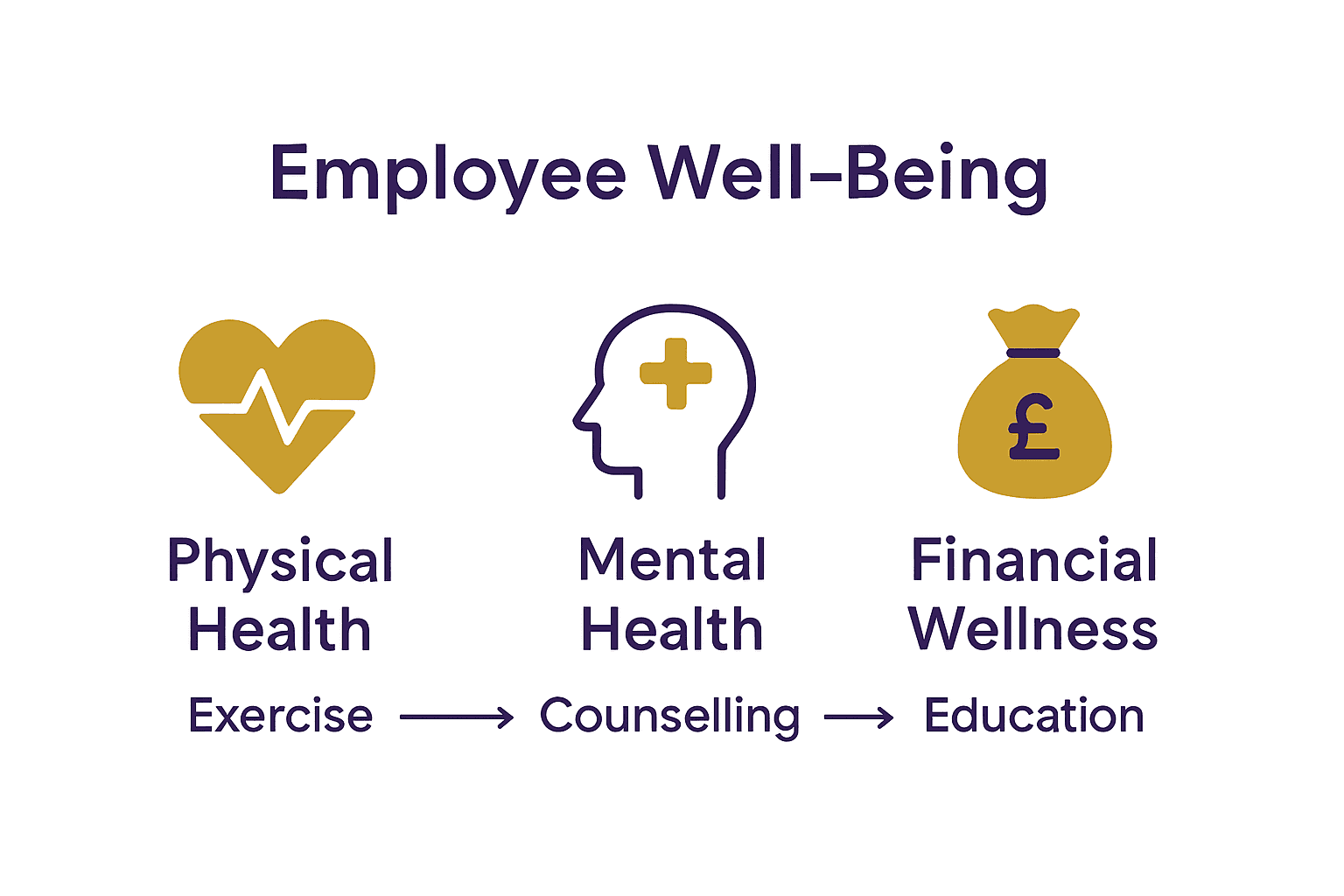
Corporate wellness initiatives represent a comprehensive approach to supporting employee health across multiple dimensions. Wellness360 highlights that these programmes encompass diverse strategies targeting mental health, physical fitness, nutrition, preventive healthcare, and financial well-being.
Modern organisations are increasingly adopting multifaceted wellness approaches. According to Wellness360, effective programmes incorporate personalised wellness budgets, social community engagement, preventive health screenings, and targeted financial education. By tailoring benefits to individual employee needs, companies can create more impactful and engaging wellness experiences.
Key types of corporate wellness initiatives include:
Physical Health Programmes
- Fitness centre memberships
- On-site exercise classes
- Health risk assessments
- Biometric screenings
Mental Health Support
- Counselling services
- Stress management workshops
- Meditation and mindfulness training
- Employee assistance programmes
Nutrition and Lifestyle
- Dietary counselling
- Healthy eating workshops
- Nutrition tracking apps
- Cooking demonstrations
Financial Wellness
- Financial planning seminars
- Retirement planning guidance
- Debt management resources
- Investment education
These comprehensive Types of Corporate Events demonstrate how modern organisations are reimagining employee support beyond traditional benefits. By addressing holistic well-being, companies can create more engaged, productive, and satisfied workforces.
Ultimately, successful corporate wellness initiatives recognise that employee health is complex and multidimensional.
 Organisations must continuously adapt their approaches, leveraging data-driven insights and employee feedback to design programmes that genuinely support individual and collective well-being.
Benefits for Organisations and Employees
Corporate wellness programmes represent a strategic investment that delivers substantial advantages for both organisations and their workforce. ArXiv Research demonstrates that implementing work-life balance initiatives, such as flexible working arrangements and comprehensive employee benefits, significantly enhances employee motivation, job satisfaction, and overall organisational performance.
From an organisational perspective, these programmes yield remarkable strategic advantages. According to ArXiv Research, companies can generate what researchers term positive workplace stress (eustress), which is associated with high-growth collaborative environments and can potentially increase company stock valuations over time. This suggests that well-designed wellness initiatives are not merely HR interventions but critical business strategies.
Benefits for Organisations:
- Reduced healthcare expenditure
- Enhanced employee productivity
- Lower recruitment and training costs
- Improved organisational reputation
- Increased employee retention rates
Benefits for Employees:
- Improved physical and mental health
- Better work-life balance
- Increased job satisfaction
- Personalised health management
- Reduced stress levels
The Stay Home, Stay Fit resource highlights how modern wellness programmes can adapt to changing workplace dynamics, offering flexible solutions that cater to diverse employee needs.
Ultimately, successful corporate wellness programmes create a symbiotic relationship where employee well-being directly correlates with organisational success. By investing in comprehensive, thoughtful wellness strategies, companies can cultivate healthier, more engaged, and more productive workforces.
Implementing Successful Wellness Strategies
Corporate wellness strategies require a comprehensive and nuanced approach that addresses multiple dimensions of employee health. PwC Research emphasises the critical importance of developing programmes that proactively prevent chronic diseases by targeting key risk factors such as physical inactivity, poor nutrition, and unhealthy lifestyle habits.
Technological innovations are transforming wellness programme implementation. ArXiv Research highlights emerging approaches like real-time stress detection algorithms and automated chatbot technologies that can be integrated into employee experience platforms. These advanced solutions offer personalised mental health support and can significantly reduce workplace attrition by providing tailored intervention strategies.
Key Steps for Successful Implementation:
- Comprehensive Assessment
- Conduct thorough health risk assessments
- Analyse current workforce health metrics
- Identify specific organisational wellness needs
- Customised Programme Design
- Develop targeted interventions
- Create personalised wellness pathways
- Ensure programme flexibility
- Technology Integration
- Implement digital health tracking
- Use data analytics for continuous improvement
- Provide accessible digital wellness resources
- Ongoing Evaluation
- Regular programme performance reviews
- Collect employee feedback
- Adapt strategies based on insights
The Types of Corporate Events resource offers additional insights into creating engaging workplace initiatives that complement wellness strategies.
Ultimately, successful wellness strategies are dynamic, employee-centric approaches that recognise individual needs while supporting broader organisational health objectives. By embracing innovative technologies, personalised interventions, and continuous improvement, companies can create transformative wellness ecosystems that benefit both employees and the organisation.
Measuring ROI and Overcoming Challenges
Corporate wellness programmes require robust measurement strategies to demonstrate their tangible value. ArXiv Research reveals that organisations implementing comprehensive work-family policies experience significant improvements in employee well-being and substantial reductions in workplace absenteeism, underscoring the critical importance of strategic measurement and evaluation.
Wikipedia highlights the Total Worker Health approach, which integrates comprehensive protection and promotion strategies to advance worker well-being. This holistic framework provides organisations with a structured methodology for assessing the multifaceted impacts of wellness initiatives beyond traditional metrics.
Key ROI Measurement Metrics:
- Healthcare cost reduction
- Employee productivity levels
- Absenteeism rates
- Employee engagement scores
- Staff retention percentages
- Workplace injury frequency
Challenges in Wellness Programme Implementation:
- Limited employee participation
- Budget constraints
- Measuring intangible benefits
- Developing personalised programmes
- Maintaining long-term engagement
- Technological integration complexities
Strategies for Overcoming Implementation Challenges:
- Conduct regular employee surveys
- Develop flexible, inclusive programmes
- Utilise data-driven insights
- Provide multiple engagement channels
- Demonstrate clear programme value
The Understanding Corporate Social Responsibility Events resource offers complementary insights into creating holistic workplace strategies.
Successful wellness programmes transcend simple metrics, creating comprehensive ecosystems that support employee well-being while delivering measurable organisational benefits. By adopting a nuanced, adaptive approach, companies can transform wellness from a peripheral initiative to a core strategic imperative.
Elevate Your Corporate Wellness Events with Expert Training
Corporate wellness programmes play a crucial role in fostering healthier and more engaged workforces. However, designing and implementing successful wellness initiatives can be challenging without the right knowledge and skills. From creating personalised wellness pathways to integrating technology for real-time support, professionals need comprehensive expertise to deliver impactful corporate wellness events.
At teami.org, we understand these challenges and offer specialised certification programmes tailored for aspiring and experienced event managers who want to master corporate wellness event planning. Our industry-backed courses, featuring practical projects and real event participation, empower you with the tools to design engaging wellness sessions that promote physical and mental well-being. Explore how you can transform your career with our focused training in corporate events by visiting Types of Corporate Events.
Don’t miss the opportunity to build rewarding skills that address key organisational goals such as employee retention and productivity. Take the next step to become a wellness event expert by connecting with us now at https://team-i-app-code-production.up.railway.app/api/go/wa?src=corporate-wellness-programmes-guide. Your journey towards creating powerful corporate wellness experiences starts here.
Frequently Asked Questions
What are corporate wellness programmes?
Corporate wellness programmes are strategic initiatives designed to enhance employee health and improve organisational performance. They focus on mental and physical well-being through various comprehensive health promotion efforts.
What types of initiatives are included in corporate wellness programmes?
Common initiatives include physical health programmes, mental health support, nutrition and lifestyle coaching, and financial wellness resources. These elements are tailored to address diverse employee needs and promote holistic well-being.
How can organisations measure the effectiveness of their wellness programmes?
Effectiveness can be measured using metrics such as healthcare cost reduction, employee productivity, absenteeism rates, and employee engagement scores. Regular evaluations and employee feedback are also crucial for assessing programme success.
What challenges do organisations face when implementing wellness programmes?
Challenges may include limited employee participation, budget constraints, and measuring intangible benefits. Companies must develop flexible and inclusive programmes while also maintaining long-term engagement to overcome these hurdles.
Recommended
- Corporate Training: Everything You Need to Know – team I
- Stay Home, Stay Fit – team I
- Types of Corporate Events: Essential Guide for 2025 – team I
- Corporate Event Planning Guide 2025: Steps, Skills, and Success – team I
- Complete Guide to School Staff Health Policies Canada – Probe IT
- Staff Health Screening Guide for Restaurants and Schools 2025 – Probe IT
Thinking about a career in event management?
team I is Bangalore’s only EEMA-certified event management institute, running for 24 years, where students work on real live events with real budgets and real deadlines rather than classroom simulations. See the full range of event management courses in Bangalore, or go straight to the flagship Certificate Program in Event Management (CPEM).