
Chasing a career in event management means juggling creativity and detailed organisation every single day. Bangalore’s thriving industry demands professionals who understand both Indian business requirements and global standards. If you’re looking to turn your passion for planning into success, mastering the strategic coordination of business events can unlock new opportunities and set you apart—whether you’re managing a corporate conference or launching a new product.
Table of Contents
- Defining Business Event Management Today
- Types of Business Events and Their Features
- Key Processes and Practical Skillsets
- Risks, Legalities, and Industry Standards
- Advancing Your Career in Event Management
Key Takeaways
| Point | Details |
|---|---|
| Strategic Coordination is Vital | Effective business event management requires blending project management with creative execution to meet specific organisational goals. |
| Understanding Event Types is Essential | Familiarity with various business event categories allows managers to tailor their approach to achieve desired outcomes. |
| Risk Management is Crucial | Comprehensive knowledge of potential risks and legal requirements is necessary to ensure successful event execution and participant safety. |
| Skill Development is Ongoing | Continuous growth in practical skills and industry knowledge is imperative for career advancement in the competitive event management landscape. |
Defining Business Event Management Today
Business event management is the strategic coordination of professional gatherings that range from intimate seminars to large-scale conferences. It combines project management principles with creative execution to deliver experiences that meet specific business objectives.
At its core, event management applies project management to create conferences, conventions, and corporate functions. The discipline extends far beyond simply booking a venue and sending invitations—it demands a comprehensive understanding of your client’s brand, target audience, and measurable outcomes.
Today’s business event managers must wear multiple hats simultaneously. You’re simultaneously a strategist, a problem-solver, and a logistics coordinator who keeps dozens of moving parts synchronized.
The Modern Scope of Business Events
Business events serve distinct purposes depending on organisational goals:
- Conferences and summits bring industry professionals together for knowledge sharing and networking
- Corporate workshops facilitate training, skill development, and internal team building
- Product launches introduce offerings to clients, media, and stakeholders with controlled messaging
- Trade shows and exhibitions create platforms for B2B connections and brand visibility
- Incentive events reward employee performance whilst strengthening company culture
Business event managers handle design, marketing, logistics, budgeting, and client service—making it one of the most demanding professions in the corporate world.
What Sets Business Events Apart
Unlike social events, business events have measurable outcomes tied to revenue, reputation, or operational goals. A wedding celebration succeeds if guests enjoy themselves. A corporate conference succeeds when attendees gain actionable insights, generate qualified leads, or strengthen professional relationships.
Professional event planners arrange every aspect of these gatherings—from securing optimal locations and managing transportation logistics to handling countless operational details that affect overall success. They work across offices and on-site throughout event execution.
In Bangalore’s rapidly expanding event industry, professionals managing business events must understand local vendor ecosystems, regulatory requirements for large gatherings, and the unique cultural context of Indian corporate environments. Whether you’re coordinating an IT summit at a five-star hotel or managing a tech conference at a convention centre, the fundamentals remain constant: strategic planning, precise execution, and flawless coordination.
The role demands someone who understands both the creative vision and the operational reality. Your budget spreadsheet matters as much as your creative concept. Your vendor relationships matter as much as your timeline.
Professional tip Begin every new business event by defining three measurable success metrics specific to your client’s objectives—whether that’s lead generation numbers, attendee satisfaction scores, or media impressions—then build your entire event plan backwards from those targets.
Types of Business Events and Their Features
Business events span a wide spectrum, each designed to achieve distinct organisational outcomes. Understanding the characteristics of each type helps you tailor your management approach and deliver what your client actually needs.
Business events encompass various types including corporate functions, experiential marketing initiatives, and fundraising activities. Each category features unique settings, objectives, and organisational requirements that demand different expertise and resources.
Corporate Events
Corporate events remain the backbone of business event management. These gather professionals around specific business objectives.
Conferences and seminars bring industry specialists together for knowledge sharing and professional development. You’re managing multi-day experiences with keynote speakers, breakout sessions, and networking opportunities.
Product launches introduce new offerings to clients, media, and stakeholders with carefully controlled messaging. The energy here is different—you’re building anticipation and generating buzz.
Team-building events strengthen internal relationships and company culture. These range from casual retreats to structured workshops designed to improve collaboration and morale.
Board meetings and shareholder gatherings demand precision, confidentiality, and formal protocols. These events have high-stakes outcomes affecting corporate governance and investor relations.
Specialised Business Event Categories
Beyond traditional corporate functions, several other categories require distinct management skills:
Here’s a concise summary of key business event types and their primary objectives:
| Event Type | Core Objective | Typical Audience |
|---|---|---|
| Conference/Summit | Knowledge exchange, networking | Industry professionals |
| Product Launch | Brand visibility, hype | Clients, media, stakeholders |
| Team-Building Event | Internal cohesion, morale | Employees, management |
| Board Meeting | Decision-making, governance | Executives, shareholders |
| Trade Show/Exhibition | Lead generation, partnerships | Business clients, vendors |
| Incentive Event | Employee reward, motivation | Staff, top performers |
| Award Ceremony/Gala | Prestige, recognition | Employees, clients |
| Hybrid/Virtual Conference | Accessibility, reach | Global, remote participants |
- Trade shows and exhibitions create B2B platforms where companies showcase products and generate qualified leads
- Award ceremonies and gala dinners celebrate achievements whilst building brand prestige and client relationships
- Incentive travel events reward top-performing employees whilst reinforcing company values
- Virtual and hybrid conferences blend in-person and digital experiences, expanding reach whilst managing technical complexity
Each event type demands different skill sets, timeline management, and vendor relationships—what works brilliantly for a product launch fails completely for a board meeting.
Key Differences in Planning Requirements
Corporate events require meticulous attention to detail that social events don’t. Your attendees aren’t there purely for enjoyment—they’re there to learn, network, or make business decisions.
Budget accountability matters differently too. Corporate clients track ROI, lead generation, and measurable outcomes. You’re not just counting happy faces; you’re tracking business impact.
Vendor selection changes based on event type. A conference needs experienced AV technicians and stage management specialists. A team-building retreat needs facilitators and experience designers. An awards ceremony needs entertainment production expertise.
In Bangalore’s competitive corporate event landscape, understanding these distinctions positions you as a strategic partner rather than simply an executor. You’re solving business problems through events.
Professional tip Create a simple one-page template for each event type you frequently manage—listing typical budgets, vendor categories, timeline phases, and common client objectives—so you start every new project with proven frameworks rather than beginning from scratch.
Key Processes and Practical Skillsets
Successful business event management requires mastery of interconnected processes and technical competencies. You can’t succeed by excelling at just one skill—you need a balanced toolkit that covers strategy, operations, and people management.
Core Management Processes
The Event Management Body of Knowledge outlines essential processes across project management, marketing, operations, and logistics domains. These form a structured framework for managing diverse event types effectively.
Your management foundation rests on several key processes:
- Planning and strategy involves defining event objectives, identifying target audiences, and establishing measurable success criteria before any logistics begin
- Stakeholder engagement requires constant communication with clients, vendors, team members, and attendees to align expectations throughout the event lifecycle
- Budget management demands precision—tracking expenses, managing vendor contracts, and controlling costs without compromising quality
- Operations coordination orchestrates venues, equipment, staffing, and timing to ensure everything functions seamlessly on event day
- Marketing and promotion builds awareness, generates registrations, and creates buzz amongst your target audience
Essential Practical Skillsets
Theory matters less than what you actually accomplish when problems emerge during event execution. Critical event management skills include event planning, marketing, logistics coordination, vendor management, and post-event evaluation.
You’ll need proficiency across these areas:
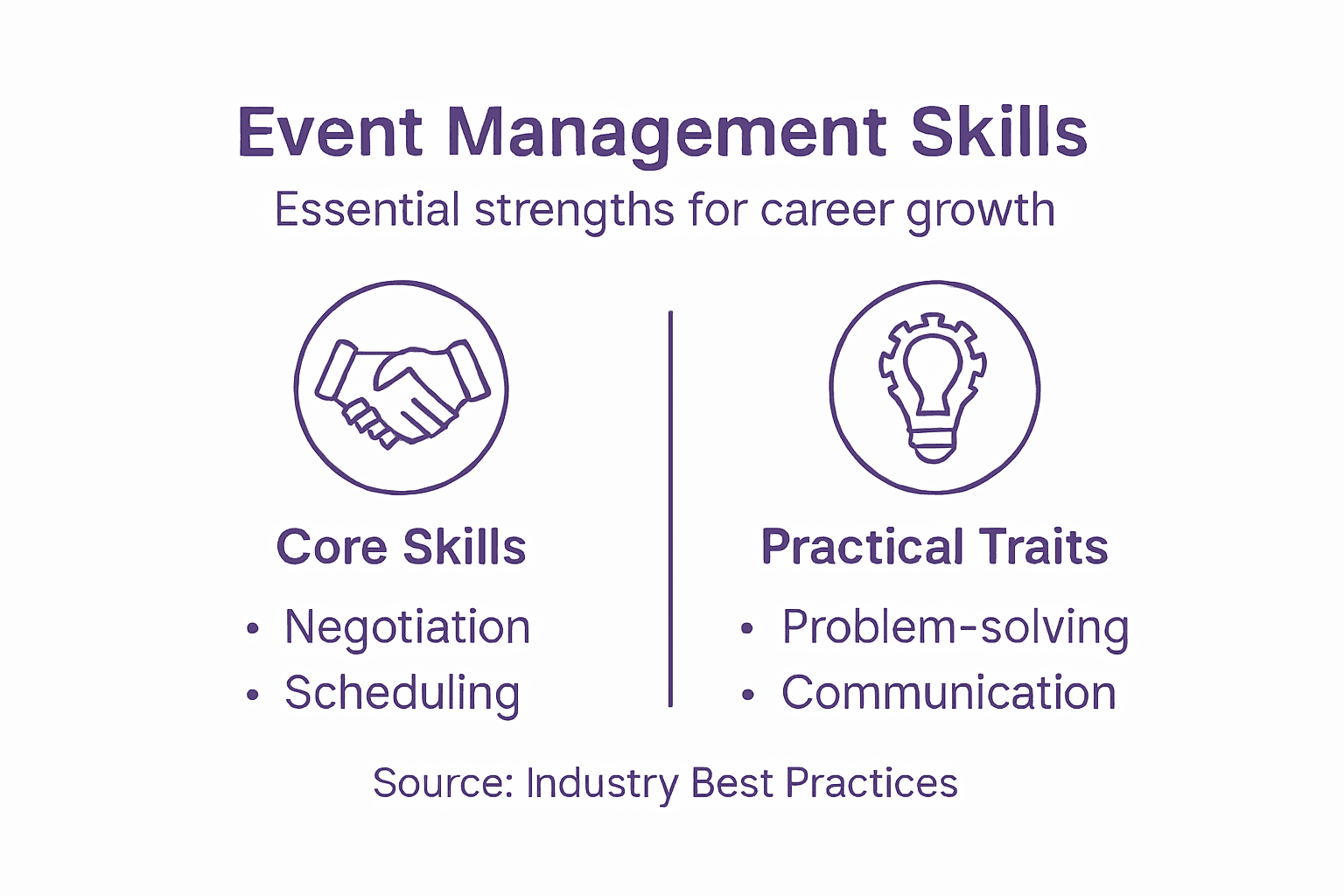
Negotiation and vendor management determines your budget reality. You’re securing venues, catering, audiovisual equipment, and creative services at prices that protect your profit margin whilst meeting client expectations.
Timeline and scheduling keeps chaos from consuming your event. You’re managing dozens of parallel tasks—vendor deliveries, staff onboarding, technical rehearsals, and guest logistics—so everything aligns perfectly.
Problem-solving under pressure separates capable managers from excellent ones. The speaker cancels two hours before their session. The catering arrives an hour late. The AV system fails during the keynote. Your ability to respond calmly and implement solutions determines whether attendees notice anything went wrong.
Communication skills matter across every interaction. You’re writing concise vendor briefs, delivering clear instructions to your team, explaining timelines to anxious clients, and managing attendee expectations throughout the event.
For quick reference, here’s a comparison of core skills versus their practical impact for business event managers:
| Skill Area | Practical Impact | Typical Situation |
|---|---|---|
| Negotiation & Vendor Management | Maximises value, controls costs | Defining contracts, securing venues |
| Timeline & Scheduling | Prevents delays, ensures alignment | Coordinating tasks, avoiding overlaps |
| Problem-Solving Under Pressure | Maintains event quality, saves reputation | Resolving last-minute crises |
| Communication | Facilitates teamwork, reduces confusion | Briefing staff, handling clients |
The most technically proficient event manager fails if they can’t communicate clearly or manage stakeholder expectations—these soft skills matter as much as operational expertise.
Building Your Skillset in Bangalore’s Market
Bangalore’s competitive event landscape demands professionals who understand both Indian business culture and international standards. Whether you’re managing a product launch for a multinational corporation or organising a conference at a Bangalore convention centre, you’re navigating complex vendor ecosystems, regulatory requirements, and cultural nuances.
Hands-on experience accelerates your skill development far more than theoretical study. Each event you manage teaches lessons that no classroom can replicate.
Professional tip Document your lessons learnt immediately after each event—what went wrong, what surprised you, what you’d do differently next time—then review these notes before starting your next project to avoid repeating mistakes and build cumulative expertise faster.
Risks, Legalities, and Industry Standards
Event management exists in a complex landscape where one oversight can transform success into liability. Understanding risks, legal requirements, and industry standards separates professionals from amateurs.
Understanding Event Risks
Risks in business events extend far beyond simple operational hiccups. You’re managing participant safety, financial exposure, reputational damage, and legal accountability simultaneously.
Common risk categories include:
- Safety hazards such as crowd crush, slips and falls, equipment failures, and fire code violations
- Health and sanitation risks including food poisoning, disease transmission, and inadequate medical support
- Financial risks from vendor cancellations, budget overruns, and inadequate insurance coverage
- Legal exposure including contracts disputes, intellectual property violations, and regulatory non-compliance
- Reputational damage from poor attendee experiences, security breaches, or public relations crises
Effective event risk management involves identifying, assessing, and mitigating threats through comprehensive risk assessments, emergency response planning, and insurance coverage.
Legal Compliance Requirements
Before your event begins, you must understand applicable laws and regulations. These vary significantly depending on event type, location, and participant numbers.
Key legal considerations include:
- Venue licensing and permits required by local authorities before hosting any gathering
- Duty of care obligations making you legally responsible for participant safety and wellbeing
- Accessibility requirements ensuring compliance with disability access legislation
- Data protection regulations governing how you collect and use attendee information
- Employment law covering contractor classification, worker safety, and insurance requirements
In India, business events must comply with local municipal regulations, fire safety codes, and labour laws. Your venue selection should always include verification of proper licences and certifications from local authorities in Bangalore or whichever city hosts your event.
Industry Standards and Best Practices
The Event Safety Alliance provides globally recognised standards addressing event safety, legal compliance, and risk management. Their guidance covers emergency planning, crowd control, fire safety, and health protocols.
Adopting industry standards demonstrates professionalism and protects your organisation:
- Establish written safety protocols that your entire team understands before event day
- Conduct emergency drills simulating realistic scenarios so your team responds calmly under pressure
- Maintain incident documentation recording what happened, how you responded, and what you’d change
- Partner with qualified security and medical personnel rather than relying on untrained staff
- Secure comprehensive event insurance covering liability, cancellation, and specific risks relevant to your event type
One serious incident can destroy years of professional reputation—the investment in proper risk management, legal compliance, and industry standards is the cheapest insurance you’ll ever purchase.
Legalities matter more in Bangalore’s regulated corporate environment where major conferences and product launches attract significant media attention. Regulatory oversights invite financial penalties and public embarrassment.
Professional tip Before confirming any venue, request written documentation proving they hold current fire safety certification, liability insurance, and proper licensing—then retain copies in your project file as evidence you conducted due diligence.
Advancing Your Career in Event Management
Your first event teaches you basics. Your fiftieth event teaches you wisdom. Career advancement in event management requires deliberate strategy beyond simply accumulating experience—you need intentional skill development, professional credentials, and strategic positioning.
Building Your Professional Foundation
Career advancement for event planners typically involves gaining experience, continuing education, and professional certification. The field offers growing job opportunities worldwide, with higher roles including event director or manager positions.
Your foundation rests on three pillars:
Practical experience comes from managing increasingly complex events. Start with smaller gatherings, then progress to larger conferences, multi-city tours, or events with higher budgets and stakeholder complexity. Each event teaches lessons that theory cannot replicate.
Professional credentials signal competence to employers and clients. Certification programmes demonstrate that you’ve mastered industry standards and best practices. In Bangalore’s competitive market, credentials differentiate you from self-taught competitors.
Continuous learning keeps you current as technology, client expectations, and industry standards evolve. Virtual event platforms, sustainability requirements, and data analytics have transformed event management in recent years.
Strategic Career Pathways
Event management careers follow several distinct trajectories. Understanding which path interests you shapes your skill development strategy.
Specialist pathway focuses deep expertise in one event type—corporate conferences, product launches, or award ceremonies. Specialists command premium rates because they understand nuances that generalists miss.
Generalist pathway builds broad capabilities across event types, making you adaptable and valuable to agencies managing diverse client portfolios. Generalists develop stronger project management and client relationship skills.
Leadership pathway moves from managing individual events to overseeing event teams, departments, or entire divisions. This requires developing management, budgeting, and strategic planning capabilities beyond execution skills.
Entrepreneurial pathway means launching your own event management agency or consultancy. This demands business acumen alongside event expertise—sales, financial management, and client acquisition matter as much as event execution.
The professionals earning highest salaries don’t simply execute events better than competitors—they solve more complex business problems and demonstrate measurable value to their organisations.
Building Your Professional Network
Your network becomes your competitive advantage. Industry connections lead to better job opportunities, vendor partnerships, and client referrals that drive career growth.
Active networking strategies include:
- Joining professional associations like the Indian Association of Event Managers or similar Bangalore-based groups
- Attending industry conferences and vendor showcases where you meet peers and potential clients
- Volunteering for committee roles that increase your visibility amongst industry leaders
- Mentoring junior event professionals, which builds your leadership credentials
In Bangalore’s thriving event industry, reputation compounds over time. Three years of excellent work generates referrals that accelerate your career more than any credentials alone.
Professional tip Create a development plan identifying one new skill to master each quarter—whether that’s advanced negotiation, sustainability certifications, or data analytics—then track your progress and celebrate milestones to stay motivated through long-term career building.
Elevate Your Career with Expert Business Event Management Training
Building the advanced skills and strategic know-how described in this article is essential for anyone serious about career growth in business event management. If you have faced challenges like mastering negotiation, managing tight timelines, or navigating the complexities of corporate event planning then specialised education can turn these pain points into strengths. Our comprehensive courses at teami.org focus precisely on the critical skill areas of negotiation, vendor management, risk mitigation and stakeholder communication to help you stand out in Bangalore’s competitive market.
Discover how you can transform your event management potential with practical training and industry-aligned certification programmes that deepen your expertise in corporate event types such as product launches, conferences and team-building activities. Take advantage of hands-on projects, internships and job placement opportunities through our collaboration with DNA Entertainment Networks to accelerate your professional journey.
Start your path today by exploring relevant insights in our Career in Event Management – team I section and expand your strategic skills with resources in Event Management – team I. Do not wait to unlock your full potential in this fast-evolving industry. Contact us now at https://team-i-app-code-production.up.railway.app/api/go/wa?src=business-event-management-skills-career to learn more about our flexible certification options and make your mark in business event management.
Frequently Asked Questions
What skills are essential for a successful career in business event management?
Key skills include negotiation and vendor management, timeline and scheduling, problem-solving under pressure, and effective communication. Mastering these skills helps ensure smooth event execution and client satisfaction.
How can I advance my career in business event management?
Advancing your career requires practical experience, obtaining professional credentials, and engaging in continuous learning. Networking within the industry also plays a crucial role in opening up new opportunities.
What types of events fall under business event management?
Business event management encompasses various types, including conferences, product launches, team-building events, trade shows, award ceremonies, and hybrid or virtual conferences, each with distinct objectives and planning requirements.
What legal considerations should I be aware of when planning a business event?
Key legal considerations include obtaining the appropriate venue licensing and permits, understanding duty of care obligations for participant safety, ensuring compliance with accessibility regulations, and protecting data privacy of attendees.
Recommended
- 7 Jobs After Event Management to Boost Your Career – team I
- Event Management Best Practices for Career Success – team I
- BLOG – team I – Page 2
- Event Management as a Career – team I
- Top 8 amin.dk Alternativer i 2026 for Eventplanlæggere i Danmark
Thinking about a career in event management?
team I is Bangalore’s only EEMA-certified event management institute, running for 24 years, where students work on real live events with real budgets and real deadlines rather than classroom simulations. See the full range of event management courses in Bangalore, or go straight to the flagship Certificate Program in Event Management (CPEM).