Most people who want to break into event management think the job is about booking venues, confirming caterers, and managing timelines. And yes, those things matter. But the professionals who actually build lasting careers in this industry know the real secret: your ability to communicate clearly, confidently, and under pressure is what separates a great event manager from a forgettable one. The Event Entertainment Management Association (EEMA) recognises this, which is why top certifications like the CPEM prioritise hands-on training alongside practical placement support. This article breaks down the core skills you need, the certifications worth pursuing, and how to put it all into action fast.
Table of Contents
- What makes event management successful today?
- Core communication skills every event manager needs
- How certification enhances your employability and practical skills
- From classroom to event floor: Applying your skills in real life
- The hidden edge: Why communication often defines success in event careers
- Kick-start your event management journey
- Frequently asked questions
Key Takeaways
| Point | Details |
|---|---|
| Hands-on learning matters | Practical training combined with certification is key to launching your event career. |
| Communication is crucial | Developing strong communication skills defines success in event management roles. |
| Right certifications boost jobs | Choose certified programmes that offer placements and real industry exposure for the best employment outcomes. |
| Apply skills early | Use every opportunity to practise your planning and communication skills during studies and internships. |
What makes event management successful today?
Event management is not a single skill. It is a living, breathing set of competencies that you apply simultaneously, often in real time, while a thousand things are happening around you. Think of it as controlled chaos with a very professional face.
At its core, event management as a career involves planning, execution, and stakeholder coordination across multiple moving parts. You are managing vendors, briefing teams, satisfying clients, and solving problems that were not in the brief. Every single one of those tasks requires communication. Not just talking, but communicating with precision.
Here is what a successful event manager brings to the table:
- Project management: Breaking large goals into timelines, budgets, and deliverables.
- Team coordination: Keeping everyone aligned, from the lighting crew to the client’s marketing team.
- Creative problem solving: Thinking on your feet when the sound system fails thirty minutes before showtime.
- Adaptability: Pivoting fast without losing your calm or your credibility.
- Communication: The thread that runs through every single point above.
“Hands-on training dramatically increases employability for event professionals, because the industry rewards those who have already been tested in real conditions, not just classroom ones.”
Pro Tip: Relationships are your real infrastructure. A vendor who trusts you will go the extra mile on the day. That trust is built entirely through consistent, clear communication over time.
Core communication skills every event manager needs
So what does “good communication” actually look like in event management? It is not just sounding confident in meetings. It is a bundle of specific abilities, each one useful in a different scenario.
Here is a breakdown of the five communication skills you need to develop, with real examples you will recognise:
Verbal clarity: You are briefing a team of fifteen people across different departments, thirty minutes before doors open. If your instructions are vague, things go wrong fast. Verbal clarity means saying exactly what needs to happen, who does it, and by when. No grey areas.
Persuasive writing: Imagine sending a sponsorship proposal to a major brand for a Bangalore music festival. A poorly written pitch loses the deal before anyone picks up the phone. Persuasive writing means structuring your message so the reader feels compelled to say yes.
Active listening: A client is explaining their vision for a corporate gala. If you are already thinking about the logistics while they are still speaking, you will miss the details that matter most to them. Active listening builds trust and prevents costly misunderstandings.
Crisis communication: Something always goes wrong. Always. The question is whether you communicate the problem calmly and with solutions, or whether you panic and make it worse. Crisis communication is a skill, and it can be practised.
Stakeholder updates: Clients, sponsors, venues, and vendors all need to feel informed without being overwhelmed. Knowing when to send a brief update versus a full report is a communication judgement call that improves with experience.
Developing effective communication at work is not optional in this industry. It is the engine behind every successful event.
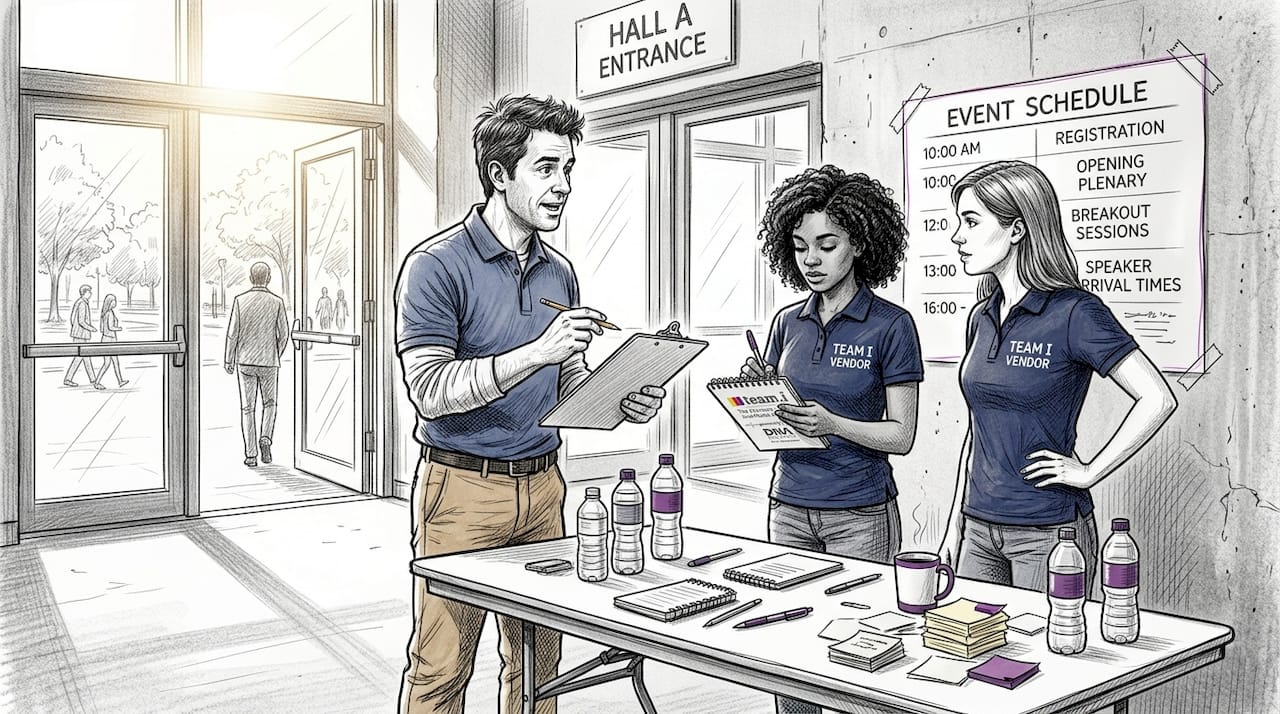
Pro Tip: Over-communicate with your key partners before the event, not during. When everyone knows the plan thoroughly in advance, the day runs smoother and you spend less time firefighting.
How certification enhances your employability and practical skills
Training gives you the knowledge. Certification gives you the credibility. And in a competitive job market, credibility opens doors that talent alone sometimes cannot.
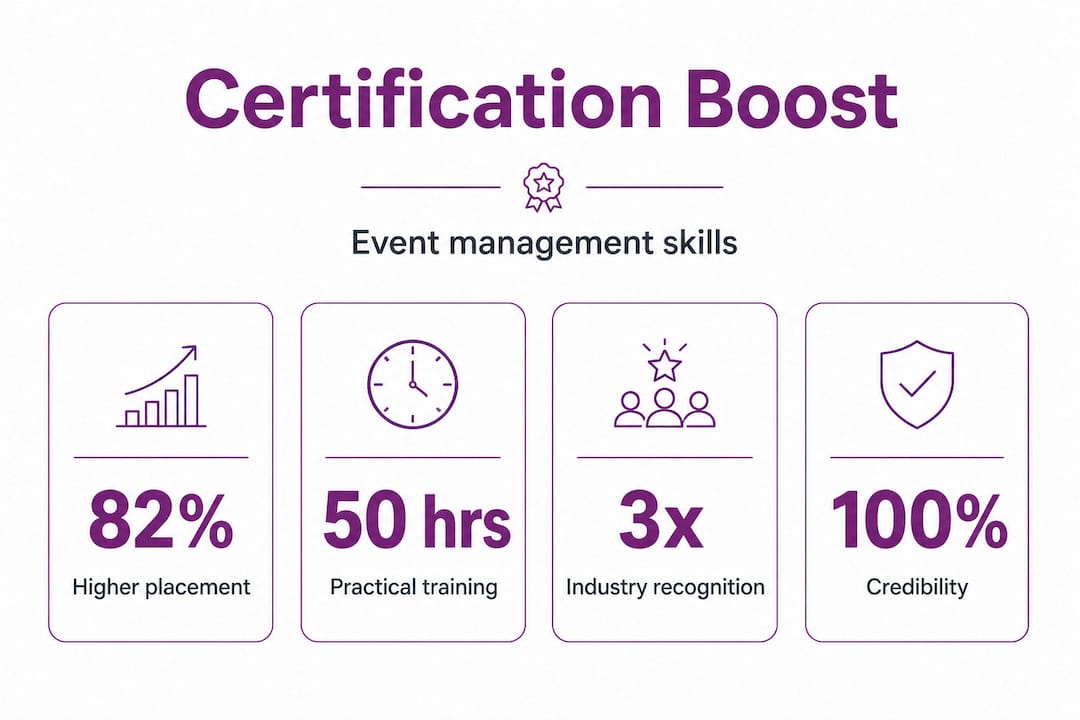
The importance of certification in event management goes beyond a piece of paper. Certified professionals report stronger placement outcomes, faster career progression, and more confidence when negotiating with clients. That is because a rigorous certification programme forces you to apply skills under real pressure, not just in theory.
When it comes to top event management certification courses in India, three names consistently stand out:
- CPEM by team I (EEMA-endorsed): A 10-month programme that includes industry placements, live project exposure, and mentorship from battle-tested professionals. This is the gold standard for serious aspirants.
- Vskills certification: Government-recognised and widely respected across industries. Ideal for those who want a credible qualification while building on existing work experience.
- NIEM diplomas: Strong regional reputation, solid curriculum, and structured pathways into event specialisations like weddings, sports, and corporate events.
Here is a quick event management certification free comparison across the three:
| Certification | Duration | Placement support | Practical modules | Industry recognition |
|---|---|---|---|---|
| CPEM by team I | 10 months | Yes, strong | Extensive, live events | EEMA-endorsed |
| Vskills | Self-paced | Limited | Moderate | Government-recognised |
| NIEM diploma | 1 to 2 years | Moderate | Good | Regional and national |
The CPEM stands out because it is EEMA-endorsed, meaning it carries the weight of India’s most influential event industry body behind it. That recognition matters enormously when you are walking into your first job interview.
Certified event professionals consistently see stronger placement rates compared to those with no formal qualification, particularly when their training includes real-world project exposure. The industry rewards people who have already been tested. Certification proves you have.
From classroom to event floor: Applying your skills in real life
Knowing things is one step. Doing things is another. The gap between the two is where most aspiring event managers struggle, and where smart ones accelerate.
Here is a practical, step-by-step approach to turning your certification and communication training into real career momentum:
Build a portfolio from day one. Every practical assignment, every mock event, every real project you touch during your training is portfolio material. Document it. Photograph it. Write up what you managed and what you learnt. Employers want evidence of action, not just qualifications.
Apply communication skills deliberately during events. Do not just execute tasks. Notice how you communicate under pressure. Did you brief your team clearly? Did you update the client proactively? Did you stay calm when something went sideways? Awareness turns experience into growth.
Seek structured feedback after every event. Not praise. Feedback. Ask your supervisor what you could have done better. Ask a colleague how your briefing came across. The people who grow fastest in this industry are the ones who actively seek honest critique.
Understanding jobs after event management requires you to look at the full picture: internships, placements, freelance projects, and event work experience all feed your profile and build the confidence that clients and employers respond to. For those considering further study, exploring event management courses after graduation can open up specialist pathways in sports, luxury, or corporate events.
Pro Tip: Keep a reflective journal during each event you work on. Note what worked, what did not, and what you would do differently. This habit will give you gold-standard material for job interviews and help you grow faster than your peers.
The hidden edge: Why communication often defines success in event careers
Here is the uncomfortable truth that most event management curricula do not say loudly enough: technical skills will get you hired, but communication skills will get you promoted, trusted, and rehired.
Think about it. You can teach someone the logistics of a showflow in a few weeks. You can run someone through vendor contract templates in a day. But teaching someone to stay calm while a VIP client is panicking backstage, to articulate a problem to a team of twelve in under two minutes, to write a post-event report that makes a sponsor want to renew immediately? That takes time, practice, and genuine self-awareness.
We have seen it play out repeatedly in the industry. Events that fall apart rarely do so because of a bad venue choice or a budget miscalculation. They fall apart because someone did not communicate a critical change to the right person at the right time. And events that go brilliantly, despite every obstacle, usually have a manager at the centre who kept everyone informed, calm, and focused.
Developing communication at work is not a soft skill afterthought. It is the hard edge that determines who leads and who follows in this industry. Start building it now, intentionally, not as a by-product of experience. The managers who treat communication as a core discipline are the ones who become the legends you hear about at industry events.
Kick-start your event management journey
If this article has got you thinking seriously about your next step, the right move is to get structured guidance. The event management course guide at teami.org walks you through everything from choosing your specialisation to understanding what employers actually look for. For those who need flexibility, the online event management courses let you build real skills around your current schedule. And when you are ready to put theory into practice, the event management work experience opportunities connect you directly to live events and industry placements. Your career does not start at graduation. It starts the moment you decide to take it seriously.
Frequently asked questions
Which certifications are best for event management in India?
The EEMA-endorsed CPEM, Vskills, and NIEM diplomas are among the strongest choices, particularly when placement support and hands-on practical training are priorities for you.
How do communication skills impact event management careers?
Strong communicators consistently secure more roles, handle crises with greater control, and build the kind of industry relationships that lead to repeat business and faster career growth.
Does practical training really help with job placements?
Certifications that include live project work and placement support significantly increase your chances of landing event jobs compared to purely theoretical qualifications.
Can I improve my communication skills during my event management studies?
Absolutely. The best event management programmes weave communication training directly into practical modules, giving you real scenarios to practise in, not just theory to absorb.
Recommended
- How to Improve Presentation Skills for Event Managers – team I
- Effective Communication at Work – Elevating Team Performance – team I
- Event Management and Public Relations: Skills and Success in 2025 – team I
- BLOG – team I – Page 2
- Organize campaign outreach and track activities efficiently
- More Than Just a Folder: Level Up Your Presentation Game | Honor U
Thinking about a career in event management?
team I is Bangalore’s only EEMA-certified event management institute, running for 24 years, where students work on real live events with real budgets and real deadlines rather than classroom simulations. See the full range of event management courses in Bangalore, or go straight to the flagship Certificate Program in Event Management (CPEM).