
Whether you’re arranging a mehendi ceremony in Bangalore or setting up a corporate awards night in Mumbai, the way a space looks and feels shapes the entire guest experience. Research shows that 78% of guests say atmosphere and decor determine whether an event succeeds or falls flat. That statistic surprises most first-time planners, who assume food and entertainment carry the weight. They don’t. Decor is the first thing guests see, the backdrop to every photograph, and the emotional signal that tells them this event was worth attending. These event decor basics will give you a proper foundation.
Table of Contents
- The core principles of event decor basics
- Lighting and florals: the real atmosphere-makers
- The step-by-step decor setup process
- Budget-friendly and sustainable decor ideas
- My honest take on event decor in India
- Start learning event decor the right way
- FAQ
The core principles of event decor basics
Good decor is not about spending more. It’s about making deliberate choices early. The three pillars that experienced planners return to again and again are theme selection, colour coordination, and smart budget allocation.
Choosing your theme with purpose
Your theme must connect directly to the event’s purpose and its guests. A product launch for a Bangalore tech firm calls for clean lines, minimal florals, and brand-aligned colour palettes. A North Indian wedding in Delhi wants drama, layered textures, marigolds, and jewel tones. Knowing your audience before you choose a single decoration is the single most important event styling tip you will ever get.
Colour coordination: the 60-30-10 rule
Colour is where most amateur planners go wrong. The 60-30-10 rule gives you a reliable framework: 60% dominant colour (walls, large furniture, draping), 30% secondary colour (table linens, floral arrangements, chair covers), and 10% accent colour (candles, centrepiece details, ribbon). Apply this to a corporate event and you might run with white at 60%, charcoal at 30%, and gold at 10%. The result feels intentional rather than chaotic.
Budget allocation: the 80/20 rule
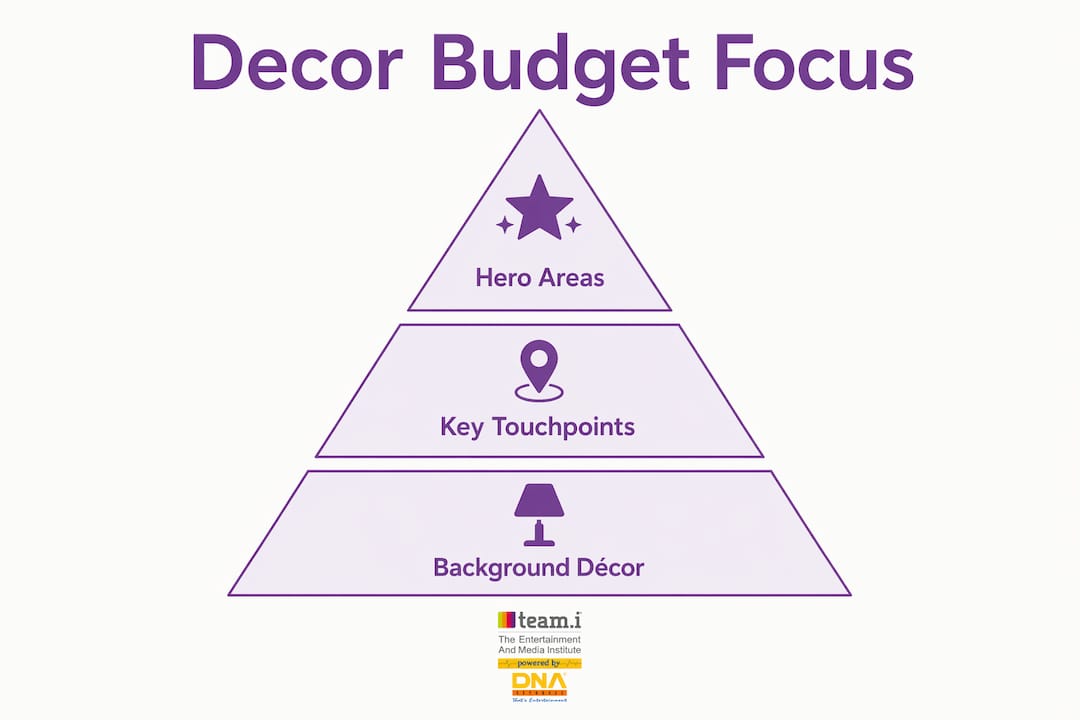
The 80/20 rule is non-negotiable when budgets are tight. Spend 80% of your decor budget on the 20% of the space that guests actually see and photograph: the entrance, the photo backdrop, and the main stage or head table. The remaining 20% covers everything else. At a Mumbai corporate event, this might mean a stunning branded arch at the entrance while the breakout tables stay simple. Guests remember the entrance. They photograph it. That’s where your money goes.
Pro Tip: When finalising your theme, pick three reference images of events you admire and identify what they have in common. That overlap is your design direction.
Lighting and florals: the real atmosphere-makers
Lighting is fundamentally underestimated by planners at every level. Correct lighting can make a basic banquet hall in Hyderabad look like a five-star venue. Poor lighting can ruin a beautifully decorated one.
Here is how the main lighting types break down:
| Lighting type | Effect | Best suited for |
|---|---|---|
| Uplighting | Washes walls in colour, creates depth | Large halls, corporate events, weddings |
| String lights | Warm, intimate glow | Outdoor weddings, garden parties |
| Pin-spot lighting | Directs focus to centrepieces or stage | Gala dinners, award nights |
| Gobo projections | Projects patterns or monograms | Branded corporate events |
Wireless LED uplights can transform an entire hall cost-effectively, with a full setup for a mid-size venue running considerably less than custom floral builds. For planners working with tighter budgets, LED uplighting gives the highest visual return per rupee spent.
The relationship between lighting and florals is where most planners trip up. Warm uplighting muddles cool-toned flowers. If your floral palette uses white lilies and lavender, a warm amber uplight will shift those colours towards yellow and brown in photographs. The fix is simple: confirm your lighting colour temperature with your florist before finalising either order.
For Indian events specifically, marigold, tuberose, and jasmine remain the most practical and cost-effective floral choices. They hold well in heat, photograph beautifully under warm light, and carry cultural significance at weddings and religious celebrations. Greenery from local nurseries in cities like Pune and Chennai can fill volume at a fraction of the cost of imported blooms.
Pro Tip: Always request a lighting test in the actual venue, ideally with a sample floral arrangement present. What looks perfect in the supplier’s showroom can look completely different under the venue’s existing ambient light.
The step-by-step decor setup process
Setup day is controlled chaos. The only way to keep it under control is a clear sequence and preparation for everything going wrong. Follow this order every time:
- Walk the venue fully before any decor arrives. Map the floor plan, identify power points, note ceiling heights, and flag any structural restrictions. Many older banquet halls in Delhi or Kolkata have columns that block sightlines. You need to know this before you start.
- Hang ceiling and overhead elements first. Draping, chandeliers, and suspended installations must go up before anything on the floor is in place. Trying to hang ceiling decor over dressed tables is the fastest way to cause damage.
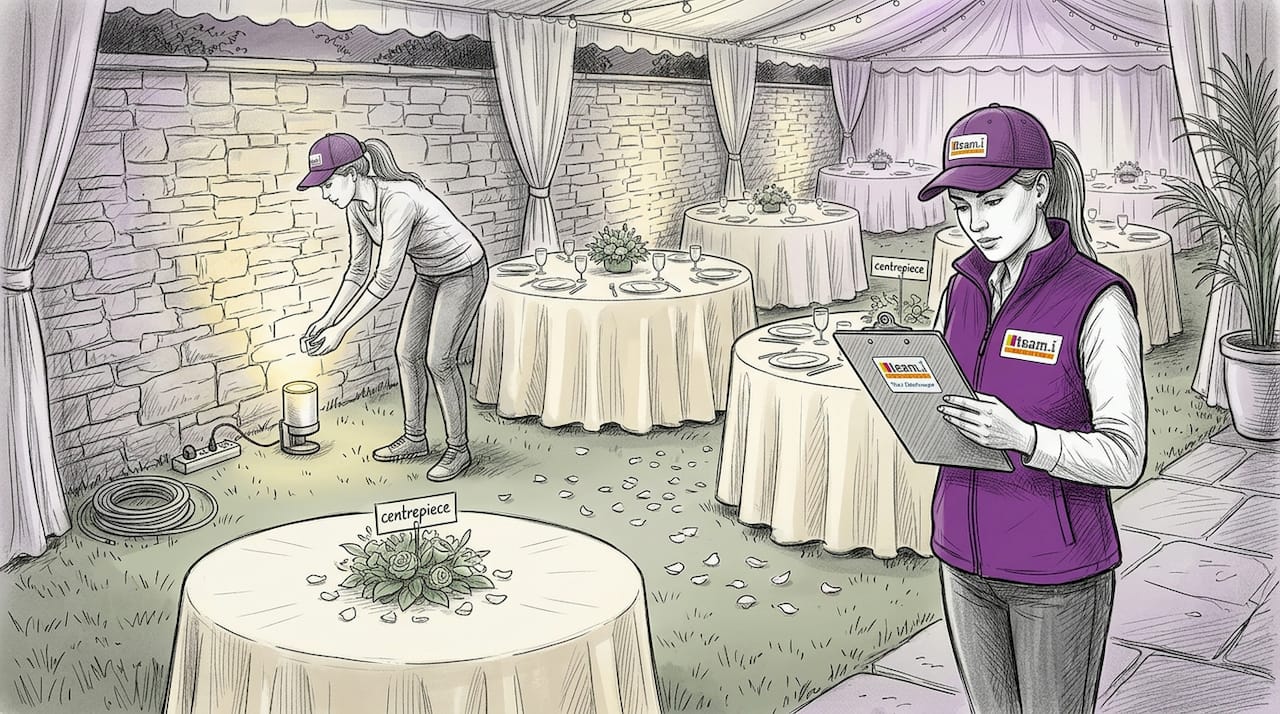
- Install all lighting rigs and cables. Tape down cables before any guest-area furniture is placed. A stray cable behind a chair leg will be tripped over.
- Bring in furniture and position it according to your floor plan. Do not move from plan unless the head planner approves it. Improvising layout on setup day creates sightline and crowd flow problems.
- Dress tabletops and place florals last. Centrepieces and fresh flowers go in at the end to preserve their condition.
On the safety side, always test hanging methods on venue walls well before the event. Many venues in India charge damage deposits and will penalise you for adhesive damage. Use the venue’s approved hanging method or Command strips rated for the weight you are suspending.
Latex balloons deflate within 12 hours indoors, so inflate them the morning of the event, not the night before. Foil balloons hold longer and are worth the extra cost for multi-day events.
Your emergency kit should contain safety pins, zip ties, a stain remover pen, spare batteries, a hot glue gun, and double-sided tape. At every large event, you will use at least three of these items before the doors open.
Budget-friendly and sustainable decor ideas
Sustainable decor is no longer a niche preference in India. Wedding planners in Mumbai and corporate event teams in Hyderabad are actively seeking reusable and biodegradable alternatives, driven by both environmental awareness and vendor rental economics.
Here are approaches that deliver quality without excessive spend:
- Fabric buntings made from cotton or jute can be reused across multiple events and sourced from local textile markets in Surat or Tirupur at very low cost.
- Photo buntings using printed images are deeply personal, require no expensive materials, and work brilliantly at milestone birthdays and anniversaries.
- Tissue paper pom-poms take under ten minutes to assemble and create strong visual volume when hung in clusters. They read beautifully in photographs.
- Potted plants as centrepieces replace cut flower arrangements that wilt within hours. Guests can take them home, and the event leaves a zero-waste footprint.
- Vendor rental for arches, pedestals, charger plates, and linen dramatically reduces per-event cost. Most cities now have dedicated event prop rental businesses. Building a relationship with one in your city pays dividends quickly.
The right place to splurge is lighting and one hero centrepiece per table. The right place to save is on background elements that guests never get close to. Understanding decor vendor management well enough to negotiate smartly is the skill that separates planners who stay on budget from those who don’t.
My honest take on event decor in India
I’ve watched decor plans fall apart because they were built entirely around aesthetics and never tested against practicality. The most common mistake I see is treating decor as an afterthought rather than a structural part of event planning.
Here’s the uncomfortable truth: beautiful decor that blocks a walkway, obscures a stage, or creates crowd congestion fails. Full stop. A towering floral arch is useless if it sits in front of the only emergency exit. Indian venues, especially older banquet halls, have quirky layouts that punish planners who don’t do a proper site visit.
Lighting is the one element I would never compromise on. I’ve seen bare venues transformed by nothing more than well-placed uplights and string lights, and I’ve seen heavily decorated spaces feel cold and flat because the lighting was neglected. If budget forces a choice between more flowers and better lighting, choose the lighting every single time.
Always have a plan B for outdoor decor. India’s weather, from pre-monsoon humidity in Chennai to unexpected dust storms in Delhi, does not care about your design vision. The planners who thrive long-term are the ones who walk in expecting something to go wrong and are ready when it does.
— Teami
Start learning event decor the right way
Understanding event decor basics is one thing. Executing them under pressure, within a real budget, and for real clients is an entirely different skill set. At Teami, that gap between theory and execution is where all the training happens.
Teami’s event management course covers everything from foundational decor principles to advanced styling techniques, with hands-on exposure through live events, industry projects, and internships across Bangalore and beyond. You won’t just learn how to decorate events. You’ll practise it on actual productions with real stakes.
If you prefer flexibility, the online event management programme gives you the same industry-connected curriculum you can work through on your own schedule. Browse the course options and see which path fits where you are right now.
FAQ
What are the most important event decor basics for beginners?
Start with theme, colour coordination, and lighting before spending on any individual decor items. The 60-30-10 colour rule and the 80/20 budget rule give you a reliable structure to build from.
How do I decorate an event on a tight budget?
Focus your budget on high-visibility areas like the entrance and photo zone, use vendor rentals for large items, and fill volume with DIY elements like tissue pom-poms and fabric buntings. Lighting consistently delivers the best visual return for money spent.
What is the correct order for setting up event decor?
Always start with ceiling and overhead elements, then lighting rigs, then furniture, and finish with tabletops and fresh florals. This sequence prevents damage and keeps the setup process moving efficiently.
Why does lighting matter so much in event decor?
Lighting shapes mood and colour perception more than almost any other decor element. The wrong colour temperature can distort floral palettes, flatten a beautifully designed space, and undermine every other decor decision you’ve made.
What should an event decor emergency kit contain?
A solid day-of emergency kit includes safety pins, zip ties, double-sided tape, a hot glue gun, spare batteries, and a stain remover pen. Experienced planners add a small sewing kit and gaffer tape for good measure.
Recommended
- Event Planning Checklist 2025: Step-by-Step Guide for Success – team I
- Life of an Event Planner: Complete Expert Guide – team I
- What is Event Planning? A Guide for Future Professionals 2025 – team I
- Event Logistics Planning: Essential Steps and Tips for 2025 – team I
Thinking about a career in event management?
team I is Bangalore’s only EEMA-certified event management institute, running for 24 years, where students work on real live events with real budgets and real deadlines rather than classroom simulations. See the full range of event management courses in Bangalore, or go straight to the flagship Certificate Program in Event Management (CPEM).