Think remote event management is just dragging a conference onto Zoom? Think again. Managing virtual events is a deeply strategic discipline that demands structured planning phases, sharp technology instincts, and the ability to keep a digital audience genuinely engaged. India’s events industry is expanding rapidly, and employers are actively hunting for trained professionals who understand the full lifecycle of a remote event. This guide covers the core phases, critical skills, and the practical experience you need to turn remote event expertise into a rewarding, fast-moving career.
Table of Contents
- What is remote event management?
- The three key phases of remote event management
- Choosing the right technology and tools
- Engagement and accessibility: what most new managers miss
- Building your career: training, certification, and hands-on experience
- Why practical experience matters more than theory in remote event management
- How to start your journey in remote event management
- Frequently asked questions
Key Takeaways
| Point | Details |
|---|---|
| Follow a structured process | Successful remote event management always uses pre-, during-, and post-event checklists. |
| Practical skills stand out | Hands-on experience with event technology, engagement tactics, and post-event analysis beats theory alone. |
| Engagement is critical | Strong audience interaction and accessibility are what drive memorable and repeatable remote events. |
| Certification opens doors | Credentials combined with real-world projects boost career opportunities for aspiring event managers. |
What is remote event management?
Remote event management is the strategic planning, execution, and evaluation of events hosted entirely on digital platforms. It is not a simplified version of in-person event management. It is a distinct discipline, with its own rules, rhythms, and skill set.
Think about what changes when an event goes virtual. Your venue becomes a platform. Your crowd becomes a stream of usernames. Your logistics shift from floor plans and catering orders to bandwidth checks and breakout room configurations. Understanding event management in media contexts makes it clear that the digital shift fundamentally rewires every role in the events team.
The core skills driving demand in remote event management include:
- Technology selection and platform setup: Knowing which tools work for which event types
- Digital audience engagement: Keeping attendees focused and interactive throughout
- Data monitoring: Reading live analytics and adjusting in real time
- Accessibility planning: Ensuring every attendee, regardless of device or ability, can fully participate
- Virtual team coordination: Managing speakers, sponsors, and crew across locations
“Structured phases and explicit technology-centric checklists are the backbone of professional remote event management. Without them, even experienced managers lose control fast.”
Understanding what event CRM means is also critical here. CRM tools help remote managers track attendees, communicate with sponsors, and manage post-event follow-ups, all from a single digital workspace. And when you look behind the scenes of event management, remote events have a whole invisible infrastructure that separates professionals from amateurs.
The three key phases of remote event management
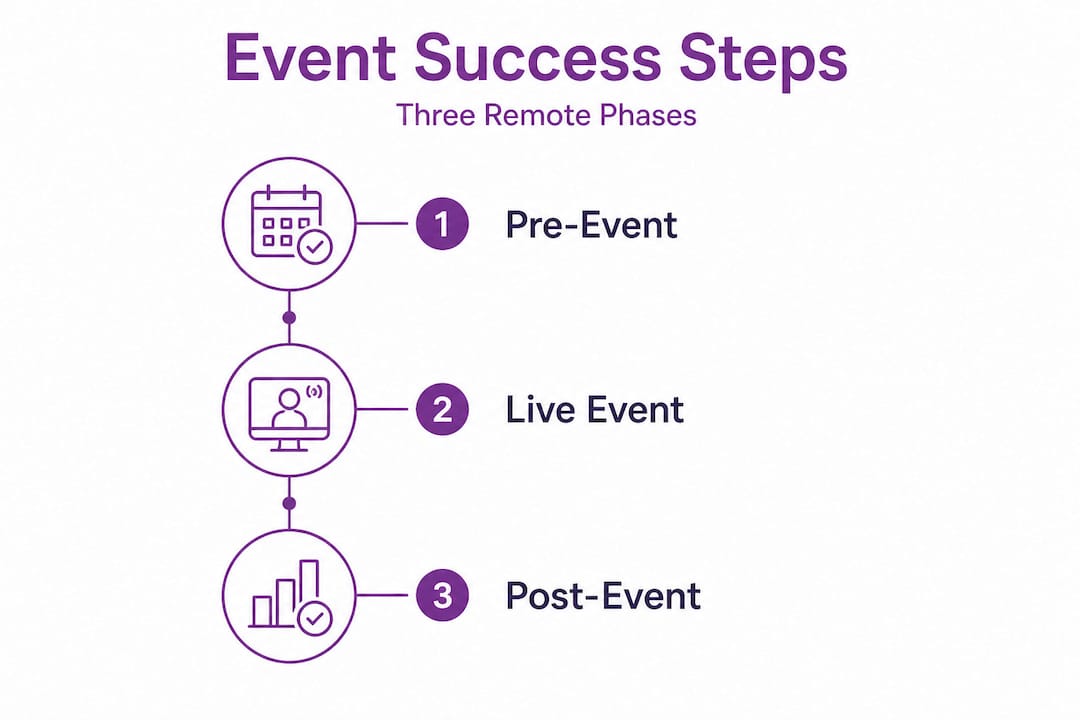
Successful remote event managers do not wing it. They follow a disciplined process built around pre-, during-, and post-event phases. Each stage is non-negotiable.
| Phase | Key tasks | Why it matters |
|---|---|---|
| Pre-event | Platform selection, speaker briefings, rehearsals, tech checks, promotion | Sets the foundation; prevents day-of disasters |
| During-event | Live troubleshooting, engagement moderation, sponsor visibility, accessibility monitoring | Keeps the audience engaged and delivers value in real time |
| Post-event | Analytics review, recording distribution, attendee feedback, sponsor reporting | Drives learning, proves ROI, and builds your professional reputation |
Here is how to approach each phase practically:
- Pre-event: Confirm your platform at least two weeks out. Brief every speaker with a dedicated technical rehearsal. Prepare contingency plans for common failures like audio drop-outs or screen-sharing errors.
- During-event: Assign a dedicated technical co-host who handles troubleshooting while you focus on the programme. Monitor the chat and Q&A actively. Keep sponsors visible through branded assets and shout-outs at scheduled intervals.
- Post-event: Pull your analytics immediately after the event closes. Gather structured attendee feedback within 24 hours. Produce a sponsor report with engagement data and attendance figures.
Pro Tip: Always log in at least 30 minutes before your event begins. This is not optional. Use the time to test audio, confirm slides are loading correctly, and give speakers a final confidence check.
Mastering these phases consistently is what separates reliable professionals from one-hit wonders. Study hybrid event best practices to understand how the same phase structure applies when part of your audience is physically present. And if you want the full picture, the complete professional guide to virtual event management is an excellent resource to bookmark now.
Choosing the right technology and tools
Having mapped the process, next comes arguably the most critical choice: which technology tools to use. Get this wrong and your pre-event preparation counts for nothing.
A good platform needs four things: reliability, ease of use, genuine interactivity features, and strong accessibility support. The rise of virtual concerts and large-scale digital gatherings has also pushed platforms to evolve rapidly, meaning your platform knowledge needs to stay current.
Here is a quick comparison of the three platforms most commonly used in India’s professional events market:
| Platform | Best for | Accessibility | Scale |
|---|---|---|---|
| Zoom | Webinars, workshops, corporate townhalls | Strong captioning, screen reader support | Up to 10,000 view-only attendees |
| Microsoft Teams | Corporate and internal events | Excellent, deeply integrated with Microsoft tools | Large enterprise scale |
| Hopin | Multi-session conferences, networking events | Good, with expo and networking features | Up to 100,000+ attendees |
Selecting the right platform is not just a logistical tick on a list. It directly affects sponsor satisfaction, because sponsors want visibility and engagement data. It shapes attendee experience, because a clunky interface drives drop-offs fast.
Knowing these tools deeply also matters when you sit in a job interview. Employers want to hear you say, “I ran a 500-person webinar on Hopin and managed the networking rooms.” That is a story. That is credibility. Understanding the future of event management makes it clear that technology fluency is now a baseline expectation, not a bonus skill.
Pro Tip: Before committing to any platform, always ask the vendor directly about accessibility features and live technical support availability. If they cannot answer clearly, look elsewhere.
Explore technology in event planning and learn how to approach running virtual events using the latest strategies to stay ahead of the curve.
Engagement and accessibility: what most new managers miss
With technology chosen, let us tackle the real difference-maker in virtual events: active, inclusive audience engagement. This is where most new managers stumble badly.
Virtual attention spans are short. A passive audience will check their phone within the first ten minutes. Your job is to make engagement unavoidable. Here are tactics that genuinely work:
- Live polls: Run them every 15 to 20 minutes to keep attendees mentally active
- Q&A sessions: Open these early and seed questions to reduce awkward silences
- Live chat moderation: Appoint a dedicated chat host to surface great comments and keep energy high
- Gamification: Leaderboards, quizzes, and prize draws create real competitive energy even through a screen
- Breakout rooms: Use them for networking and small-group discussions during longer events
Accessibility and live engagement are not optional extras. They are professional standards.
“Monitoring data in real time and prioritising accessibility is a non-negotiable step for any manager who wants repeat clients and genuine career momentum.”
Accessibility means live captions for attendees who are deaf or hard of hearing. It means ensuring your platform works on mobile devices, not just desktops. It means sending clear joining instructions three days before the event, not three hours before. Reviewing a solid remote event checklist will show you just how many accessibility steps experienced managers build into their standard workflow.
The payoff is direct. Strong engagement produces better feedback scores. Better feedback scores build your professional reputation. And a strong reputation in remote event management is genuinely rare among young professionals right now. Look at corporate event entertainment ideas for inspiration on bringing creative energy into virtual formats.
Building your career: training, certification, and hands-on experience
With a grip on best practice, here is how you turn remote event expertise into real career advancement. Knowledge is the starting point, not the finish line.
- Learn the fundamentals: Study event planning frameworks, platform options, and engagement best practices. Use structured resources, not just YouTube tutorials.
- Get certified: Choose a certification that includes practical assessments on real event platforms, not just multiple-choice tests.
- Shadow professionals: Reach out to working event managers and offer to assist on live virtual events. Observation is learning at its most vivid.
- Volunteer for campus or community events: Organising even a 50-person online seminar gives you something real to talk about in interviews.
- Reflect with structured feedback: After every event you work on, write a post-event review. Document what worked, what failed, and what you would change.
Pro Tip: Seek out courses and mentors who cover post-event analytics and sponsor value, not just the flashy day-of execution. Knowing how to produce a sponsor report separates serious professionals from enthusiastic beginners.
Practical experience and structured feedback are what build genuine employability in this field. Explore work experience for events management to understand what real-world exposure looks like and how to find it.
Why practical experience matters more than theory in remote event management
Here is an uncomfortable truth the industry rarely says out loud: a certificate on its own will not get you hired. What gets you hired is the story behind it.
Employers are not impressed by someone who scored perfectly on a theory test about platform selection. They are impressed by someone who says, “I managed the tech for a 300-person virtual conference, the main host’s audio dropped ten minutes in, and I had a backup plan running within 90 seconds.” That is battle-tested confidence. That is what a hiring manager remembers.
Professionals who volunteer, shadow, or actively seek professional event management guidance consistently outperform peers who rely only on classroom hours. The reason is simple. Remote event management involves controlled chaos. Platforms crash. Speakers freeze. Sponsors send last-minute requests. You only learn to handle those moments by actually living through them, not by reading a module about them.
The best thing you can do right now is find a real event, offer to help, and stay until the post-event debrief. That single experience will teach you more than a semester of theory.
How to start your journey in remote event management
Ready to put your learning into action? team I’s event management courses are built around the reality that practice is the theory. With 24 years of industry experience and live project exposure through DNA Entertainment Networks, team I gives you the kind of hands-on remote event training that actually shows up on your CV. Explore online event management courses designed specifically for young professionals and students across India. When you are ready to formalise your skills, event career certification from a recognised institute gives employers confidence and gives you momentum. Your career in remote event management starts with one real decision.
Frequently asked questions
What does a remote event manager actually do day-to-day?
A remote event manager plans, coordinates, and executes virtual events, manages technology, prepares speakers, monitors engagement, and analyses results to improve future events. Every day involves a mix of logistics, communication, and live problem-solving.
What certification is best for remote event management careers?
Look for certifications that offer both theory and practical assessments on real event platforms, as these produce the best results in India’s competitive market.
How do I get hands-on experience in remote event management?
You can volunteer for student organisations, assist with webinars, or intern with event companies running virtual programmes to build genuine, practical experience.
What technical skills are most important in remote event management?
Key skills include platform selection, troubleshooting, live data monitoring, and ensuring full accessibility for all participants across different devices and ability levels.
How does remote event management help my job search?
It demonstrates practical skills in digital communication, team coordination, and technology troubleshooting, which are among the most highly valued competencies for modern employers in India’s events and media industry.
Recommended
- Event Management Best Practices for Career Success – team I
- Virtual event management: Essential skills for aspiring managers – team I
- Events Management Work Experience: Pathways to Career Success – team I
- How to Start Event Management Career: Step-by-Step Guide – team I
- Remote audio collaboration tips for flawless results – Audome
- How to organize impactful coffee events step by step