

You’ve done everything right. You mapped every cost, negotiated vendor rates, built in a buffer, and triple-checked your spreadsheet. Then the event happens, and suddenly you’re £2,000 over budget with no clear explanation. Sound familiar? 65% of planners face budget overruns averaging 20%, often due to hidden fees, staffing overtime, and scope creep. For aspiring event managers working with tight budgets, these overruns aren’t just frustrating, they’re career-limiting. This article breaks down why event budgets spiral, identifies the specific traps that catch even experienced planners, and gives you battle-tested strategies to build, track, and protect your budget from start to finish.
Table of Contents
- Why event budgeting is so challenging
- The top causes of budget overruns in events
- Spotting hidden fees and managing scope creep
- Building a robust and realistic event budget
- Smart strategies for staying on track during the event
- What to do when your event goes over budget
- Advance your event management expertise and master budgeting
- Frequently asked questions
Key Takeaways
| Point | Details |
|---|---|
| Unexpected costs are common | Most planners face surprise expenses, making contingency budgeting essential. |
| Scope creep threatens budgets | Managing client changes and add-ons is key to preventing cost overruns. |
| Preparation and vigilance pay off | Thorough planning and real-time tracking greatly reduce overspending risk. |
| Professional training offers solutions | Learning advanced budgeting frameworks and networking with experts can prevent costly mistakes. |
Why event budgeting is so challenging
Event budgeting isn’t like planning a household expense. It’s dynamic, emotional, and subject to forces you can’t always control. Rising costs are the biggest challenge, with nearly 50% of event professionals identifying it as their top issue, alongside inflation cited by 27% of planners. Vendor rates shift. Clients change their minds. What looked affordable in January costs 15% more by June.
Then there’s scope creep. A client asks for “just one more speaker.” The venue suggests upgraded lighting. Suddenly, your carefully balanced budget has ten new line items you never planned for. Most beginners assume budgeting is about adding up costs and sticking to the total. In reality, it’s about anticipating the unpredictable and building systems that absorb shocks without collapsing.
“The biggest mistake new planners make is treating their budget as fixed. Events are living things. Your budget needs to breathe with them.”
Here’s where assumptions fail:
- Assuming vendor quotes are final (they rarely are)
- Underestimating setup and breakdown time (leading to overtime charges)
- Ignoring seasonal price fluctuations for venues and suppliers
- Failing to account for last-minute client requests
If you want to understand the full scope of challenges in event planning, you need to accept that budgeting is as much about psychology and negotiation as it is about spreadsheets. The event budget planning guide offers a structured approach, but the real skill is learning to adapt when reality diverges from the plan.
The top causes of budget overruns in events
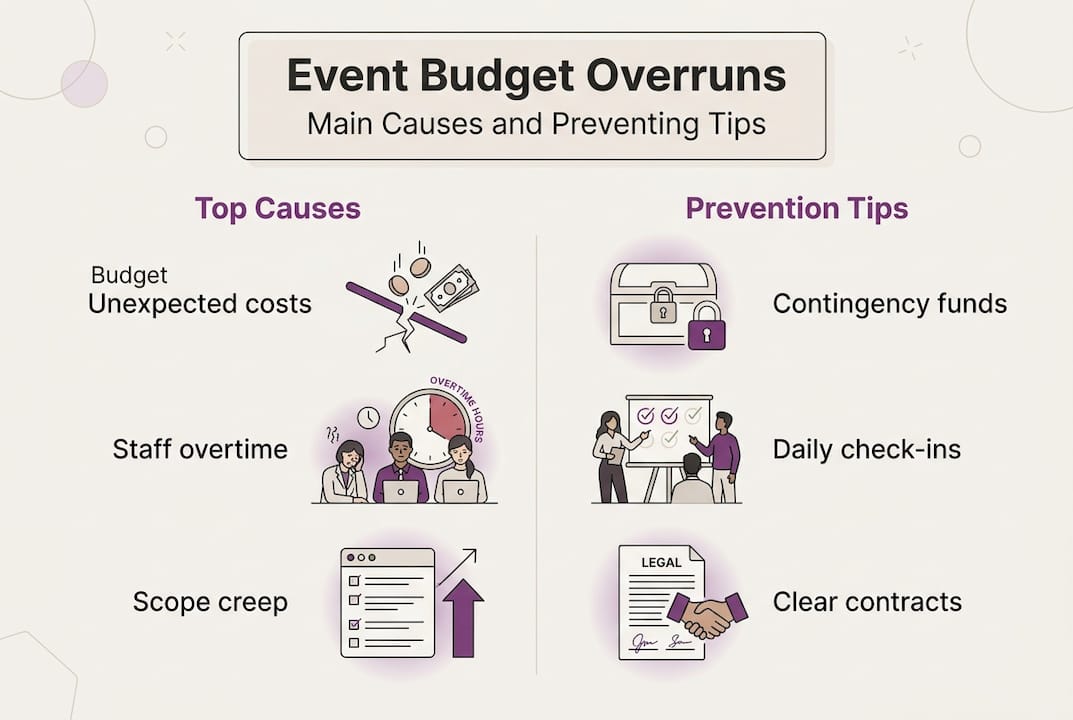
Let’s get specific. 55% of planners cite unexpected costs as the primary reason for overspending, leading to average overruns of 20-23%. These aren’t vague miscalculations. They’re identifiable, recurring problems that you can learn to spot and control.
Unexpected costs are the silent budget killers. A venue adds a “service charge” you didn’t see in the initial quote. Your AV supplier charges extra for cables you assumed were included. Insurance requirements change a week before the event, forcing you to upgrade your policy. These aren’t rare edge cases. They happen on nearly every event, and they add up fast.
Hidden fees come in many forms:
- Venue overtime charges (often triggered by setup delays)
- Equipment delivery fees not included in rental quotes
- Last-minute permit requirements for outdoor events
- Catering minimums that force you to order more than you need
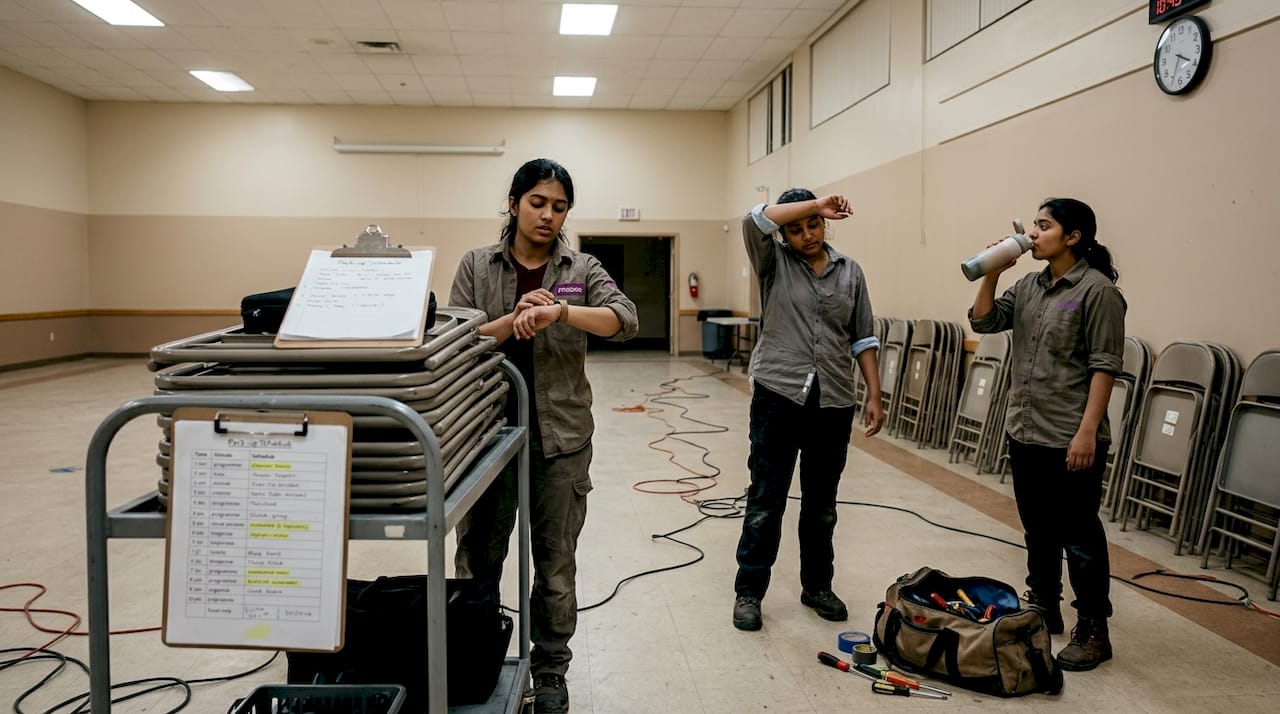
Staffing overtime is another major culprit. You budget for an eight-hour day, but setup takes ten hours. Your crew works through the night to fix a technical issue. Suddenly, you’re paying time-and-a-half rates you never planned for. 65% of planners face overruns averaging 20%, often due to hidden fees, staffing overtime, and scope creep.
Scope creep is the slow expansion of project requirements without a corresponding increase in budget. It starts innocently. A client asks if you can “just add” a photo booth. Then they want a live band instead of a DJ. Before you know it, you’ve added £5,000 in costs with no additional revenue to cover them.
| Cause | Typical Impact | Prevention Strategy |
|---|---|---|
| Unexpected costs | 10-15% overrun | Build 15-20% contingency |
| Hidden fees | 5-10% overrun | Request itemised quotes |
| Staffing overtime | 8-12% overrun | Add buffer hours to contracts |
| Scope creep | 15-25% overrun | Formalise change request process |
Understanding these causes is the first step. The next is learning to spot them before they derail your budget. If you’re feeling the pressure of managing these variables, you’re not alone. The experience of being an event manager involves constantly juggling competing demands, and learning to deal with event stress is part of the job.
Spotting hidden fees and managing scope creep
Hidden fees and scope creep are the two trickiest budget threats because they disguise themselves as normal business. A vendor doesn’t call an extra charge a “hidden fee.” They call it a “standard service charge” or “industry practice.” Scope creep doesn’t announce itself. It arrives as a friendly request that seems reasonable in isolation.
Hidden fees in action: You book a venue for £3,000. The contract mentions a “service charge,” but you assume it’s included. On the final invoice, you discover it’s an additional 18%, adding £540 you never budgeted for. Or your caterer quotes £25 per head, but the contract includes a 20% gratuity and a £200 delivery fee. Suddenly, your £2,500 catering budget is £3,200.
Scope creep warning signs:
- Clients using phrases like “just one more thing” or “while we’re at it”
- Requests that arrive via email or casual conversation rather than formal channels
- Changes framed as “small tweaks” that actually require new vendors or equipment
- Additions that don’t come with a discussion of budget impact
| Approach | Preventative | Reactive |
|---|---|---|
| Hidden fees | Request itemised quotes; ask “what’s not included?”; compare multiple vendors | Negotiate removal; reallocate from contingency; document for future |
| Scope creep | Formalise change request process; require written approval for additions | Assess impact immediately; present cost to client; offer alternatives |
Pro Tip: Make your contracts airtight by including a clause that requires written approval for any cost additions over £100. This forces vendors to disclose fees up front and gives you documentation if disputes arise later.
The key to managing these issues is vigilance and process. Don’t rely on memory or goodwill. Document everything. When a client requests a change, respond with a written summary of the cost and timeline impact. When a vendor provides a quote, ask explicitly what’s not included. These habits feel tedious at first, but they save you thousands. For more on overcoming planning challenges, focus on building systems that catch problems early. Understanding media industry trends can also help you anticipate where costs are likely to rise.
Building a robust and realistic event budget
A robust budget isn’t just a list of costs. It’s a strategic tool that anticipates risk, allocates resources intelligently, and gives you room to manoeuvre when things go wrong. Here’s how to build one that actually works.
Step 1: Map all cost areas. Start by listing every possible expense category: venue, catering, AV, staffing, marketing, insurance, permits, contingency. Then break each category into line items. Don’t estimate in round numbers. Research actual costs from vendors, and add 10-15% to account for price increases between planning and execution.
Step 2: Allocate contingency funds. Rising costs are the biggest challenge, with nearly 50% of event professionals identifying it as their top issue. Your contingency should be 15-20% of your total budget, not 5%. This isn’t pessimism. It’s realism. Most events encounter at least one significant unexpected cost. If you don’t have a buffer, you’ll either go over budget or compromise on quality.
Step 3: Track spending against your plan. Use a spreadsheet or budgeting tool that shows planned vs. actual costs in real time. Update it weekly during planning and daily during event week. This visibility lets you spot overruns early and make adjustments before they spiral.
Step 4: Separate non-negotiables from negotiables. Non-negotiables are costs you can’t reduce without fundamentally changing the event (venue, key speakers, essential equipment). Negotiables are areas where you have flexibility (décor, entertainment upgrades, premium catering options). When you need to cut costs, you know exactly where to look.
- Research and document all vendor quotes with itemised breakdowns
- Build your budget in a tool that allows scenario planning
- Identify three areas where you can cut 10-15% if needed
- Set up weekly budget review meetings with your team
- Create a change request form for any additions or modifications
Pro Tip: Separate your budget into “committed” and “uncommitted” columns. Committed costs are locked in with signed contracts. Uncommitted costs are planned but not yet finalised. This distinction helps you understand your true financial exposure at any moment.
For a detailed walkthrough of event planning steps, focus on building your budget as a living document that evolves with your event. The success tips for new professionals emphasise the importance of financial discipline from day one.
Smart strategies for staying on track during the event
You’ve built a solid budget. Now you need to work it. The execution phase is where most overruns happen, because the pace accelerates and decisions get made quickly. Here’s how to maintain control when everything is moving fast.
Use apps and tools for live tracking. Budget spreadsheets are fine for planning, but during the event, you need something faster. Mobile apps that sync across your team let you log expenses in real time and see your remaining budget at a glance. When a vendor asks for payment, you can check your budget on your phone and make an informed decision immediately.
Create check-ins and accountability measures. Schedule daily budget reviews during event week. Assign one person to track all spending and flag anything that exceeds planned amounts. This isn’t about micromanagement. It’s about creating a system where overspending gets caught and addressed within hours, not days.
Respond immediately to overspend alerts. 55% of planners cite unexpected costs as the primary reason for overspending. When you spot an overrun, don’t wait to see if it resolves itself. Assess the cause, determine if it’s justified, and either reallocate funds or find a cost to cut elsewhere. Speed matters. A £500 overrun caught early can be managed. A £2,000 overrun discovered after the event is a crisis.
Quick ways to cut non-essentials on the fly:
- Reduce décor or signage that’s purely aesthetic
- Scale back on premium catering options (swap champagne for prosecco)
- Eliminate optional entertainment or activities
- Negotiate shorter vendor hours if possible
The goal isn’t to slash your budget indiscriminately. It’s to make strategic trade-offs that preserve the event’s core value while controlling costs. Staying current with event industry trends helps you understand where costs are rising and where you have leverage. Learning what happens behind the scenes of event management gives you the confidence to make tough calls under pressure.
What to do when your event goes over budget
Even with perfect planning, some events go over budget. It happens. The question is how you respond. Quick, transparent action can turn a budget overrun into a learning opportunity rather than a career setback.
Immediate steps:
- Identify the exact cause and amount of the overrun
- Determine if any costs can be negotiated down or deferred
- Reallocate funds from lower-priority areas if possible
- Cut non-essential costs immediately to stop the bleeding
Communicate transparently with stakeholders. Don’t hide budget problems. If you’re working with a client, inform them as soon as you know there’s an issue. Present the facts, explain the cause, and offer solutions. Most clients appreciate honesty and will work with you to find a resolution. If you try to absorb the cost yourself or hide it until after the event, you damage trust and credibility.
Capture lessons and update future budgets. After the event, conduct a thorough budget post-mortem. What went wrong? What assumptions failed? What costs did you underestimate? Document these insights and use them to improve your next budget. 65% of planners face overruns averaging 20%, often due to hidden fees, staffing overtime, and scope creep. The difference between good planners and great ones is that great planners learn from every overrun and build that knowledge into their systems.
Pro Tip: Create a “lessons learnt” document after every event that includes budget variances, their causes, and specific actions to prevent them next time. Share this with your team so everyone benefits from the experience.
The success tips for new professionals emphasise resilience and continuous improvement. Budget overruns are part of the learning curve. What matters is how you respond and what you take forward.
Advance your event management expertise and master budgeting
You’ve now got the framework for understanding and controlling event budgets. But reading about budgeting and actually doing it under pressure are two different things. That’s where formal training and real-world experience make the difference.
Advanced courses give you more than theory. They put you in scenarios where you have to make budget decisions with incomplete information, negotiate with vendors who push back, and manage scope creep from demanding clients. You learn to spot the warning signs before they become problems. You build confidence in your ability to hold the line when someone asks for “just one more thing.”
Networking with experienced professionals accelerates your learning even faster. When you hear how a seasoned planner handled a £10,000 budget overrun or negotiated down a vendor’s hidden fees, you gain insights no textbook can provide. You learn the unwritten rules, the industry norms, and the tactics that actually work in the field.
If you’re serious about mastering event budgeting and building a career in this industry, explore the comprehensive event management course that covers financial planning, vendor negotiation, and risk management in depth. For those who need flexibility, online event management courses offer the same rigorous training with the convenience of learning at your own pace. And for specific guidance on building bulletproof budgets, the budget planning steps provide a detailed roadmap you can apply immediately.
Frequently asked questions
What is the most common reason events go over budget?
Unexpected costs such as hidden fees and last-minute changes are the leading cause of events going over budget, affecting 55% of planners.
How much do event budgets typically overrun?
Most event budgets overrun by about 20% due to unplanned expenses and scope creep, with 65% of planners experiencing this issue.
What can new event managers do to avoid hidden fees?
Carefully review all contract details, ask vendors up front about extra charges, and include a 15-20% contingency in your budget to absorb hidden fees when they arise.
Does inflation impact event budgets significantly?
Yes, rising prices and inflation continue to increase vendor and logistics costs across the industry, with 27% of planners citing it as a top challenge.