

Many Indian event managers believe the MICE industry is limited to glamorous international conferences. In reality, this sector involves a wide range of gatherings—corporate meetings, incentive trips, conventions, and exhibitions—that are shaping business and tourism across India. Understanding the diversity and complexity of MICE events will help you build relevant skills and discover career pathways far beyond ordinary event management roles.
Table of Contents
- Defining MICE Industry And Common Misconceptions
- Types Of MICE Events And Their Distinctions
- Core Components And How The MICE Sector Operates
- Essential Skills And Qualifications For MICE Professionals
- Opportunities, Challenges, And Industry Best Practices
Key Takeaways
| Point | Details |
|---|---|
| Understanding the MICE Scope | The MICE industry includes Meetings, Incentives, Conventions, and Exhibitions, encompassing diverse events beyond large conferences. |
| Debunking Common Myths | MICE is not solely focused on big events or venue booking; it involves comprehensive event management and diverse formats. |
| Emerging Opportunities | The sector offers growth through global expansion, technology-driven innovations, and increasing demand for sustainable events. |
| Essential Skills for Success | Professionals need a blend of hard and soft skills, including project management, negotiation, communication, and adaptability to excel in the industry. |
Defining MICE Industry and Common Misconceptions
The MICE industry stands for Meetings, Incentives, Conventions, and Exhibitions. It’s a fast-growing global sector that organises professional, business, cultural, and academic events of all sizes.
Many people think MICE is just about large conferences in fancy hotels. That’s only part of the story. The industry actually encompasses a much broader range of activities and opportunities.
What MICE Actually Includes
MICE covers four main pillars:
Meetings: Corporate gatherings, team workshops, board meetings, and professional forums where businesses connect and collaborate.
Incentives: Reward programmes and trips designed to motivate employees or recognise achievements. Think sales team rewards or loyalty events.
Conventions: Large-scale gatherings of professionals in specific industries. Medical conferences, legal seminars, and trade association meetings fall here.
Exhibitions: Trade shows, expos, and product launches where companies showcase offerings to potential clients and industry peers.
But here’s what matters: MICE definitions vary significantly depending on context, organiser perspective, and target audience. The sector uses alternative acronyms like MEEC (Meetings, Events, Exhibitions, Conventions) or C&E (Conferences and Events) to reflect this diversity.
Common Misconceptions Debunked
Misconception 1: MICE is only about big events. Wrong. The industry includes intimate corporate dinners, small-scale training sessions, and niche industry meetups alongside massive international conventions.
Misconception 2: MICE professionals just book venues. Not even close. Event managers handle vendor negotiations, crowd flow logistics, budgeting, risk management, creative design, technology integration, and stakeholder communication.
Misconception 3: It’s a declining industry. Actually, the MICE sector remains vital and resilient, contributing significantly to global economies and travel sectors despite challenges like recent disruptions.
Misconception 4: MICE is purely corporate entertainment. The industry bridges professional development, business growth, cultural exchange, and academic advancement. It’s serious work.
Understanding these distinctions matters for your career. Indian event managers increasingly recognise that MICE skills—vendor management, logistics, negotiation, and client relations—are transferable across wedding events, social gatherings, and sports events.
The MICE industry isn’t narrow or declining; it’s diverse, essential, and constantly evolving with new opportunities for skilled professionals.
Pro tip: When exploring MICE roles in India, look beyond job titles. A “conference coordinator” role at a Delhi business summit teaches you exactly the same negotiation and logistics skills you’d use managing a Mumbai wedding or Bangalore product launch.
Types of MICE Events and Their Distinctions
Each letter in MICE represents a distinct event type with unique purposes, formats, and organisational needs. Understanding these differences is crucial for building a career in event management.
Think of MICE as four different branches of professional events, not variations on the same theme. Each requires specific skills and knowledge.
To clarify the differences within the MICE industry, consider this comparison of each event type:
| Event Type | Primary Purpose | Audience Size | Typical Venue |
|---|---|---|---|
| Meetings | Strategic decision-making | Small to medium | Boardrooms, meeting rooms |
| Incentives | Employee recognition | Small groups | Resorts, luxury destinations |
| Conferences | Knowledge sharing | Medium to large | Convention centres, hotels |
| Exhibitions | Business showcasing | Medium to very large | Exhibition halls, expo parks |
Meetings: Strategic Decision-Making Gatherings
Meetings are collaborative events where professionals gather to discuss strategy, solve problems, or share updates. These are typically smaller than conferences and highly focused.
Common examples include:
Board meetings and executive strategy sessions
Team workshops and departmental briefings
Client pitch meetings and supplier negotiations
Professional association gatherings
Meetings usually last a few hours to a full day. They prioritise interaction and decision-making over formal presentation. As an event manager, you’ll handle logistics, catering, audio-visual setup, and creating an environment conducive to productive discussions.
Incentive Travel: Employee Motivation and Rewards
Incentive events are luxury experiences designed to reward and motivate employees for achieving targets or demonstrating excellence. These combine travel, accommodation, and entertainment into memorable packages.
Typical incentive events include:
Sales team reward trips following record-breaking quarters
Employee recognition tours to premium destinations
Loyalty programmes for long-serving staff members
Achievement celebrations combining work and leisure
Incentive travel requires exceptional attention to detail. You’re orchestrating not just an event, but an entire experience. Indian companies frequently use destinations like Goa, Kerala, and Rajasthan for domestic incentive programmes, whilst international trips to Southeast Asia and Europe are common for top performers.
Conferences: Large-Scale Knowledge Sharing
Conferences bring together professionals from the same industry to share knowledge, discuss trends, and build networks. These are typically large-scale, multi-day events with keynote speakers, breakout sessions, and exhibition areas.
Conference characteristics include:
Multiple parallel sessions allowing attendees to choose topics
Prominent industry speakers and thought leaders
Networking events and social programmes
Often held annually in specific cities
India hosts major conferences in technology, healthcare, finance, and hospitality sectors. The distinct purposes and formats of MICE events require conference managers to coordinate venue logistics, speaker management, session scheduling, and registration systems simultaneously.
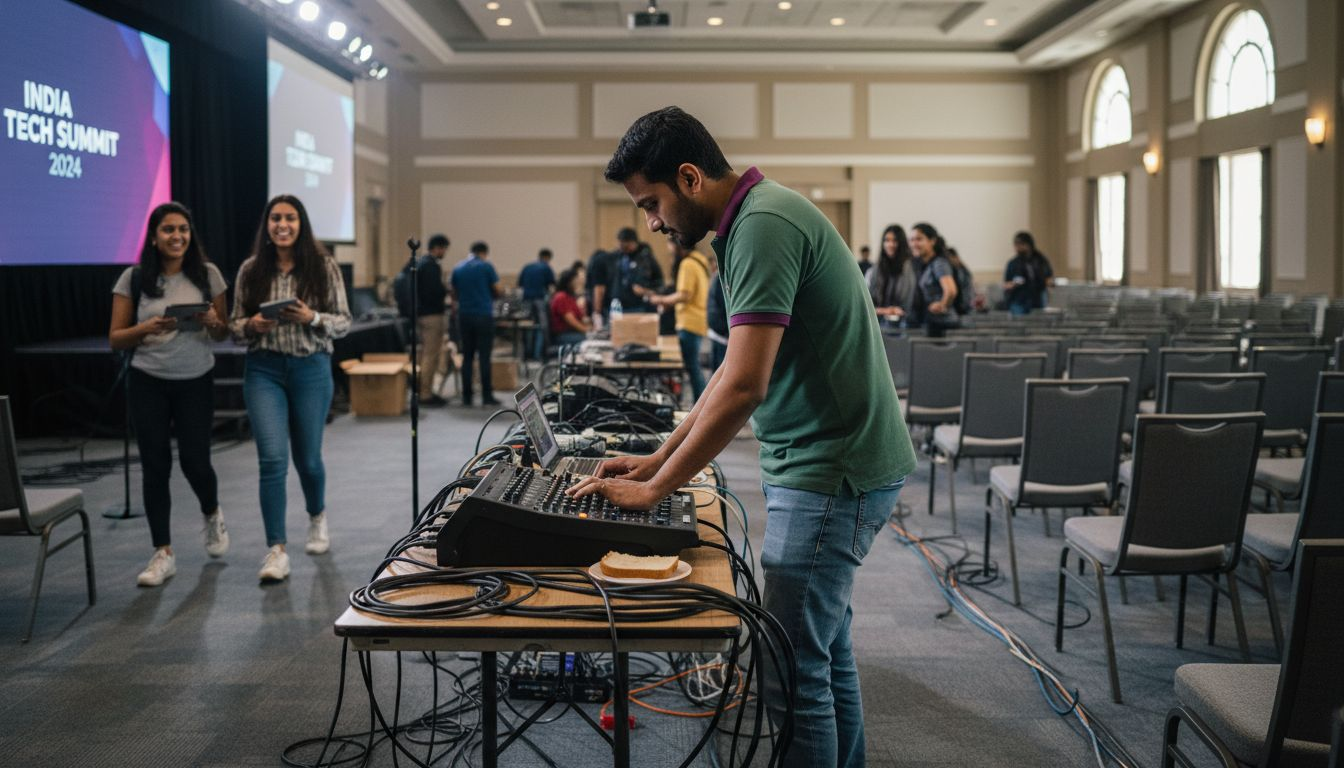
Exhibitions: Business Expansion Platforms
Exhibitions are trade shows where companies showcase products and services to potential clients, partners, and investors. Booths, demonstrations, and networking are central to the experience.
Exhibition examples:
Technology expos and product launches
Trade fairs for specific industries
Consumer shows and shopping festivals
Career fairs and recruitment exhibitions
Exhibitions demand expertise in booth coordination, vendor management, crowd flow planning, and security. Major Indian cities like Mumbai, Delhi, and Bangalore host significant annual exhibitions attracting thousands of visitors.
Each MICE event type demands different skill sets, timelines, and management approaches. Success requires understanding these distinctions deeply.
Pro tip: Start your career by shadowing professionals managing different MICE event types. A conference coordinator role teaches you systems thinking; an incentive travel role teaches luxury service standards; exhibition work teaches vendor negotiation. Each skill transfers across all event types.
Core Components and How the MICE Sector Operates
The MICE sector operates as an interconnected system where multiple stakeholders collaborate seamlessly. Understanding how these components work together is essential for launching a successful career in event management.
Think of it like an orchestra: each player has a specific role, but the final performance depends on perfect coordination.
The Key Operational Components
Successful MICE events require attention to numerous interconnected elements:
Planning and budgeting: Defining objectives, timelines, and financial parameters before anything else moves forward.
Site selection and logistics: Choosing appropriate venues and arranging transportation, accommodation, and catering.
Permits and regulatory compliance: Obtaining necessary approvals from local authorities and ensuring legal requirements are met.
Safety and contingency planning: Developing risk management strategies and backup plans for unexpected situations.
Technology and audio-visual setup: Managing registration systems, live streaming, sound, lighting, and presentation equipment.
The MICE sector’s operational framework integrates these elements seamlessly, ensuring each event runs smoothly regardless of size or complexity.
The Stakeholder Network
MICE events succeed through collaboration among diverse players. Each brings specific expertise and resources.
Key stakeholders include:
Event organisers: Professionals like you, managing the entire operation from conception to execution.
Venue partners: Hotels, conference centres, and exhibition spaces providing physical infrastructure.
Hospitality providers: Catering companies, accommodation services, and food and beverage specialists.
Transportation partners: Airlines, coaches, and local transport providers ensuring attendee movement.
Technology vendors: Audio-visual companies, registration platforms, and event management software providers.
Participants and attendees: The clients, employees, or industry professionals attending the event.
In India, many event management companies partner with hospitality groups across major cities. Bangalore, Mumbai, and Delhi have established networks of venues and suppliers familiar with MICE operations.
How Operations Flow in Practice
MICE events follow a structured operational sequence. The initial phases focus on planning and vendor selection. Middle phases handle logistics coordination and participant communication. Final phases manage execution, attendee experience, and crisis management.
During a Bangalore technology conference, for example, the organiser coordinates with the venue on setup, works with caterers on meal planning, manages speaker logistics with airlines, handles registration through a dedicated platform, and ensures security through trained personnel.
Successful MICE operations depend on detailed planning, clear communication channels, and flexibility to adapt when circumstances change.
This sector’s efficiency directly impacts India’s tourism and hospitality sectors. A well-executed conference brings hundreds of visitors to a city, boosting hotel bookings, restaurant revenue, and transportation services.
Pro tip: Build relationships with three to five reliable vendors in your city—a preferred caterer, audio-visual company, and transport provider. When you understand their capabilities and limitations, you can manage timelines more effectively and negotiate better rates for your clients.
Essential Skills and Qualifications for MICE Professionals
Successful MICE professionals aren’t born—they’re built. The industry demands a rare combination of creative thinking, logistical precision, and genuine people skills.
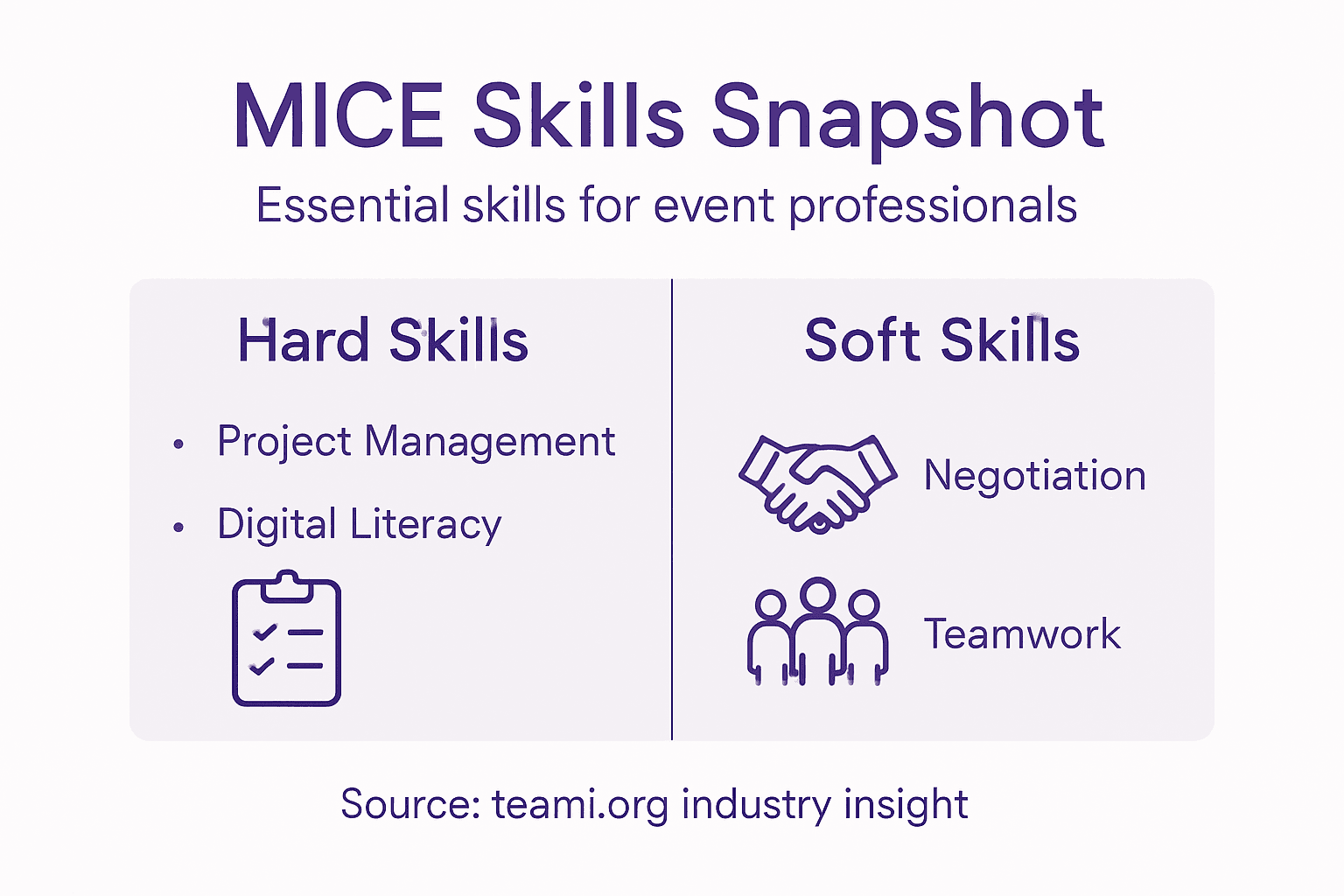
You’ll need more than just event management knowledge. You’ll need versatility.
Hard Skills That Matter
Project management forms the backbone of MICE work. You’re juggling timelines, budgets, vendor contracts, and stakeholder expectations simultaneously. One missed deadline ripples across everything else.
Essential hard skills include:
Event coordination and logistics: Managing every detail from venue setup to participant flow.
Budget management: Creating realistic budgets, tracking expenses, and making cost-effective decisions without compromising quality.
Vendor negotiation: Securing competitive quotes, managing relationships, and resolving issues when problems arise.
Technology proficiency: Understanding registration platforms, audio-visual systems, and increasingly, hybrid and virtual event technology.
Marketing and promotion: Creating event awareness and driving registrations through effective communication strategies.
Due to recent industry shifts, digital literacy and hybrid event expertise have become non-negotiable. You must understand virtual platforms, live streaming, and how to create seamless experiences whether attendees are physically present or joining remotely.
Here is a summary of essential skills demanded in the MICE sector and their practical impact:
| Skill Area | Example Skill | Business Impact |
|---|---|---|
| Project Management | Logistics coordination | Ensures event flows smoothly |
| Technology | Hybrid event tools | Engages remote and on-site attendees |
| Communication | Stakeholder updates | Minimises errors and confusion |
| Problem-solving | Crisis management | Reduces event disruption risk |
Soft Skills That Set You Apart
Technical knowledge only takes you so far. The professionals who truly succeed in MICE possess exceptional interpersonal abilities.
Critical soft skills include:
Communication: Articulating ideas clearly to clients, vendors, and team members; listening actively to understand needs.
Problem-solving: Remaining calm under pressure and finding creative solutions when situations deteriorate.
Leadership and coordination: Inspiring teams, delegating effectively, and ensuring accountability across multiple stakeholders.
Adaptability: Pivoting quickly when circumstances change—a weather issue at an outdoor incentive event, a speaker cancellation at a conference, unexpected attendance surges.
Attention to detail: Catching inconsistencies in contracts, spotting logistical gaps, and preventing small oversights from becoming major problems.
Formal Qualifications and Certifications
Whilst experience matters enormously, formal training accelerates your career progression significantly. Indian event management institutes offer diploma and certification programmes covering MICE operations comprehensively.
Valued qualifications include:
Diplomas in Event Management or Hospitality Management
Specialised MICE certification programmes
Project Management Professional (PMP) credentials
Hospitality and tourism certifications
Many Indian professionals build competitive advantages through event management specialisations that combine strategic planning with technical expertise. Hands-on experience matters too—internships and entry-level roles provide invaluable real-world exposure.
The best MICE professionals blend creativity with analytical thinking, combining the artistry of creating memorable experiences with the discipline of flawless execution.
Pro tip: Start building your vendor network and negotiation experience early. Every internship, every entry-level event you coordinate teaches you vendor relationships. When you move into senior MICE roles, having established relationships with reliable partners in your city becomes your greatest competitive advantage.
Opportunities, Challenges, and Industry Best Practices
The MICE industry is growing, but it’s not without obstacles. Understanding both the opportunities and challenges helps you navigate your career strategically and position yourself for success.
The sector is more dynamic—and more demanding—than most people realise.
Emerging Opportunities in MICE
Global business expansion continues driving demand for professional events. Companies need conferences, incentive programmes, and exhibitions more than ever.
Key opportunities include:
Expanding global markets: Governments actively support tourism development, creating infrastructure and funding for MICE destinations across Asia-Pacific and emerging regions.
Technology-driven innovation: Hybrid and virtual event capabilities open entirely new revenue streams and attendee access possibilities.
Sustainable event demand: Organisations increasingly prioritise green events, creating specialised roles for professionals trained in sustainable practices.
Destination diversification: Beyond traditional cities, Indian destinations like Jaipur, Udaipur, and Kochi are positioning themselves as MICE hubs, creating opportunities for local professionals.
Specialisation opportunities: Niche MICE sectors—medical conferences, tech summits, sustainability forums—reward specialists with premium compensation.
Real Challenges You’ll Face
Don’t underestimate the obstacles. The MICE industry presents significant operational and market challenges.
Common challenges include:
High operating costs: Venue hire, technology, staffing, and logistics represent substantial investments. Margin pressure intensifies when clients demand lower fees.
Geopolitical uncertainties: Political instability, visa restrictions, and travel disruptions can derail events with minimal notice.
Health and safety protocols: Post-pandemic expectations for hygiene, sanitation, and contingency planning have permanently increased operational complexity.
Competitive pricing pressure: Every MICE city has dozens of event companies competing for the same clients, making differentiation crucial.
Talent retention: The industry’s demanding schedules and irregular hours create high burnout rates among professionals.
Best Practices That Drive Success
The most successful professionals adopt proven practices that others overlook. These aren’t complicated—they’re disciplined.
Adopt these practices:
Sustainable event planning: Implement waste reduction, carbon tracking, and ethical vendor partnerships. Sustainability in event planning isn’t optional anymore—clients expect it.
Leverage hybrid capabilities: Invest in reliable technology for seamless online and in-person experiences. The professionals commanding highest fees master both simultaneously.
Build strategic partnerships: Collaborate with venues, tech providers, and hospitality partners. Strong relationships reduce costs and improve service quality.
Prioritise stakeholder communication: Regular updates to clients, participants, and vendors prevent misunderstandings that spiral into crises.
Develop contingency protocols: Create backup plans for likely disruptions—weather, no-shows, technical failures. Professionals who handle crises calmly gain repeat business.
Indian MICE professionals succeeding today combine emerging industry trends with practical execution skills. They stay current on technology, maintain strong vendor networks, and invest in their professional development continuously.
The difference between struggling and thriving in MICE comes down to preparation. Professionals who anticipate challenges rather than react to them consistently outperform their peers.
Pro tip: Build a crisis response toolkit specific to your region. Document worst-case scenarios—what happens if your main venue cancels, if key speakers drop out, if attendance collapses? Having written contingency plans transforms panic into protocol, and that composure attracts clients and impressed employers alike.
Launch Your Career in the Dynamic MICE Industry with Expert Training
Understanding the diverse and evolving nature of the Meetings, Incentives, Conventions, and Exhibitions sector reveals significant challenges and opportunities. Whether you aim to master complex logistics, vendor negotiations, or digital event technologies, building a strong foundation in these critical skills is essential to thrive. The article highlights key pain points such as the need for versatility, adaptability, and specialised knowledge in areas like hybrid event management and sustainable event planning.
At teami.org, you gain access to specialised event management certifications backed by 24 years of industry experience and real-world practical exposure. Our programmes are designed to equip you with project management expertise, stakeholder communication skills, and technology proficiency tailored specifically for the MICE sector. Explore our hybrid and online courses and learn directly from professionals with strong industry partnerships including DNA Entertainment Networks. Prepare now to meet the demands of this resilient industry and position yourself as a versatile event manager ready to take on diverse MICE event types.
Ready to start transforming your passion for events into a rewarding career Why wait when you can build your MICE proficiency and gain hands-on experience today Connect with us at teami.org and take the first step towards mastering India’s thriving event industry. Visit https://team-i-app-code-production.up.railway.app/api/go/wa?src=what-is-mice-industry to learn more and enrol in courses that will set you apart.
Frequently Asked Questions
What are the main components of the MICE industry?
The MICE industry encompasses four main components: Meetings, Incentives, Conventions, and Exhibitions. Each plays a unique role in facilitating professional, corporate, cultural, and academic events.
Why is the MICE industry considered essential for event careers?
The MICE industry is vital for event careers because it presents diverse opportunities, enhances networking, and drives economic growth. Professionals can benefit from transferable skills across various types of events, ensuring their expertise is valuable in the broader event management field.
What skills are necessary for a successful career in the MICE sector?
Key skills for success in the MICE sector include project management, vendor negotiation, technology proficiency, and strong communication. Additionally, interpersonal skills such as leadership and adaptability are crucial in navigating event challenges.
How can one enter the MICE industry?
Entering the MICE industry typically requires formal training in event management, internships, and gaining hands-on experience. Pursuing diploma programs, certifications, and building a network of industry contacts can significantly enhance career prospects.
Recommended
- Understanding Event Management for Beginners – team I
- 8 Best Event Management vs Hospitality Management – Expert Comparison 2025 – team I
- What is Event Planning? A Guide for Future Professionals 2025 – team I
- Best Event Management Career Guidance in Electronic City, Bengaluru Karnataka – team I
Thinking about a career in event management?
team I is Bangalore’s only EEMA-certified event management institute, running for 24 years, where students work on real live events with real budgets and real deadlines rather than classroom simulations. See the full range of event management courses in Bangalore, or go straight to the flagship Certificate Program in Event Management (CPEM).