

Success in event management goes far beyond choosing the right venue or perfecting a conference schedule. For ambitious students and early-career professionals in Bangalore, understanding the core ideas behind destination management is what sets you apart in a competitive industry. With cities like Bangalore, Mumbai, and Delhi relying on sophisticated Destination Management Organisations, mastering these concepts opens doors to career advancement, practical expertise, and a seat at the table with top event planners shaping India’s tourism future.
Table of Contents
- Destination Management Explained And Core Concepts
- Variations And Models Of Destination Management
- How Destination Management Operates In Practice
- Career Paths And Qualifications In Destination Management
- Roles, Responsibilities, And Ethical Obligations
- Common Risks, Challenges, And How To Avoid Them
Key Takeaways
| Point | Details |
|---|---|
| Understanding Destination Management | It is essential for event professionals to grasp the frameworks and operational dynamics of destination management to enhance their project success. |
| Variations in Destination Management Models | Recognising the differences in DMO structures across cities allows event planners to tailor strategies to local contexts. |
| Ethical Responsibilities | Event organisers must prioritise ethical practices, ensuring tourism initiatives benefit local communities and respect cultural values. |
| Proactive Risk Management | Anticipating and addressing potential risks through thorough planning and stakeholder engagement is crucial for successful event execution. |
Destination management explained and core concepts
Destination management is the orchestrated process of developing, promoting, and delivering experiences across a geographical location. At its core, it’s about making a place attractive to visitors whilst ensuring that local infrastructure, services, and resources work in harmony to meet expectations. This isn’t just about tourism boards slapping logos on brochures. Rather, it involves systematic planning, stakeholder coordination, and strategic decision-making that transforms a location into a compelling destination.
When you’re working in events in cities like Bangalore, Chennai, or Jaipur, you’re directly working within destination management frameworks, whether you realise it or not. The infrastructure that supports your corporate conference, the hospitality standards enforced, the transport logistics in place, the regulatory environment you navigate—all of these exist because destination management systems are in motion. Destination Management Organisations (DMOs) function as the backbone of these systems. They attract visitors, coordinate between government bodies, hospitality providers, entertainment companies, and venue operators. They ensure quality delivery across every touchpoint. Think of them as the invisible choreographers making sure that when 5,000 delegates arrive for a tech conference in Bangalore, the hotels have rooms, the restaurants can handle the volume, the airport processes them efficiently, and the event venues have the required technical infrastructure.
Understanding the foundational frameworks and theories of destination management is critical for event professionals because your career success depends on your ability to work within these systems. The World Bank Group’s Destination Management Handbook emphasises that destinations operate at different developmental stages. A Tier 1 city like Mumbai operates in a mature DMO environment with established infrastructure, whereas emerging destinations like Pune or Hyderabad are still building their destination management capabilities. Event planners must recognise these differences because they affect everything: vendor availability, regulatory timelines, venue capacity, and support services.
Core concepts in destination management include several interconnected elements. First, there’s visitor segmentation: understanding that business travellers, leisure tourists, and conference delegates have entirely different needs and spending patterns. Second, there’s infrastructure development: ensuring that transport networks, accommodation, F&B outlets, and entertainment venues can handle visitor volume without degradation. Third, there’s quality assurance: maintaining consistent standards across hospitality and service delivery so that whether someone books a 5-star hotel or mid-range accommodation, their experience feels professional and reliable. When you’re coordinating event logistics and vendor relationships, you’re directly applying these concepts. The vendor contracts you negotiate, the timeline buffers you build, the contingency protocols you establish—these all reflect sound destination management thinking.
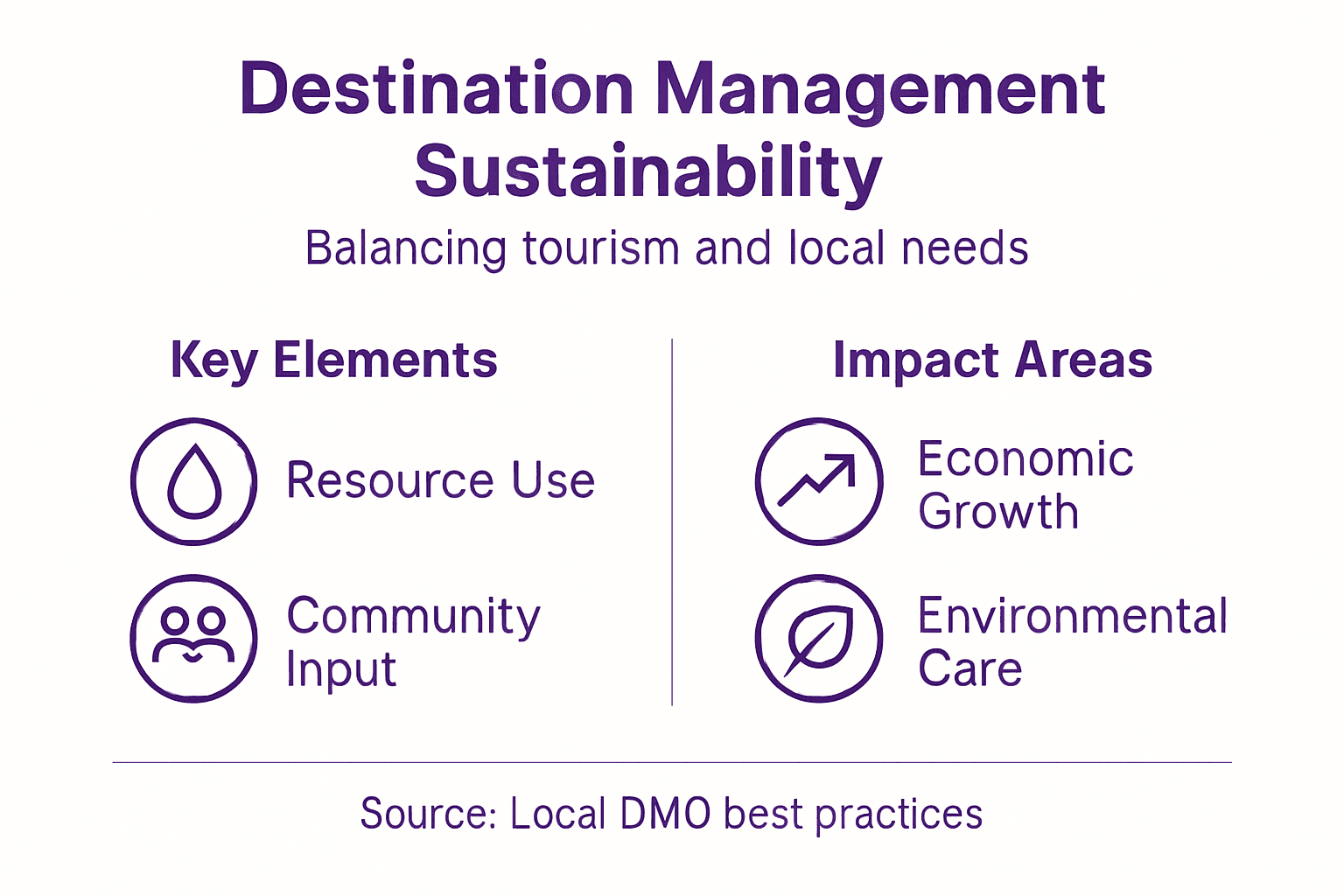
The sustainability angle cannot be ignored. Modern destination management prioritises long-term viability over short-term visitor numbers. This means managing overtourism in peak seasons, protecting local culture and resources, ensuring that tourism revenue genuinely benefits local communities, and building resilience into destination systems. For event professionals in India, this translates into practical responsibilities: sourcing from local vendors where possible, reducing waste at events, respecting cultural sensitivities, and ensuring that events contribute positively to the destination economy rather than extracting value.
Pro tip: Before accepting an event management contract in any Indian city, request a brief from the local DMO or tourism board regarding destination development priorities and seasonal considerations—this intelligence helps you align your event logistics with broader destination strategies and often reveals cost-saving opportunities through seasonal timing or preferred vendor partnerships.
Variations and models of destination management
Destination management isn’t a one-size-fits-all proposition. The way Mumbai operates its destination systems differs vastly from how a tier 2 city like Lucknow approaches the same challenges. This variation stems from differences in budget, governance structures, stakeholder alignment, and development priorities. Understanding these variations is crucial for event professionals because your ability to navigate local destination systems directly impacts your project timeline, vendor coordination, and budget management.
There’s no single consensus on how to operationalise destination management organisations, which creates both opportunities and complications for event planners. Diverse structural forms and roles exist depending on geographical context, political systems, and local economics. Some destinations operate through public sector tourism boards entirely controlled by government departments. Others function as public-private partnerships where government shares authority with private businesses and hospitality operators. A few operate as fully private organisations run by chambers of commerce or tourism associations. In India, you’ll encounter all three models. Delhi Tourism operates as a government entity with state funding. Bangalore’s hospitality industry coordinates through a mix of government bodies and private industry associations. Some emerging destinations in tier 3 cities might have minimal formal DMO structures, which means you’re essentially working with fragmented stakeholder groups rather than centralised destination management.
The key performance areas and causal relationships within destination management organisations reveal why size and ownership structure matter profoundly. Leadership strength, stakeholder trust, and sustainability commitments determine how effectively a DMO functions. A well-funded DMO with strong leadership can facilitate vendor coordination, streamline regulatory approvals, and provide real-time support for large events. A poorly-resourced or politically fractured DMO leaves event organisers managing multiple stakeholder relationships independently, creating friction and delays. Think about the difference between coordinating a conference in Bangalore with a mature, well-established destination infrastructure versus organising the same event in a secondary city where the local tourism board operates with minimal staff and budget. In Bangalore, the DMO can facilitate hotel block agreements, coordinate transport operators, and ensure consistent messaging. In the secondary city, you’re essentially building these relationships from scratch.
Three primary destination management models dominate practice: the governance model focuses on structural organisation and decision-making authority; the marketing model emphasises destination branding and visitor attraction; and the development model prioritises infrastructure investment and long-term capability building. Most effective destinations blend elements from all three. A mature DMO in a city like Pune might have formal governance structures coordinating across city authorities, hotels, venues, and transport operators. Simultaneously, it invests heavily in destination branding campaigns targeting corporate event planners and incentive travel operators. It also drives infrastructure development, advocating for airport expansions, metro extensions, or convention centre upgrades. Event professionals benefit from understanding which model dominates your destination because it tells you where leverage exists and how to accelerate approvals or vendor coordination.
Here’s a comparison of the three main destination management models in practice:
| Model Type | Main Focus | Typical Stakeholders Involved | Best Use Context |
|---|---|---|---|
| Governance Model | Organisational structure | Government, DMOs, regulatory bodies | Policy and coordination |
| Marketing Model | Branding and attraction | Tourism boards, marketers, event offices | Visitor growth |
| Development Model | Infrastructure investment | City planners, investors, contractors | Expansion and upgrades |
When you’re planning events across multiple Indian cities, recognise that destination management maturity exists on a spectrum. Metros like Delhi and Mumbai have sophisticated, multi-stakeholder DMO networks with decades of event experience. Tier 1 cities like Bangalore, Hyderabad, and Pune have increasingly professional destination management with dedicated event tourism teams. Tier 2 and 3 cities are often still building these capabilities, which creates gaps but also opportunities. Your responsibility as an event professional is to identify which model operates in your destination and adjust your stakeholder engagement strategy accordingly.
Pro tip: Contact the destination’s official tourism board or Chamber of Commerce early in your project planning phase to understand their DMO structure, available support services, and seasonal event calendars—this single conversation often reveals vendor networks, approval processes, and cost-saving opportunities you wouldn’t discover independently.
How destination management operates in practice
Destination management theory becomes real when multiple stakeholders coordinate towards shared outcomes. The practical operation involves a series of interconnected activities that seem invisible to visitors but require meticulous coordination from behind the scenes. When a delegate arrives in Bangalore for a three-day conference, they experience the destination seamlessly: flights arrive on schedule, hotels have their reservations ready, restaurants can accommodate group bookings, transport flows smoothly, and venues operate flawlessly. That seamlessness doesn’t happen accidentally. It’s the result of destination management systems working in concert.
The core operational workflow starts with stakeholder integration. A destination management organisation brings together representatives from government agencies, hotels, transport operators, venue managers, restaurants, attractions, and event organisers. They establish communication channels, align on common standards, and coordinate around shared priorities. For instance, when Hyderabad’s tourism authority plans for a major tech conference season, they coordinate with airport authorities to ensure adequate ground transport capacity, align with hotels on group booking terms, brief restaurants on expected demand patterns, and coordinate with police on traffic management plans. Creating effective visitor environments requires coordinating across multiple stakeholder groups and managing expectations throughout the journey. This coordination happens through regular meetings, shared planning calendars, and formal protocols. Event professionals benefit from accessing these networks because they become extensions of your planning team.

Resource management sits at the heart of destination operations. This includes budgeting for infrastructure maintenance, funding marketing campaigns, training hospitality staff, managing crisis response capabilities, and investing in technology systems for bookings and information. A well-resourced DMO in Mumbai can afford dedicated event liaison officers who provide on-ground support for conferences. They can fund hospitality training programmes ensuring consistent service quality. They can maintain technology platforms where event organisers access vendor directories, venue availability, and regulatory requirements. A resource-constrained DMO in a tier 2 city might lack these capacities, forcing event organisers to manage these functions independently. Practical destination management emphasises integrating stakeholders, developing strategies, managing resources sustainably, and responding to crises through approaches adapted to destination maturity. This adaptation matters deeply because your planning approach shifts based on available destination infrastructure.
Operationally, destinations follow cyclical patterns. High season requires surge capacity coordination across accommodation, dining, and transport. Off-season focuses on maintenance, staff training, and strategic planning. Crisis situations such as transport strikes, natural disasters, or public health emergencies trigger emergency protocols coordinated by the DMO. Event professionals entering a destination must understand these cycles. Planning a conference during peak season means competing for resources but accessing full operational capacity. Planning during off-season offers cost advantages but requires managing reduced service availability. The DMO becomes your intelligence source on these dynamics.
Practical destination management also involves quality assurance and measurement. DMOs establish service standards for hospitality, define complaint resolution procedures, monitor visitor satisfaction, and track economic impact. They use this data to identify operational gaps and invest in improvements. When you’re coordinating an event, you benefit from these established standards because vendors already operate within known quality frameworks. You’re not negotiating baseline professionalism; you’re working within an ecosystem where standards are already defined.
The reality is that destination management operates through relationship networks rather than hierarchical structures. Success depends on personal connections, mutual trust, and repeated interactions. When you build relationships with destination managers, hospitality liaisons, and local vendors, you’re plugging into these networks. Your willingness to understand destination priorities, respect local cultures, and contribute positively to the destination economy determines how effectively these networks support your events.
Pro tip: Visit your destination at least once before your event date and meet with key DMO personnel, hotel general managers, and venue directors in person—face-to-face relationships dramatically accelerate approvals, unlock vendor flexibility, and create a support network that remote communication cannot replicate.
Career paths and qualifications in destination management
Destination management careers offer remarkably diverse trajectories. You’re not locked into a single job title or company type. Instead, you build expertise that branches across tourism policy, corporate events, hotel management, government agencies, and sustainability consulting. The field values practical experience over rigid credentials, though formal qualifications increasingly matter for senior leadership roles. For aspiring professionals in Bangalore, this means multiple entry points exist. You can launch a destination management career from event management, hospitality, tourism studies, or even unrelated backgrounds if you develop the right skills and networks.
The typical career progression starts with operational roles. Event coordinators, venue managers, hospitality liaison officers, or tourism board assistants learn how destinations function from the ground up. You understand stakeholder relationships, vendor coordination, and regulatory environments firsthand. After 2-3 years in operational roles, you transition into strategic positions: destination marketing manager, event tourism manager, or stakeholder engagement officer. These roles involve developing destination strategies, creating marketing campaigns for event tourism, and managing relationships across hospitality, government, and private sectors. After 5-7 years of combined experience, you’re positioned for senior leadership: Destination Director, Chief Marketing Officer, or sustainability advisor roles. Strategic, research, and leadership skills prepare professionals for roles such as consultants, project managers, researchers, and sustainability advisors in international contexts. Many destination professionals eventually specialise. Some focus on event tourism exclusively, managing conference and incentive travel initiatives. Others specialise in sustainable tourism, ensuring that destination growth doesn’t damage local communities or environments. Still others move into destination branding or policy advisory roles.
Formal qualifications increasingly matter at senior levels. Postgraduate degrees specifically in destination management, tourism management, or international hospitality provide systematic grounding in strategy, sustainability, and stakeholder management. Comprehensive knowledge of destination marketing, management, and sustainable practices through postgraduate education prepares students for leadership roles and strategic decision-making. However, many senior destination professionals built careers before these specialised programmes existed. They demonstrate competence through certifications in event management, tourism development, or sustainability. If you’re considering formal education, a postgraduate qualification combined with internship experience provides significant career acceleration, particularly if you aspire to leadership roles in mature destination environments like Mumbai, Delhi, or Bangalore. For event management backgrounds specifically, destination management intersects with event career options where your existing event skills provide a foundation that destination management expertise expands significantly.
Specialisation areas within destination management create distinct career identities. Event tourism specialists focus exclusively on attracting conferences, incentive travel, and corporate events to destinations. They work with convention bureaus, hotels, and venues. Destination marketing professionals develop campaigns and positioning strategies that differentiate their destinations in competitive markets. Sustainability advisors ensure that tourism development strengthens rather than damages destinations. Community engagement officers manage relationships between tourism interests and local residents. Tourism policy advisors work with government agencies on strategic tourism development. Each specialisation requires different skill combinations and appeals to different professional interests.
Practical skills matter more than formal credentials in early career stages. Event management certification, hospitality qualifications, or tourism studies diplomas provide foundations. But what accelerates careers is demonstrated competence: successfully coordinating large events, managing vendor networks, solving logistical problems, building stakeholder relationships, and delivering results under pressure. Your willingness to work across multiple destinations, learn local contexts, and adapt to different operational models determines trajectory more than your educational background. That said, as you progress toward strategic roles, formal qualifications increasingly signal readiness for senior responsibility.
The Indian context creates specific opportunities. Tier 1 cities like Bangalore, Mumbai, and Delhi offer established destination management careers within mature tourism systems. Tier 2 cities like Pune, Hyderabad, and Jaipur are experiencing rapid destination development and need professionals who can build systems from the ground up. If you’re launching a destination management career, consider starting in operational roles in tier 1 cities where you’ll learn professional standards, then potentially transition to strategy roles or move to tier 2 cities where your experience commands premium compensation and rapid advancement. The industry values professionals with multi-city experience because you understand how destination management operates at different maturity levels.
Network building forms an often-overlooked career accelerator. Destination management operates through relationships. Professionals who attend industry conferences, join tourism boards or chambers of commerce, and maintain relationships across hospitality, events, and government sectors access opportunities unavailable to isolated practitioners. When you’re building your destination management career, dedicate time to relationship development as seriously as you develop technical skills.
Pro tip: Before committing to a destination management specialisation, secure a 6-month internship or project role with a tourism board, convention bureau, or hotel destination marketing office to validate the career fit—this exposure reveals whether you genuinely enjoy stakeholder coordination and destination strategy work before you invest in formal qualifications.
Roles, responsibilities, and ethical obligations
Destination management isn’t a single role with a single person accountable. Instead, it’s a distributed system where multiple actors carry defined responsibilities across governance levels. National tourism boards shape policy frameworks. Regional tourism authorities coordinate infrastructure and marketing strategies. Local destination management organisations handle day-to-day operations and stakeholder engagement. Event professionals must understand this layered accountability because your success depends on knowing who holds decision-making authority at each level. When you need a traffic management plan approved for a large conference, you’re not approaching one person. You’re navigating a system where municipal authorities, police departments, and local tourism bodies each hold specific responsibilities.
Clear governance models with well-defined roles and responsibilities prevent overlapping duties and enhance coordination across national, regional, and local levels. In mature destinations like Mumbai or Delhi, these role definitions are explicit and documented. Government tourism departments handle policy and regulation. Convention bureaus focus on attracting conferences and incentive travel. Hotels and venue operators manage facility standards. Hospitality associations set service quality benchmarks. Each entity knows its remit. In less developed destination systems, roles overlap. A single tourism board might simultaneously handle policy, marketing, and operational support, creating inefficiency but also flexibility. Your ability to work within ambiguous role structures determines your effectiveness in tier 2 and tier 3 Indian cities.
Destination Management Organisations serve as strategic leaders coordinating tourism activities and integrating diverse stakeholders including government bodies, service providers, and cultural organisations to ensure destination competitiveness and sustainability. This coordination role carries specific responsibilities. DMOs must facilitate communication between stakeholders who don’t naturally interact. They must develop destination strategies that balance economic growth with community protection. They must ensure that infrastructure investment supports both tourism and local residents. They must monitor tourism impacts and adjust management approaches when negative outcomes emerge. When you’re working within destination systems, you’re supporting these coordination functions. Your vendor contracts, timeline management, and stakeholder communication contribute to the DMO’s ability to deliver on these responsibilities.
Ethical obligations in destination management run deeper than regulatory compliance. The fundamental ethical principle is that tourism development must genuinely benefit destinations and their residents, not extract value. This translates into practical obligations. First, transparency: stakeholders deserve honest information about tourism impacts, infrastructure investments, and decision-making processes. Second, inclusivity: local residents and small businesses must have voice in destination development decisions, not just large corporate interests. Third, sustainability: tourism growth cannot come at the expense of environmental degradation or cultural erosion. Fourth, accountability: when tourism development causes problems, DMOs must acknowledge these and implement corrections rather than concealing negative impacts.
For event professionals, ethical obligations manifest in vendor selection, waste management, and community engagement. When you’re coordinating a conference in Bangalore, choosing local vendors strengthens the destination economy. Implementing waste reduction measures respects the destination’s environment. Respecting local customs and cultural sites demonstrates that your event contributes positively to the destination rather than exploiting it. These aren’t peripheral concerns. They’re central to ethical destination management because tourism impacts compound across dozens of events annually. When each event organiser makes ethically thoughtful decisions, the destination benefits. When event organisers prioritise only their immediate project success without considering broader destination impacts, local communities and environments bear the costs.
Crisis management represents a critical responsibility domain that event professionals often overlook. When unexpected events occur—transport strikes, natural disasters, public health emergencies, political instability—destination systems must respond. DMOs must activate communication protocols, coordinate with government agencies, provide real-time support to visitors and events, and implement continuity plans. Event professionals carry complementary crisis responsibilities. You must maintain communication with participants and vendors, implement contingency plans, protect participant safety, and support destination authorities in managing broader impacts. The 2020 pandemic illustrated how crisis management roles matter. Event professionals who coordinated effectively with destination authorities, adapted events rapidly, and prioritised safety created positive outcomes. Those who ignored destination guidelines and prioritised event delivery at all costs damaged both their reputation and the destination.
A practical reality exists that often goes unspoken. Destination management requires professionals who can navigate political complexity, manage competing interests, and make decisions despite imperfect information. You’ll encounter situations where different stakeholders want contradictory outcomes. A hotel wants to maximise room rates; event organisers want negotiated rates. A community group wants tourism limited; a business association wants tourism expanded. A government agency prioritises revenue; an environmental group prioritises conservation. Your role isn’t to eliminate these tensions but to manage them transparently, ensure all voices are heard, and make decisions that serve destination long-term interests rather than individual short-term interests.
Pro tip: When entering any destination management role, invest time understanding the formal and informal governance structures—identify who holds decision-making authority, how stakeholders traditionally communicate, and what unwritten norms exist—this intelligence prevents wasted effort on approvals through wrong channels and reveals whose support you genuinely need.
Common risks, challenges, and how to avoid them
Destination management operates in an increasingly unstable environment. Climate change brings unpredictable weather events. Geopolitical tensions create security concerns. Pandemics disrupt travel patterns. Economic downturns reduce visitor spending. Labour shortages strain hospitality services. Technology evolves faster than many destinations can adapt. Destinations face major risks including climate change, overtourism, security threats, labour shortages, and technological disruptions. These aren’t theoretical problems. They’re operational realities that event professionals navigate constantly. When you’re coordinating a three-day conference in Bangalore, you’re managing within this risk environment. A sudden transport strike, unexpected weather, staff shortages, or security concerns can derail carefully planned logistics. Your ability to anticipate risks, build contingencies, and respond rapidly determines whether your event succeeds or fails.
Overtourism represents one of the most visible destination management challenges. When visitor numbers exceed infrastructure capacity, quality deteriorates for everyone. Hotels become overcrowded. Restaurants cannot maintain service standards. Transport networks become congested. Popular sites experience environmental degradation. Local residents become frustrated by tourism intrusions. This creates a downward spiral where destination reputation suffers, visitor satisfaction declines, and long-term viability weakens. Event professionals contribute to overtourism when they cluster major events during peak seasons without coordinating with destination authorities. The solution involves genuine stakeholder coordination. When you’re planning a large event, consult with the destination DMO about optimal timing. Are there already major events scheduled? Will your event push the destination beyond comfortable capacity? Can you adjust timing to distribute visitor volume across seasons? This isn’t altruistic. It’s business-sensible. Destinations that maintain quality visitor experiences generate stronger reputations, attract return visitors, and create conditions where your future events also succeed.
Resource constraints, crisis impacts like pandemics, infrastructure bottlenecks, and stakeholder misalignment pose significant challenges requiring adaptable strategies and resilient planning. Many Indian tier 2 and tier 3 destinations operate with limited budgets, aging infrastructure, and fragmented stakeholder coordination. A destination tourism board might lack funding for consistent venue maintenance or vendor training. This creates operational risks. You arrive to conduct your event and discover that promised infrastructure isn’t ready. Vendors lack training in professional standards. Coordination between government agencies breaks down. Avoid these surprises through diligent due diligence. Visit venues personally. Request documentation of recent maintenance and upgrades. Verify that key stakeholders have confirmed their support for your event. Build contingency timelines that assume delays. When you’re coordinating an event in a less-developed destination, expect friction and plan accordingly.
Stakeholder misalignment creates profound challenges. Different destination actors have competing interests and priorities. Government wants tax revenue from tourism. Hospitality businesses want high visitor volumes. Environmental groups want tourism limited to protect resources. Local residents want tourism that benefits them without disrupting daily life. Event organisers want efficient approvals and vendor cooperation. No single approach satisfies everyone. The risk emerges when destination authorities lack mechanisms for managing these competing interests transparently. You might secure approval from one stakeholder only to discover opposition from another. The solution involves mapping stakeholder landscapes early and building coalitions. Before confirming your event, understand who holds decision-making authority and whose support you genuinely need. Engage stakeholders proactively. Communicate how your event contributes positively to destination objectives. When you understand competing interests and address them thoughtfully, you build genuine support rather than surface agreement.
Labour shortages present an increasingly serious operational challenge. Hospitality and event services require skilled staff. When talented professionals emigrate for better opportunities or when training systems fail to develop talent, destinations struggle. Hotels cannot staff adequately. Catering companies struggle to fulfill event contracts. Venue technicians become unavailable. This creates quality degradation and cost inflation. The pandemic exacerbated this challenge across India as many hospitality professionals shifted to other sectors. When you’re planning events, engage with vendors early about labour availability. Build extended timelines that account for potential staffing challenges. Consider whether your event can proceed with slightly reduced services if necessary. Build relationships with reliable vendors who have demonstrated ability to secure and retain quality staff. These vendors become your partners across multiple events.
Technological disruption represents an underestimated risk. Venues require updated audiovisual capabilities. Event management platforms evolve rapidly. Digital payment systems must integrate with international standards. Cybersecurity threats grow more sophisticated. Destinations that fail to invest in technology become less competitive. A venue without modern AV capabilities cannot support contemporary conferences. A destination without reliable digital payment infrastructure frustrates international visitors. When evaluating destination readiness, assess technological capabilities explicitly. Request venue technical specifications. Verify that payment systems support international transactions. Confirm that internet infrastructure handles heavy usage during events. When you identify gaps, work with destinations on solutions or adjust event plans accordingly.
Event risk assessment remains critical for identifying potential problems before they materialise. Systematic risk identification, analysis, and mitigation planning prevent crises. When you’re planning an event, conduct comprehensive risk assessment covering venue capabilities, vendor reliability, destination infrastructure, security environments, and crisis response protocols. Identify your highest-impact risks and develop specific contingency plans. Communicate these plans to relevant stakeholders so they understand how you’ll respond if problems emerge.
Here’s a summary of common risks in destination management and proactive responses:
| Risk Area | Potential Impact | Proactive Response |
|---|---|---|
| Overtourism | Quality decline, crowding | Stagger event timing, stakeholder talks |
| Labour Shortages | Service disruption, cost rise | Early vendor engagement, buffer staff |
| Technological Gaps | Outdated facilities, loss of bids | Check specs, request upgrades |
| Stakeholder Misfit | Delays, conflicting priorities | Early mapping, coalition building |
| Crisis Events | Event delays, cancellations | Crisis plans, local authority liaisons |
Pro tip: When entering a new destination, request meetings with at least three established event professionals who’ve worked there previously—ask them specifically about risks they encountered, vendor reliability, and governance challenges—their real-world experience reveals problems that official destination materials won’t acknowledge.
Build a Successful Career in Destination Management with Expert Training
Navigating the complexities of destination management requires more than just passion. The article highlights critical challenges such as stakeholder coordination, understanding governance models, and developing sustainable event strategies. If you are aiming to overcome these industry pain points and excel in roles that demand strategic thinking and practical skills, specialised education is your key. Concepts like sustainable tourism practices, vendor coordination, and crisis management are essential skills that the best professionals master through targeted training.
At teami.org, we offer comprehensive certification programmes that bridge theory and practice in event and destination management. Benefit from 24 years of industry experience, hands-on internship opportunities, and collaboration with leading partners like DNA Entertainment Networks. Whether you want to specialise in corporate events or deepen your knowledge about destination marketing and tourism sustainability, our courses equip you with the precise skills needed to thrive across diverse Indian cities and evolving DMOs. Seize this moment to transform your ambition into a rewarding career path by exploring our certification programmes today.
Your next step is simple complete the form on our landing page to connect with course advisors who can help tailor your training to your destination management career goals. Start building the professional network and expertise that top destinations value now.
Frequently Asked Questions
What is destination management?
Destination management is the process of developing, promoting, and delivering experiences across a geographical location to make it attractive to visitors while ensuring local infrastructure and services are well-coordinated.
How does destination management impact event planning?
Destination management impacts event planning by providing a structured framework that ensures adequate infrastructure, hospitality standards, and logistics, which are essential for the successful execution of events and conferences.
What are the key roles within destination management organisations?
Key roles within destination management organisations include government bodies, hospitality providers, event organisers, and tourism authorities. These stakeholders collaborate to coordinate resources, promote the destination, and ensure quality experiences for visitors.
How can I start a career in destination management?
Starting a career in destination management typically involves gaining experience in operational roles, such as event coordination or hospitality management. Pursuing relevant qualifications in tourism or hospitality can also enhance your career prospects in this field.
Recommended
- 7 Jobs After Event Management to Boost Your Career – team I
- 7 Event Management Career Options for Aspiring Professionals – team I
- How to Become a Certified Event Manager: Step-by-Step Guide – team I
- What Is Event Management? Guide for Aspiring Professionals – team I
Thinking about a career in event management?
team I is Bangalore’s only EEMA-certified event management institute, running for 24 years, where students work on real live events with real budgets and real deadlines rather than classroom simulations. See the full range of event management courses in Bangalore, or go straight to the flagship Certificate Program in Event Management (CPEM).