
Most British recruiters agree that a memorable personal brand sets candidates apart in competitive industries like event management. For students in Bangalore pursuing event management, standing out is not just helpful—it is essential for landing internships and job placements. When your skills, story, and professional image are distinct, you increase your visibility to industry experts and employers. Discover how strategic personal branding can turn your passion into professional opportunities.
Table of Contents
- Personal Branding Defined For Students
- Key Elements Of A Strong Personal Brand
- Optimising Your Online Presence Effectively
- Networking And Industry Connections For Event Careers
- Common Pitfalls And How To Avoid Them
Key Takeaways
| Point | Details |
|---|---|
| Personal branding is essential for students. | It is a strategic approach to crafting a unique professional identity that stands out in competitive environments. |
| Consistency is key. | Maintaining a coherent online presence across platforms is crucial for reinforcing your professional narrative and building credibility. |
| Networking opens doors. | Building genuine relationships through networking can lead to mentorship opportunities and career advancements. |
| Authenticity builds trust. | Presenting an honest representation of skills and values is vital to attracting meaningful professional opportunities. |
Personal Branding Defined for Students
Personal branding represents a strategic approach to showcasing one’s unique professional identity and potential. It is more than a marketing exercise – it is about deliberately crafting a narrative that communicates your distinctive skills, experiences, and professional aspirations. Personal branding for students emerges as a powerful tool for differentiating oneself in an increasingly competitive academic and professional landscape.
At its core, personal branding involves intentionally developing a consistent reputation that reflects your values, capabilities, and professional trajectory. This goes beyond traditional resume building – it requires thoughtful communication of your personal story across multiple platforms. Students must understand that their brand is dynamic, evolving with each academic achievement, internship, and professional interaction. The goal is to create a memorable impression that resonates with potential employers, mentors, and professional networks.
Successful personal branding hinges on several fundamental principles. Students must develop clarity about their professional identity by identifying their core strengths, passions, and long-term career objectives. This involves introspection and strategic positioning. Key elements include maintaining a consistent online presence, curating a professional digital portfolio, and actively networking within your chosen industry. Each interaction becomes an opportunity to reinforce your personal brand.
Pro tip: Create a personal mission statement that succinctly captures your professional essence, using it as a guiding framework for all your personal branding efforts.
Key Elements of a Strong Personal Brand
Building a powerful personal brand requires strategic planning and intentional self-presentation. Personal branding involves articulating core values that distinguish you from others in your professional ecosystem. This process demands a comprehensive understanding of your unique strengths, professional aspirations, and the distinctive narrative you wish to communicate.
The foundational elements of an effective personal brand encompass several critical dimensions. Core values form the bedrock of your professional identity, serving as the philosophical compass that guides your career decisions and interactions. Developing a compelling personal narrative means crafting a story that connects your experiences, skills, and future objectives into a coherent and engaging framework. This narrative should demonstrate not just what you do, but why you do it, creating an emotional resonance with potential employers, mentors, and professional connections.
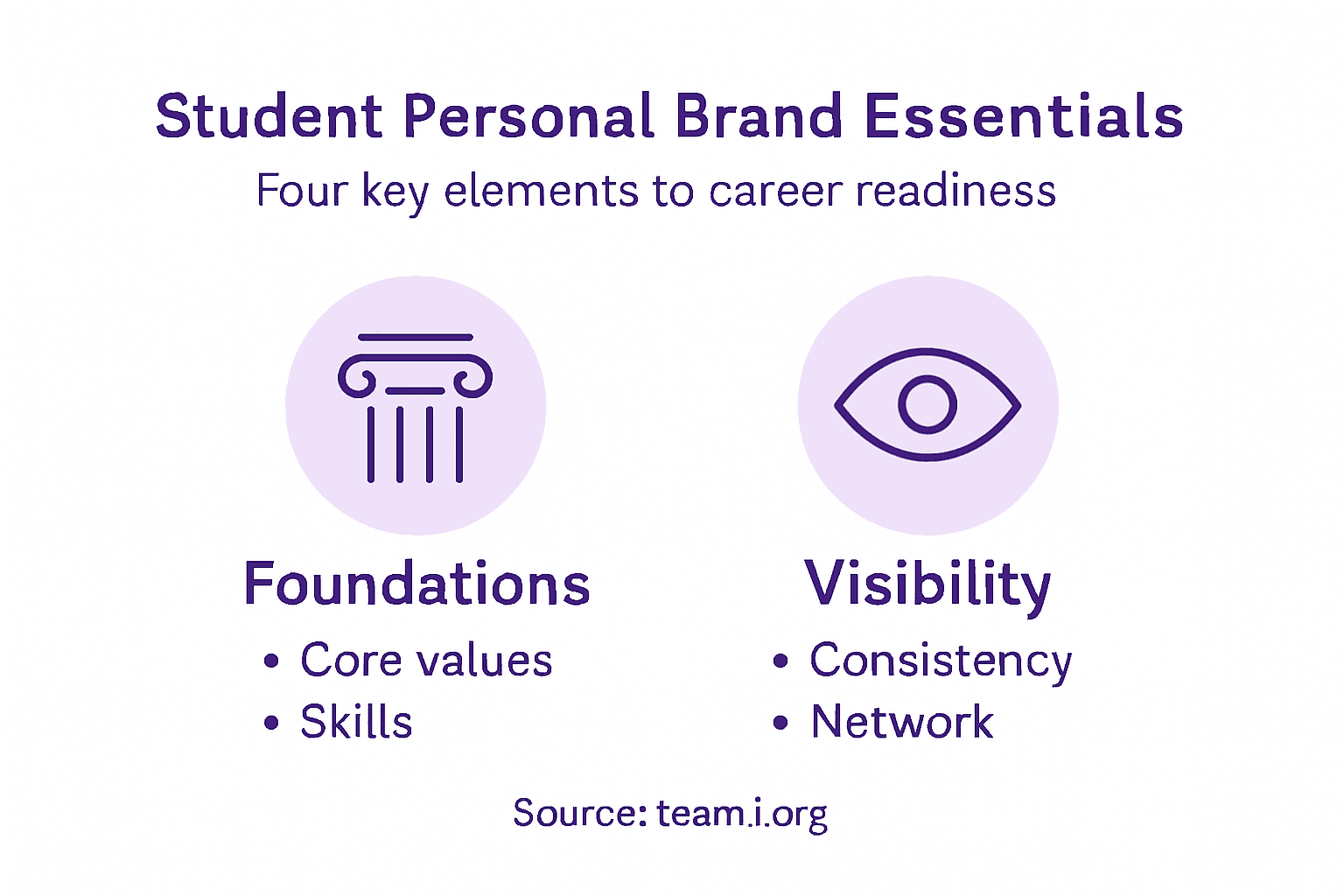
Successful personal branding also requires strategic communication across multiple platforms. Building personal brand authority necessitates consistent messaging that reinforces your professional identity. This involves curating your digital presence, from LinkedIn profiles to professional portfolios, ensuring that each touchpoint reflects your brand’s core attributes. Key components include professional headshots, a well-crafted biography, documented achievements, and thoughtful content that showcases your expertise and perspective.

Pro tip: Conduct a quarterly audit of your personal brand by reviewing your online presence, updating your achievements, and ensuring your professional narrative remains current and authentic.
Here is a summary of essential components and their impact in building a strong personal brand:
| Component | Description | Impact on Career |
|---|---|---|
| Core values | Guiding principles and beliefs | Shapes reputation and choices |
| Personal narrative | Consistent story of achievements and goals | Creates emotional resonance |
| Online presence | Profiles, websites, and social channels | Increases professional visibility |
| Network engagement | Relationships with peers and mentors | Drives access to new opportunities |
Optimising Your Online Presence Effectively
Online presence management represents a critical strategy for students seeking to establish a professional digital footprint. In today’s interconnected world, your digital identity serves as a powerful tool for career advancement, networking, and personal branding. Effectively curating this presence requires deliberate, strategic approaches that showcase your professional potential across multiple digital platforms.
Creating a cohesive online presence involves multiple strategic components. Professional networking platforms like LinkedIn demand particular attention, requiring a meticulously crafted profile that highlights academic achievements, internships, and relevant skills. This digital portfolio should include a professional photograph, a compelling summary that articulates your career objectives, and detailed descriptions of your academic and professional experiences. Beyond professional networks, students must also consider the broader digital landscape, including personal websites, portfolio platforms, and carefully managed social media accounts that reflect their professional aspirations.
The art of digital self-presentation extends beyond mere visibility to strategic reputation management. Students must develop a consistent narrative across different digital channels, ensuring that each platform contributes to a unified professional image. This means aligning your content, tone, and visual branding to create a seamless representation of your professional identity. Regularly monitoring your digital footprint, managing privacy settings, and curating content that demonstrates your expertise and potential becomes crucial in maintaining a positive and professional online reputation.
Pro tip: Conduct a monthly digital audit by Google searching your name and reviewing all public-facing online profiles to ensure they present a professional and consistent personal brand.
Networking and Industry Connections for Event Careers
Effective networking strategies are crucial for students aiming to establish themselves in the competitive event management landscape. Networking transcends mere social interaction; it represents a strategic approach to building professional relationships that can unlock unprecedented career opportunities. For event management students in Bangalore, this means creating meaningful connections that extend beyond traditional job applications and into the realm of professional mentorship and industry insights.
Building a robust professional network requires a multifaceted approach. Students must leverage both digital and in-person platforms to expand their professional reach. Professional social networks like LinkedIn become critical tools for connecting with industry professionals, alumni, and potential mentors. Attending industry conferences, participating in local event management workshops, and engaging with professional associations provide tangible opportunities to establish direct connections. The key lies in approaching networking as a two-way relationship, where students not only seek opportunities but also offer their emerging skills, perspectives, and enthusiasm.
Successful networking in the event management sector demands authenticity and strategic engagement. This involves developing a compelling personal narrative that communicates your unique value proposition. Students should focus on creating meaningful interactions rather than collecting business cards or digital connections. Building mutually beneficial professional relationships requires consistent follow-up, demonstrating genuine interest in understanding industry dynamics, and showcasing a proactive attitude towards learning and collaboration. Sharing relevant industry content, offering thoughtful insights during discussions, and maintaining professional communication can transform initial connections into long-term professional relationships.
Pro tip: Create a personalised tracking system for your professional contacts, documenting key details and follow-up dates to ensure meaningful and consistent networking engagement.
Common Pitfalls and How to Avoid Them
Fragmented personal branding strategies can significantly undermine students’ professional development in the event management sector. Most emerging professionals encounter critical challenges that, if not addressed strategically, can derail their career prospects. Understanding these potential pitfalls becomes crucial for maintaining a robust and authentic personal brand that resonates with industry professionals and potential employers.
One of the most prevalent mistakes involves inconsistent self-presentation across different platforms. Students often create disconnected digital personas that lack coherence, presenting conflicting professional narratives on various social networks. This fragmentation can confuse potential employers and weaken the overall credibility of their personal brand. To mitigate this risk, event management students must develop a unified brand strategy that maintains consistent messaging, visual aesthetics, and professional tone across LinkedIn, professional portfolios, personal websites, and social media channels.
Neglecting brand authenticity represents another significant pitfall that can undermine professional credibility. Many students attempt to construct an idealised professional image that diverges from their genuine skills and values. This approach not only feels inauthentic but can also lead to challenges during job interviews or professional interactions where inconsistencies become apparent. Successful personal branding requires a genuine representation of one’s unique strengths, professional aspirations, and core values, creating a transparent and compelling narrative that attracts meaningful professional opportunities.
Pro tip: Conduct a quarterly comprehensive review of your personal brand, comparing your online profiles to ensure consistency and alignment with your current professional goals and authentic self.
The following table compares common pitfalls with strategies to avoid them in student personal branding:
| Pitfall | Consequence | Prevention Strategy |
|---|---|---|
| Inconsistent self-presentation | Confuses employers and weakens reputation | Use unified profiles and visual branding |
| Lack of authenticity | Damages trust and credibility | Align branding with true values |
| Neglecting digital footprint | Limits career prospects | Regularly monitor and update content |
| Insufficient networking | Misses out on potential opportunities | Proactively connect and follow up |
Take Control of Your Personal Brand with Expert Event Management Training
The article highlights the challenge students face in creating a consistent, authentic personal brand that stands out in the competitive event management field. If you are struggling with crafting a compelling personal narrative, maintaining a professional online presence, or building meaningful industry connections, you are not alone. Developing clarity around your core strengths and aligning your digital footprint with your career goals are essential steps to becoming a confident, career-ready professional.
At teami.org, you gain more than just knowledge. With 24 years of industry experience and exclusive partnerships like DNA Entertainment Networks, we provide practical, hands-on training that empowers you to build a strong personal brand through real event participation and internships. Explore our specialised certification programs to sharpen your skills in social, corporate, wedding, and sports event management. This is your opportunity to transform personal branding theories into tangible career advantages.
Start building a powerful personal brand today by discovering how our certification courses can elevate your industry credibility. Connect with us now at teami.org and take the next step towards a thriving career in event management. Don’t wait for opportunity to find you—create it with professional guidance and strategic training.
Frequently Asked Questions
What is personal branding for students?
Personal branding for students is the strategic process of showcasing one’s unique professional identity, skills, experiences and aspirations to stand out in a competitive academic and job market.
Why is personal branding important for my career as a student?
Personal branding is crucial for students as it helps create a memorable impression on potential employers and professionals, increases networking opportunities, and enhances career prospects through a consistent and authentic representation of one’s capabilities.
How can I optimise my online presence for personal branding?
To optimise your online presence, ensure that your profiles on professional networking platforms, personal websites, and social media reflect a cohesive narrative of your professional persona. Regular updates and consistent messaging across these platforms are essential for effective branding.
What are common pitfalls in personal branding that students should avoid?
Common pitfalls include inconsistent self-presentation across platforms, neglecting authenticity, failing to monitor one’s digital footprint, and insufficient networking, all of which can weaken your personal brand and limit career opportunities.
Recommended
- Event Branding Essentials: Complete Guide – team I
- 7 Essential Tips for Networking Events for Young Professionals – team I
- Brand Activation Events: Driving Engagement and Loyalty – team I
- Leadership Development for Youth: Skills for Future Success – team I
- Master Leadership Mindset for Strategic Growth Success
- Showcasing Your Professional Achievements
Thinking about a career in event management?
team I is Bangalore’s only EEMA-certified event management institute, running for 24 years, where students work on real live events with real budgets and real deadlines rather than classroom simulations. See the full range of event management courses in Bangalore, or go straight to the flagship Certificate Program in Event Management (CPEM).