

Successful event leaders know that negotiation skills are critical whether you are managing a British corporate gala or planning a high-pressure product launch in Delhi. Research shows that over 85 percent of deals fall short because event managers enter discussions without defined objectives or a structured approach. For professionals in India, mastering these essential negotiation steps can help you confidently manage clients and vendors across diverse sectors and secure outcomes that protect your interests, reputation, and business growth.
Table of Contents
- Step 1: Assess Negotiation Objectives And Priorities
- Step 2: Research Clients, Vendors And Common Interests
- Step 3: Develop Persuasive Negotiation Strategies
- Step 4: Conduct Successful Negotiation Meetings
- Step 5: Confirm Agreements And Follow Up Actions
Quick Summary
| Key Point | Explanation |
|---|---|
| 1. Define your negotiation goals | Clearly outline must-have and nice-to-have outcomes to guide your negotiation effectively. Prioritisation prevents rigid thinking and encourages creative solutions. |
| 2. Conduct thorough research | Gather detailed information on all parties involved to uncover shared interests and strengthen your negotiating position through informed strategy. |
| 3. Develop adaptable strategies | Create flexible negotiation strategies that incorporate psychological insights, allowing for responsive approaches that foster collaboration and trust-building. |
| 4. Manage the negotiation meeting effectively | Structure meetings with clear agendas while remaining adaptable; prioritise active listening and maintain a neutral, professional demeanour to promote a cooperative environment. |
| 5. Document agreements meticulously | Establish clear records of negotiations, including commitments and timelines, along with a follow-up mechanism to ensure successful implementation and communication. |
Step 1: Assess negotiation objectives and priorities
Successful negotiations begin with crystal-clear clarity about what you want to achieve. In this crucial first step, you will map out your specific goals and rank their importance before entering any discussion.
Start by conducting a thorough value-focused negotiation assessment. Break down your objectives into two categories: must-have outcomes and nice-to-have opportunities. This approach helps you avoid getting trapped in rigid zero-sum thinking and opens pathways for creative problem solving. List out every potential goal and then ruthlessly prioritise them by potential impact and feasibility.
Next, quantify and qualify each objective. What specific resources are required? What are the potential trade-offs? Understanding the nuanced quantitative negotiation priorities allows you to develop a flexible strategy that can adapt during discussions. Consider both tangible metrics (financial value, timelines) and intangible factors (relationship preservation, future opportunities).
Top Tip: Always have a clear bottom line defined before entering negotiations to prevent emotional decision making and maintain strategic clarity.
Here is a summary of negotiation objective types and their strategic implications:
| Objective Type | Typical Example | Impact on Strategy |
|---|---|---|
| Must-have outcomes | Minimum contract value | Non-negotiable, guides limits |
| Nice-to-have | Extended warranty | Negotiable, allows compromise |
| Tangible goals | Delivery timeline, pricing | Clear measurement, facilitates agreement |
| Intangible goals | Relationship building | Indirect benefit, shapes tone |
Step 2: Research clients, vendors and common interests
Effective negotiation starts long before you enter the meeting room. Your goal in this step is to gather comprehensive intelligence about all parties involved to uncover potential shared interests and strategic advantages.
Begin by conducting systematic negotiation research on each participant. Dive deep into their professional backgrounds, recent business activities, and organisational priorities. Use LinkedIn, company websites, annual reports, and professional networks to build a nuanced understanding of their potential motivations and constraints. Pay special attention to recent projects, financial performance, and strategic objectives that might influence their negotiation stance.

Next, map out potential common ground and areas of mutual benefit. The comprehensive stakeholder analysis should identify not just surface level interests but underlying needs and potential collaborative opportunities. Consider past interactions, industry trends, and broader market dynamics that might create value beyond the immediate negotiation. Look for win-win scenarios where both parties can achieve meaningful outcomes.
Pro Tip: Create a structured research template with specific categories to ensure you capture comprehensive insights about each negotiation participant, preventing overlooked details.
The following table compares common negotiation research sources and their strengths:
| Source | Key Insights Provided | Ideal Use Case |
|---|---|---|
| Professional history, interests | Individual motivation analysis | |
| Company websites | Strategic goals, press releases | Current organisational priorities |
| Annual reports | Financial status, challenges | Assessing leverage and stability |
| Professional networks | Reputation, past collaborations | Building rapport and trust |
Step 3: Develop persuasive negotiation strategies
Successful negotiation requires more than just knowing what you want. You will craft a flexible, psychologically informed approach that can adapt to changing dynamics and maximise your chances of achieving meaningful outcomes.
Start by developing strategic adaptability in negotiation. This means creating a strategy that is not rigid but responsive to emerging information and your counterpart’s reactions. Map out multiple potential scenarios and prepare flexible response strategies for each. Consider your primary objectives, fallback positions, and walk-away points. Your strategy should include both logical arguments and emotional intelligence techniques that can help build rapport and trust.
Next, apply psychological insights to your communication approach. The nuanced persuasion techniques involve understanding your counterpart’s underlying motivations, communication style, and potential pressure points. Develop a narrative that aligns your interests with theirs, creating a sense of collaborative problem solving rather than adversarial bargaining. Use active listening, ask probing questions, and demonstrate how your proposed solutions can address their core needs and challenges.
Pro Tip: Practice your negotiation strategy through role play with a trusted colleague to identify potential weaknesses and refine your approach before the actual negotiation.
Step 4: Conduct successful negotiation meetings
Now that you have prepared thoroughly, it is time to transform your strategic planning into a dynamic, productive negotiation meeting. Your goal is to create an environment of collaborative problem solving that moves both parties towards a mutually beneficial agreement.
Begin by implementing comprehensive negotiation meeting strategies. Structure your meeting with a clear agenda that outlines key discussion points, but remain flexible enough to adapt to emerging insights. Start by establishing a positive tone through active listening and demonstrating genuine interest in understanding your counterpart’s perspective. Be prepared to ask probing questions that reveal underlying motivations and potential areas of collaboration. Maintain a balance between assertiveness and empathy, showing that you are committed to finding a solution that respects both parties’ core interests.
Next, focus on managing the interpersonal dynamics of the negotiation. Multi-level negotiation techniques require you to read the room carefully, recognising both verbal and non-verbal communication signals. Be attentive to emotional undercurrents, and be prepared to use strategic concessions that build trust and demonstrate your commitment to a fair outcome. Create opportunities for collaborative problem solving by framing challenges as shared opportunities rather than competitive scenarios.
Pro Tip: Maintain a neutral, professional body language and tone throughout the meeting to project confidence and control, regardless of the negotiation’s intensity.
Step 5: Confirm agreements and follow up actions
The final stage of negotiation is as critical as the discussion itself. Your objective now is to solidify the agreed terms, create a clear record of understanding, and establish a systematic approach to implementation that maintains the collaborative spirit of your negotiation.
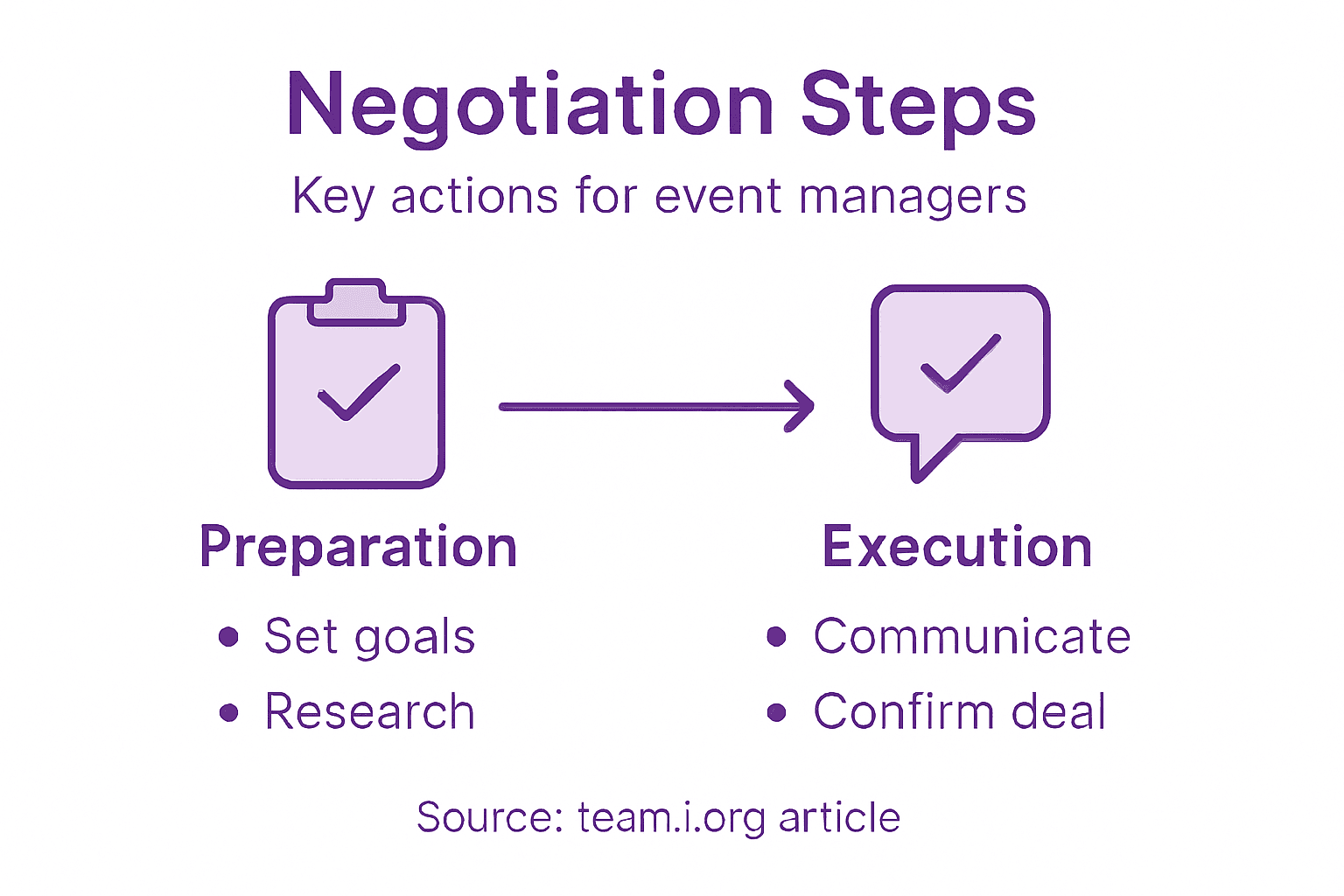
Begin by documenting negotiation agreements with meticulous precision. Draft a comprehensive memorandum that captures every discussed point, including specific responsibilities, timelines, deliverables, and contingency plans. Ensure that all parties receive and review the document promptly, allowing space for minor clarifications or adjustments. Be explicit about each party’s commitments and expected outcomes, leaving no room for ambiguity or potential misinterpretation.
Next, establish a robust follow-up mechanism that demonstrates your commitment to the agreement. Systematic agreement implementation requires scheduling regular check-in points to monitor progress, address emerging challenges, and maintain open communication channels. Create a shared timeline with clear milestones, and proactively reach out to stakeholders to ensure smooth execution. This approach not only safeguards the agreement but also reinforces the trust and collaborative relationship you have cultivated during the negotiation process.
Pro Tip: Send a personalised follow-up email within 24 hours of the negotiation, summarising key discussion points and expressing appreciation for the collaborative dialogue.
Master Negotiation Skills to Elevate Your Event Management Career
Negotiation lies at the heart of successful event management. As highlighted in the article, challenges such as defining clear objectives, researching stakeholders, and employing persuasive strategies are essential to secure the best outcomes for your events. If you struggle with balancing must-have goals against collaborative opportunities or managing complex meeting dynamics, developing advanced negotiation skills will empower you to lead confidently and deliver exceptional results.
At teami.org, we understand these pain points and offer specialised certification courses designed to sharpen your negotiation and managerial capabilities within the event industry. Through practical exposure, role plays, and real event participation, you will learn to craft adaptable strategies and execute successful agreements that benefit all parties. Don’t let uncertainty hold you back from career growth. Explore our comprehensive event management training and start transforming your negotiation approach today. Take the first step to join thousands of professionals who have advanced their careers with guidance tailored to your exact challenges.
Frequently Asked Questions
How can I assess my negotiation objectives for event success?
Start by identifying and ranking your specific goals before negotiations. Break them into must-have and nice-to-have outcomes, and prioritise them based on impact and feasibility to ensure clarity during discussions.
What key research should I conduct before entering a negotiation meeting?
Gather detailed information about all parties involved, including their professional backgrounds and organisational priorities. Use platforms like professional networks and company websites to uncover shared interests and potential collaborative opportunities.
What strategies should I employ to adapt during a negotiation?
Craft a flexible negotiation strategy that allows you to respond to emerging dynamics. Outline multiple scenarios and prepare adaptable response tactics, ensuring your approach incorporates both logical reasoning and emotional intelligence to build rapport.
How should I conduct the actual negotiation meeting for best results?
Structure your meeting with a clear agenda while remaining open to new insights. Focus on active listening and demonstrating genuine interest, and balance assertiveness with empathy to encourage a collaborative atmosphere.
What steps should I take to confirm agreements after a negotiation?
Document the agreements meticulously, detailing responsibilities, timelines, and deliverables. Follow up promptly with all involved parties to ensure clarity and establish a system for monitoring progress and communication moving forward.
How can I ensure the ongoing success of the agreements reached in a negotiation?
Establish a follow-up mechanism by scheduling regular check-ins to monitor progress and address challenges. Create a shared timeline with clear milestones to maintain accountability and reinforce trust among stakeholders.
Recommended
- Vendor Management Strategies: Boosting Event Success – team I
- What Makes a Successful Event: Real Impact Revealed – team I
- Top Event Management Skills for Success in 2025 – team I
- Sports Event Management: Essential Skills, Jobs, and Certifications 2025 – team I
Thinking about a career in event management?
team I is Bangalore’s only EEMA-certified event management institute, running for 24 years, where students work on real live events with real budgets and real deadlines rather than classroom simulations. See the full range of event management courses in Bangalore, or go straight to the flagship Certificate Program in Event Management (CPEM).