

Over 60 percent of event leaders say strategic vendor partnerships directly increase project success, yet many aspiring event managers in India struggle to demystify these complex processes. With more British and Indian-led global events shaping market standards, mastering vendor management strategies has become vital for anyone seeking certification and rapid career growth. This article reveals practical tools and insider perspectives to help young professionals confidently transform vendor relationships into a springboard for long-term achievement in the competitive event industry.
Table of Contents
- Vendor Management Strategies Defined And Demystified
- Types Of Vendors In Event Industry
- Establishing Selection And Evaluation Criteria
- Key Roles And Responsibilities In Partnerships
- Mitigating Risks And Ensuring Compliance
Key Takeaways
| Point | Details |
|---|---|
| Strategic Partnerships | Vendor management shifts from transactional relationships to collaborative partnerships, enhancing organisational success. |
| Holistic Evaluation | Effective vendor selection requires a comprehensive assessment of performance metrics, operational capabilities, and ethical practices. |
| Continuous Improvement | Ongoing dialogue and performance monitoring are crucial for fostering innovation and reliability within vendor relationships. |
| Risk Mitigation | Proactive risk management strategies, including compliance verification and contingency planning, are essential for successful event management. |
Vendor Management Strategies Defined and Demystified
Vendor management represents a sophisticated organisational process that transforms traditional transactional relationships into strategic partnerships. At its core, this approach moves beyond simple purchasing interactions to create collaborative ecosystems where vendors become integral contributors to an organisation’s success.
The evolution of vendor management has been profound, shifting from basic procurement models to comprehensive strategic relationship frameworks. Modern strategies now emphasise proactive engagement, performance governance, and mutual value creation. Key elements include:
- Detailed vendor selection processes
- Continuous performance evaluation mechanisms
- Technology-enabled real-time monitoring
- Risk mitigation and collaborative innovation strategies
Understanding vendor management requires recognising it as a dynamic discipline that integrates multiple business functions. Global supply chain performance increasingly depends on organisations’ ability to develop nuanced, collaborative vendor relationships that transcend traditional transactional boundaries. Successful strategies incorporate clear performance metrics, ethical sourcing practices, and mechanisms for ongoing dialogue and improvement.
The following table summarises how strategic vendor management enhances organisational performance compared to traditional procurement models:
| Aspect | Traditional Procurement | Strategic Vendor Management | Business Impact |
|---|---|---|---|
| Relationship Focus | Transactional | Collaborative Partnership | Increased trust and innovation |
| Performance Tracking | Basic evaluation | Continuous, data-driven | Higher reliability and quality |
| Value Creation | Cost-only consideration | Mutual, long-term benefits | Competitive advantage |
| Risk Management | Reactive | Proactive and integrated | Reduced disruption likelihood |
Pro tip: Develop a comprehensive vendor scorecard that evaluates not just cost, but strategic alignment, innovation potential, and long-term partnership capabilities.
Types of Vendors in Event Industry
The event management landscape encompasses a diverse ecosystem of vendors, each playing a critical role in transforming event concepts into seamless, memorable experiences. Vendor categorisation strategies reveal multiple specialized categories essential for comprehensive event planning and execution.
Primary vendor types in the event industry include:
Technical Vendors
- Audio-visual equipment providers
- Lighting and stage design specialists
- Digital technology and streaming service vendors
Logistical Vendors
- Transportation and shuttle services
- Temporary infrastructure and tent rental companies
- Security and crowd management providers
Catering and Hospitality Vendors
- Food and beverage service providers
- Catering equipment rental companies
- Professional staff recruitment agencies
Creative and Production Vendors
- Event decoration and styling experts
- Prop and set design companies
- Entertainment and performance talent agencies
Global event supply chains demonstrate that successful vendor management requires understanding each vendor’s unique capabilities, compliance standards, and potential contributions to overall event quality. Modern event professionals must develop nuanced strategies for vendor selection, performance monitoring, and collaborative relationship building.

Effective vendor management transcends transactional interactions, focusing instead on creating strategic partnerships that enhance event innovation, reliability, and exceptional attendee experiences. By carefully curating and managing vendor relationships, event organisers can transform complex logistical challenges into seamless, memorable productions.
Pro tip: Develop a comprehensive vendor evaluation matrix that assesses not just cost and technical capabilities, but also cultural alignment, innovation potential, and track record of successful collaborations.
Establishing Selection and Evaluation Criteria
Effective vendor selection represents a sophisticated process that goes far beyond simple price comparisons. Systematic selection frameworks provide event managers with robust methodologies to identify and engage vendors who can truly transform event experiences.
Key evaluation criteria for vendor selection include:
Performance Metrics
- Historical delivery reliability
- Quality consistency
- Responsiveness to communication
- Technical capabilities
- Innovation track record
Financial Considerations
- Cost competitiveness
- Payment flexibility
- Financial stability
- Transparent pricing structures
- Value proposition
Operational Capabilities
- Technical infrastructure
- Scalability of services
- Compliance with industry standards
- Geographical reach
- Resource availability
Sustainability and Ethical Factors
- Environmental practices
- Social responsibility credentials
- Diversity and inclusion policies
- Ethical business practices
- Long-term strategic alignment
Multi-criteria decision analysis enables event professionals to develop comprehensive evaluation approaches that consider complex, interconnected performance dimensions. This approach transforms vendor selection from a transactional process into a strategic partnership development mechanism.
Successful vendor evaluation requires a holistic perspective that balances quantitative metrics with qualitative assessments. By developing nuanced selection frameworks, event managers can create resilient vendor ecosystems that consistently deliver exceptional outcomes and adapt to evolving event landscape challenges.
The following table provides a concise reference for evaluating vendor sustainability and ethical credentials:
| Criteria | What to Examine | Business Benefit |
|---|---|---|
| Environmental Impact | Sustainable sourcing, waste policy | Enhances public reputation |
| Social Responsibility | Community initiatives, fair labour | Strengthens stakeholder trust |
| Diversity Policies | Supplier inclusion programmes | Encourages innovation |
| Ethical Practices | Anti-corruption measures | Reduces compliance risks |
Pro tip: Create a weighted scorecard that assigns specific numerical values to each evaluation criterion, allowing for objective and comprehensive vendor assessment across multiple performance dimensions.
Key Roles and Responsibilities in Partnerships
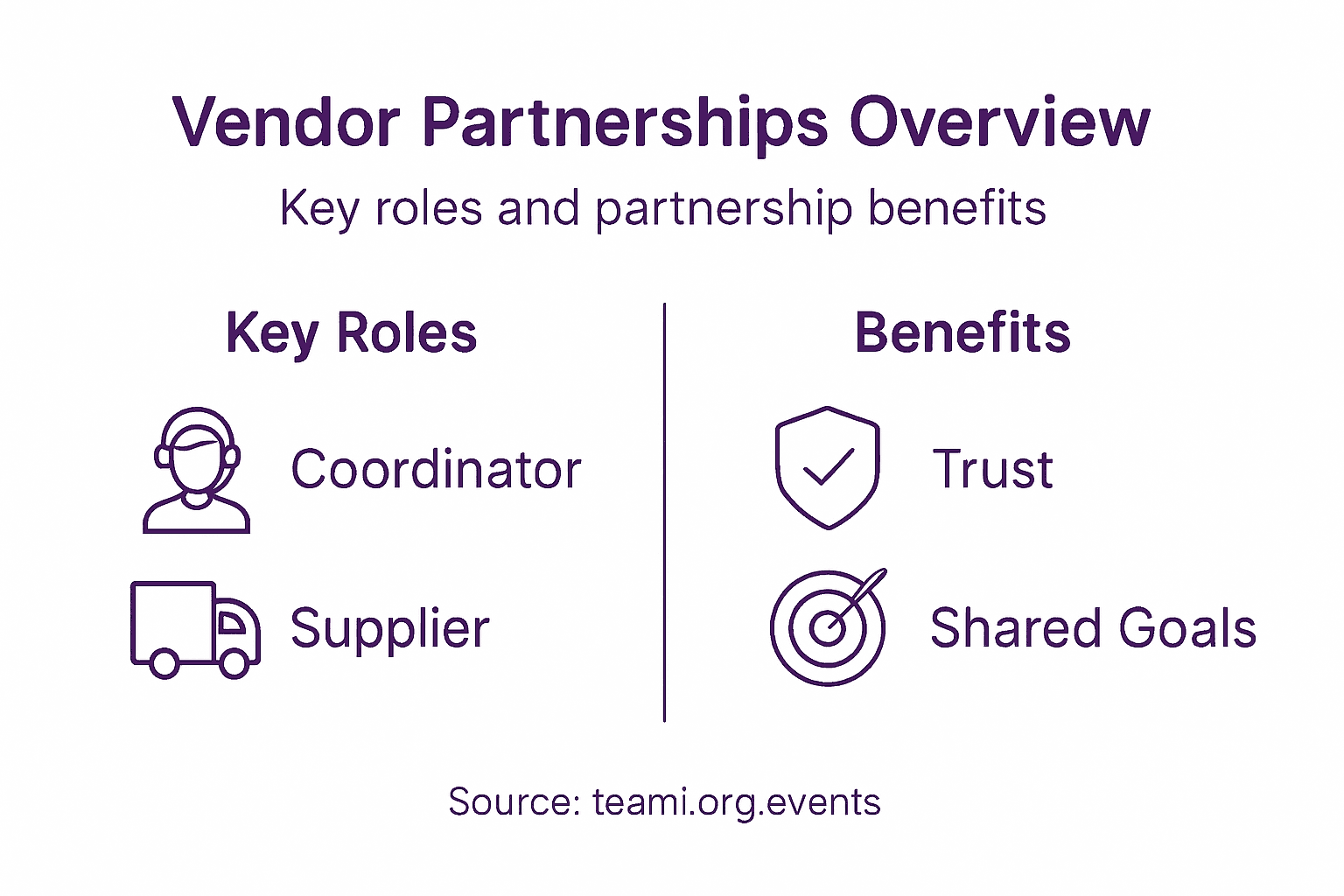
Successful event vendor partnerships require intricate collaboration and clearly defined responsibilities. Strategic vendor relationship management establishes comprehensive frameworks that transform transactional interactions into dynamic, mutually beneficial relationships.
Key roles and responsibilities for event management teams and vendors include:
Event Management Team Responsibilities
- Clear communication of event objectives
- Comprehensive brief development
- Performance expectation setting
- Regular progress monitoring
- Timely feedback mechanism
Vendor Responsibilities
- Technical capability demonstration
- Contractual commitment adherence
- Proactive problem-solving
- Quality standards maintenance
- Innovative solution proposing
Collaborative Interaction Protocols
- Structured communication channels
- Regular performance review meetings
- Transparent reporting mechanisms
- Continuous improvement frameworks
- Conflict resolution strategies
Accountability Mechanisms
- Defined performance metrics
- Key performance indicator (KPI) tracking
- Compliance verification processes
- Risk management protocols
- Contractual penalty clauses
Global supply chain management emphasises that successful partnerships transcend traditional transactional relationships. Modern vendor management requires a holistic approach that integrates strategic alignment, mutual respect, and shared commitment to exceptional event delivery.
Effective partnerships are built on trust, transparency, and a collective understanding of shared objectives. By establishing clear roles, maintaining open communication, and creating robust accountability mechanisms, event managers and vendors can develop resilient, high-performing collaborative ecosystems.
Pro tip: Develop a comprehensive partnership charter that explicitly outlines roles, expectations, communication protocols, and performance evaluation metrics to establish a solid foundation for vendor relationships.
Mitigating Risks and Ensuring Compliance
Event management demands a proactive approach to risk mitigation and regulatory compliance. Vendor management models provide strategic frameworks for identifying, assessing, and managing potential operational risks across diverse event environments.
Key risk mitigation strategies include:
Comprehensive Risk Assessment
- Geopolitical risk evaluation
- Cultural compatibility analysis
- Regulatory landscape mapping
- Financial stability screening
- Technological infrastructure assessment
Compliance Verification Mechanisms
- Regular vendor documentation audits
- Certification and credentials verification
- Continuous performance monitoring
- Legal requirement tracking
- Ethical sourcing validation
Technology-Enabled Risk Management
- Blockchain verification systems
- AI-powered risk prediction tools
- Real-time compliance monitoring platforms
- Digital contract management systems
- Automated reporting mechanisms
Contingency Planning
- Supplier diversification strategies
- Emergency response protocols
- Alternative vendor identification
- Rapid substitution frameworks
- Business continuity planning
Global supply chain risk management emphasises developing resilient strategies that anticipate potential disruptions. Successful event managers must create adaptive frameworks that balance rigorous compliance requirements with operational flexibility.
Navigating vendor risks requires a holistic approach that integrates technological tools, strategic planning, and continuous assessment. By implementing robust risk management protocols, event professionals can transform potential vulnerabilities into opportunities for enhanced performance and reliability.
Pro tip: Develop a dynamic risk assessment matrix that continuously updates vendor risk profiles, incorporating real-time data and predictive analytics to stay ahead of potential compliance challenges.
Elevate Your Event Vendor Management Skills for Success
The article highlights the complexities of strategic vendor management in the event industry, emphasising challenges such as establishing collaborative partnerships, rigorous performance evaluation, and proactive risk mitigation. If you aim to master these critical vendor management strategies including developing evaluation scorecards and risk assessment matrices, it is essential to gain practical knowledge and industry insights.
At teami.org, you can develop these skills through specialised certification programmes that focus on real-world applications of vendor management in diverse event settings. With 24 years of industry experience and strong partnerships like DNA Entertainment Networks, the training equips you with hands-on exposure to managing technical, logistical and creative vendor relationships outlined in the article.
Take the next step towards transforming your understanding of vendor performance metrics and ethical compliance by exploring our certification courses. Learn how to build strategic vendor partnerships that boost event success and gain a competitive edge in this dynamic industry. Connect with us today and start shaping your future with expert guidance and practical experience.
Frequently Asked Questions
What is vendor management in the context of event planning?
Vendor management in event planning refers to the process of establishing strategic partnerships with vendors to enhance event execution and overall success. It includes selecting, evaluating, and managing vendors to ensure that they contribute positively to the event’s objectives.
How can I develop effective selection criteria for event vendors?
Effective selection criteria for event vendors should include performance metrics, financial considerations, operational capabilities, and sustainability factors. This comprehensive framework helps ensure that chosen vendors align with event goals and values.
What are the benefits of strategic vendor management compared to traditional procurement?
Strategic vendor management fosters collaborative partnerships, enhances trust, and promotes innovation. Unlike traditional procurement, it focuses on mutual value creation, continuous performance monitoring, and proactive risk management, leading to better overall event quality.
How can risk mitigation strategies be effectively implemented in vendor management?
Risk mitigation strategies can be implemented through comprehensive risk assessments, compliance verification mechanisms, and contingency planning. These proactive approaches help identify potential operational risks and ensure that vendors meet industry standards and regulatory requirements.
Recommended
- Importance of Event Evaluation for Aspiring Managers – team I
- What Makes a Successful Event: Real Impact Revealed – team I
- Sports Event Management: Essential Skills, Jobs, and Certifications 2025 – team I
- How to Organise Events for Maximum Impact: Step-by-Step Guide – team I
Thinking about a career in event management?
team I is Bangalore’s only EEMA-certified event management institute, running for 24 years, where students work on real live events with real budgets and real deadlines rather than classroom simulations. See the full range of event management courses in Bangalore, or go straight to the flagship Certificate Program in Event Management (CPEM).