

More than 7,400 british event management businesses operate across the UK, competing for attention in a thriving industry. Aspiring entrepreneurs need more than ambition to stand out and build lasting success. Building a reputable company starts with a careful mix of specialised education, targeted market research, business compliance, and strong partnerships. This step-by-step guide breaks down the process, helping you avoid common pitfalls while navigating the crowded world of british event management.
Table of Contents
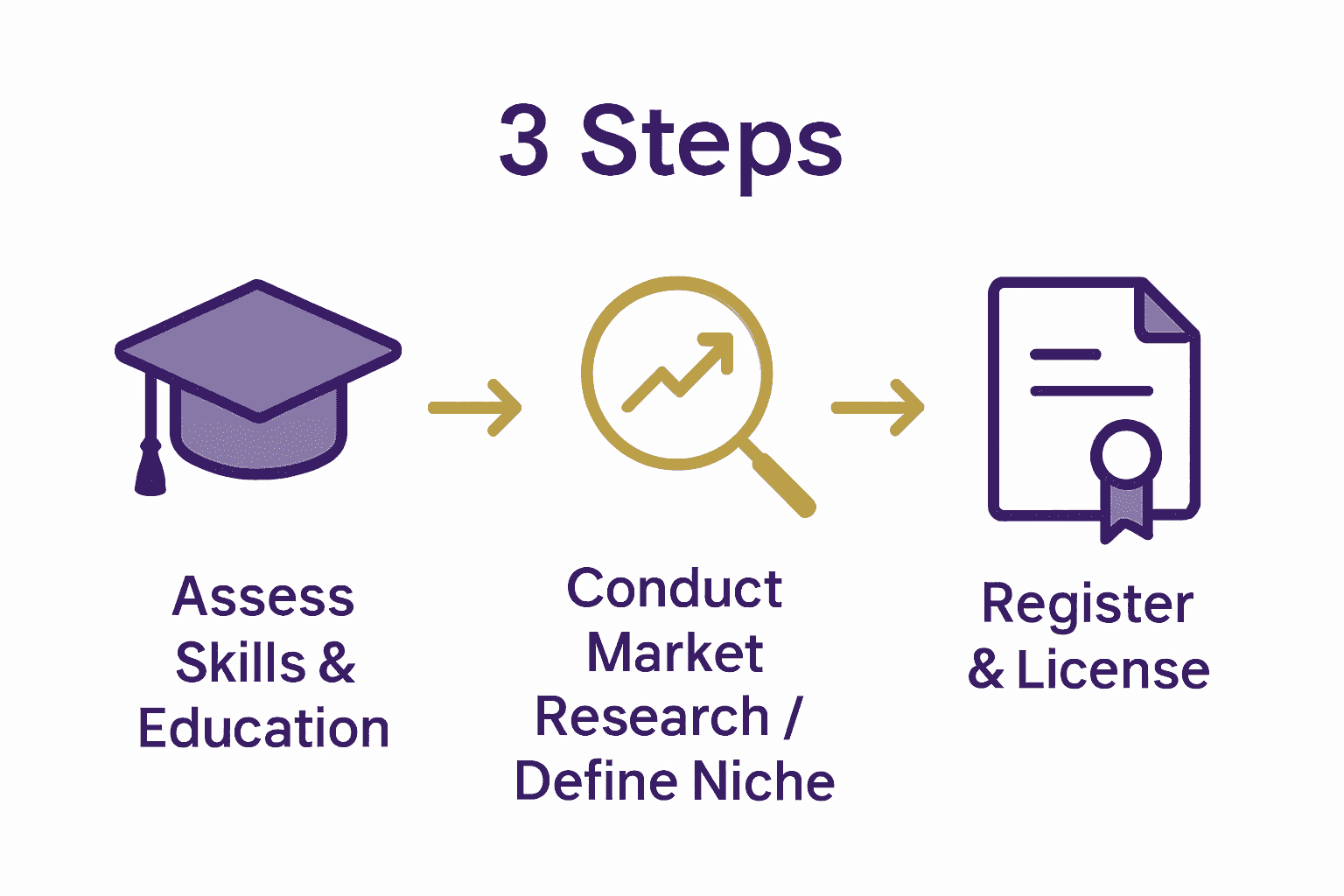
- Stage 1: Assess Skills And Acquire Event Management Education
- Stage 2: Conduct Market Research And Define Your Niche
- Stage 3: Register The Business And Secure Necessary Licences
- Stage 4: Build Industry Partnerships And Develop Your Service Portfolio
- Stage 5: Launch Marketing Campaigns And Secure Initial Clients
- Stage 6: Evaluate Operations And Optimise For Growth
Quick Summary
| Essential Insight | Explanation |
|---|---|
| 1. Acquire essential skills and education | Start by understanding fundamental event management skills, through training or certifications, to build a solid foundation. |
| 2. Perform detailed market research | Identify your niche by researching local event trends, potential clients, and gaps in the service market to align with demand. |
| 3. Complete the business registration process | Establish your company legally by selecting a business structure and fulfilling regional licensing requirements to ensure compliance. |
| 4. Build strategic industry partnerships | Network with local vendors and service providers to create a strong service portfolio that highlights your unique offerings. |
| 5. Develop a targeted marketing approach | Use digital platforms and promotional strategies to attract initial clients, showcasing your expertise and unique services. |
Stage 1: Assess skills and acquire event management education
Launching an event management company starts with a strategic foundation built on skills and specialised education. Before diving into entrepreneurship, you need a comprehensive understanding of the industry landscape and your personal capabilities.
According to Edge Education, successful event professionals require a robust skill set spanning management techniques, budgeting, project planning, logistics coordination, technology integration, and crowd control strategies. Your educational journey should focus on acquiring these core competencies through structured programmes or targeted certifications. Consider exploring event management course requirements to understand formal pathways into this dynamic profession.
Start by conducting a personal skills audit across key areas such as communication, organisational planning, vendor negotiations, and technological proficiency. Look for educational programmes that offer practical training and real world exposure. Top programmes will include hands on projects, internship opportunities, and industry networking potential. Specialised courses in specific event domains like corporate, wedding, or sports events can provide targeted expertise that distinguishes your future business.
 Remember that continuous learning remains crucial in the rapidly evolving events industry.
In your next step, you will transform these educational insights into a comprehensive business strategy.
Stage 2: Conduct market research and define your niche
Defining your event management company’s unique position requires strategic market research and a clear understanding of your professional strengths. Your goal is to identify a specialised segment where your skills and passion intersect with market demand.
Research from arXiv emphasises the critical importance of aligning educational projects with real world industry needs a principle equally relevant when establishing your event management business. Edge Education suggests exploring diverse event management domains including corporate events, wedding planning, sustainable event design, risk management, and specialised theming.
Start by conducting comprehensive market analysis through multiple channels. Interview potential clients, analyse local event industry trends, and investigate gaps in current service offerings. Consider your personal strengths and interests when selecting a niche whether that is corporate conference management, destination wedding planning, or specialised sporting event coordination. Develop a detailed market research document that maps potential client segments, competitive landscape, pricing strategies, and unique value propositions. Your niche should balance your professional expertise with market opportunities.
In the next stage, you will transform these market insights into a robust business strategy.
Stage 3: Register the business and secure necessary licences
Registering your event management company is a critical step that transforms your entrepreneurial vision into a legal business entity. This process involves navigating complex administrative requirements to establish your professional credibility and operational legitimacy.
According to Setup Dubai, the registration process requires careful selection of your business activity code and strategic name reservation. While the specific requirements vary by region, Ministry of Economy documentation highlights the importance of preparing comprehensive documentation that demonstrates your business capabilities.
Begin by consulting local business registration authorities to understand specific licencing requirements for event management companies. This typically involves preparing documents such as business plans, financial projections, professional qualifications, and proof of initial capital. You will need to select an appropriate business structure professional limited company, partnership, or sole proprietorship and register with relevant government agencies. Consider seeking legal counsel to ensure you meet all regulatory requirements and understand potential tax implications. Professional guidance can help you navigate complex bureaucratic processes and avoid potential compliance issues.
In the next stage, you will develop a comprehensive business strategy and financial planning framework.
Stage 4: Build industry partnerships and develop your service portfolio
Establishing a successful event management company requires strategic networking and a comprehensive range of professional services that differentiate you in a competitive marketplace. Your goal is to create a robust portfolio that showcases your unique capabilities and professional connections.
Professional conference organiser resources highlight the critical importance of developing a multifaceted service offering that encompasses conference design, programme development, registration management, venue selection, and financial planning. Business education partnerships demonstrate the mutual benefits of strategic collaborations, suggesting that your partnerships should extend beyond simple transactional relationships.
Begin by identifying potential industry partners such as venue managers, catering services, audiovisual specialists, local businesses, and educational institutions. Attend industry conferences, join professional associations, and leverage digital networking platforms to expand your professional network. Develop a comprehensive service portfolio that clearly articulates your unique value propositions across different event categories corporate conferences, weddings, cultural events, and specialised industry gatherings. Create detailed service descriptions, develop professional marketing materials, and build a digital portfolio that demonstrates your expertise and previous successful projects. Remember that trust and reputation are fundamental in the event management industry.
In the next stage, you will focus on creating a strategic marketing approach to attract your first clients.
Stage 5: Launch marketing campaigns and secure initial clients
Transitioning from a new event management company to a recognised brand requires strategic marketing and a targeted approach to attracting your first clients. Your primary objective is to demonstrate your professional capabilities and build initial trust within the industry.
Edge Education emphasises the critical role of social media as a powerful marketing and communication tool for event management businesses. Additionally, ISO 20121 guidelines suggest incorporating sustainability principles into your marketing strategy to enhance credibility and differentiate your services in a competitive marketplace.
Develop a comprehensive digital marketing strategy that leverages multiple channels such as LinkedIn, Instagram, and specialised event industry platforms. Create a professional website showcasing your portfolio, client testimonials, and unique service offerings. Produce high quality content that demonstrates your expertise through blog posts, case studies, and event management insights. Network aggressively by attending industry conferences, participating in professional associations, and offering complimentary consultations to potential clients. Consider developing introductory packages or promotional rates to attract your first clients and build a robust initial portfolio. Focus on delivering exceptional value and building strong relationships that can generate referrals and repeat business.
In the next stage, you will focus on scaling your operations and continuously improving your service offerings.
Stage 6: Evaluate operations and optimise for growth
Continuous evaluation and strategic optimisation are essential for transforming your event management company from a startup into a sustainable business. Your focus will be on developing robust systems that enable consistent performance improvement and operational efficiency.
arXiv research highlights the importance of experiential learning and continuous evaluation in developing organisational capabilities. Seminar Management Systems research further emphasises the need for adaptable operational frameworks that can quickly respond to changing market dynamics.
Implement a comprehensive performance tracking system that measures key metrics such as client satisfaction, project profitability, operational efficiency, and team productivity. Conduct regular retrospective meetings to analyse project outcomes, identifying strengths to replicate and weaknesses to address. Invest in professional development opportunities for your team including workshops, certifications, and cross training programmes. Develop a feedback mechanism that allows clients and team members to provide candid insights into your service delivery. Consider implementing technology solutions that streamline administrative tasks such as project management software, customer relationship management systems, and financial tracking tools. Remember that growth is not just about increasing revenue but also about enhancing service quality and operational sophistication.
In the final stage, you will develop a long term strategic vision for your event management company.
Unlock Your Event Management Career with Expert Training
Starting an event management company requires mastering essential skills such as budgeting, logistics coordination, and client engagement while navigating complex registration and marketing challenges. This guide highlights the critical need for practical education and industry insights to confidently launch and grow your business in a competitive market.
teami.org offers a specialised platform designed to bridge these gaps with over 24 years of industry experience. Their certification programmes provide hands-on projects, internships, and real event participation to develop your competence across niches like corporate, wedding, and sports event management. By partnering with industry leaders like DNA Entertainment Networks, they ensure you gain not only knowledge but also valuable networking opportunities and placement support.
Take the first step towards transforming your event management aspirations into a thriving business by exploring the training options at teami.org. Ready to build your skills and stand out in a dynamic industry Contact their team today at Speak to an Advisor and start your journey with confidence.
Frequently Asked Questions
What skills do I need to start an event management company?
Starting an event management company requires skills in management, budgeting, project planning, and logistics coordination. Conduct a personal skills audit to identify areas you need to improve and consider enrolling in specialised educational programmes to enhance your capabilities.
How can I define my niche in the event management industry?
To define your niche, conduct market research to identify gaps in current service offerings that align with your skills and interests. Create a detailed market analysis document to map potential client segments and develop a unique value proposition that distinguishes your services.
What is the process for registering my event management business?
Registering your business typically involves selecting a business structure, applying for necessary licences, and preparing documentation like your business plan and financial projections. Begin by consulting your local business registration authority to ensure you complete all administrative requirements correctly.
How do I build partnerships within the event management industry?
Building partnerships involves networking with venue managers, caterers, and other service providers in the industry. Attend industry conferences and join professional associations to expand your network and develop collaborative relationships that enhance your service offerings.
What marketing strategies should I utilise to attract my first clients?
To attract your first clients, develop a comprehensive digital marketing strategy that includes a professional website and active social media presence. Produce high-quality content demonstrating your expertise, and consider offering introductory packages to generate initial interest and build your portfolio.
How can I evaluate and optimise my operations for growth?
Evaluate and optimise your operations by implementing a performance tracking system to measure client satisfaction and project profitability. Conduct regular reviews and invest in professional development for your team to continuously improve service quality and operational efficiency.
Recommended
- 7 Jobs After Event Management to Boost Your Career – team I
- Corporate Event Planning Guide 2025: Steps, Skills, and Success – team I
- Understanding Event Management for Beginners – team I
- Event Planning Checklist 2025: Step-by-Step Guide for Success – team I
- Cloud-Lösungen für Eventagenturen: Der komplette Leitfaden
- Why Use Event Management Companies: Complete Guide – Uproduction
Thinking about a career in event management?
team I is Bangalore’s only EEMA-certified event management institute, running for 24 years, where students work on real live events with real budgets and real deadlines rather than classroom simulations. See the full range of event management courses in Bangalore, or go straight to the flagship Certificate Program in Event Management (CPEM).