
Every classroom lesson in event and management eventually has to survive contact with a real audience, a real green room, and a real countdown clock. That is exactly what happened when a group of team I students got the chance to work at InvokED 4.0, a summit built around the theme of catalysing education equity in India. We are genuinely grateful to the organisers and sponsors of the event for opening their doors to our students and letting them be part of something bigger than a classroom simulation.
InvokED 4.0 was not a music festival or a college fest. It was a dialogue-driven education summit, with panel discussions on education leadership, art installations, and a room full of policymakers, educators and guests who expected a smooth, professional experience from the moment they walked in. For students used to campus events, that shift in audience and expectation was itself a learning curve.
What Team I Students Actually Did at InvokED 4.0
The students were not spectators. Their reports and slides show them working across several practical zones of the event:
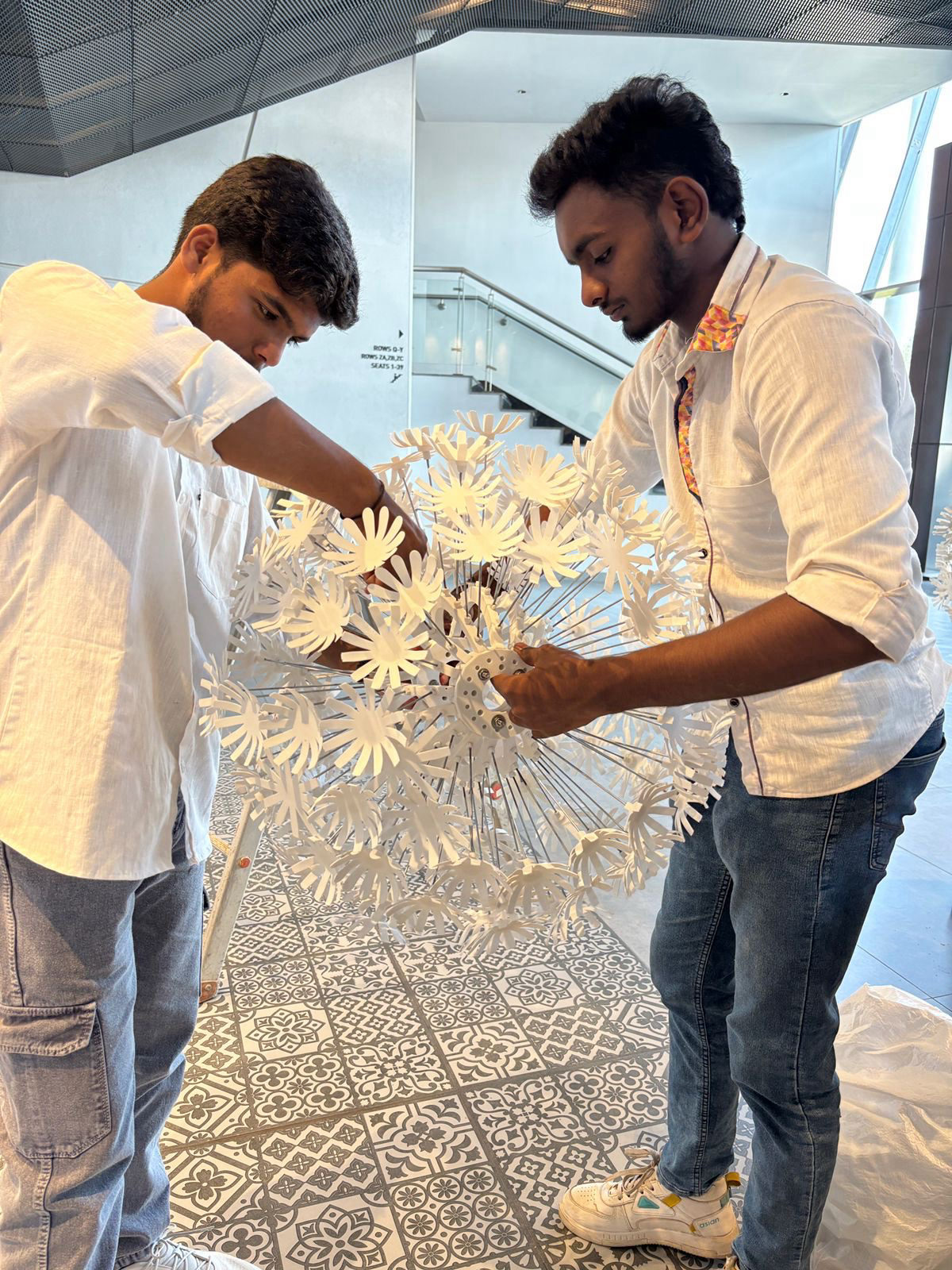
- Helping assemble large decorative installations, including an intricate paper flower sculpture built piece by piece before doors opened
- Managing guest flow and crowd movement in the lounge and seating areas during panel discussions
- Coordinating backstage in the green room area alongside the production team
- Supporting the front-of-house and auditorium setup for the main sessions
- Interacting directly with guests and clients, which meant switching into a more formal, professional register than they would use on campus
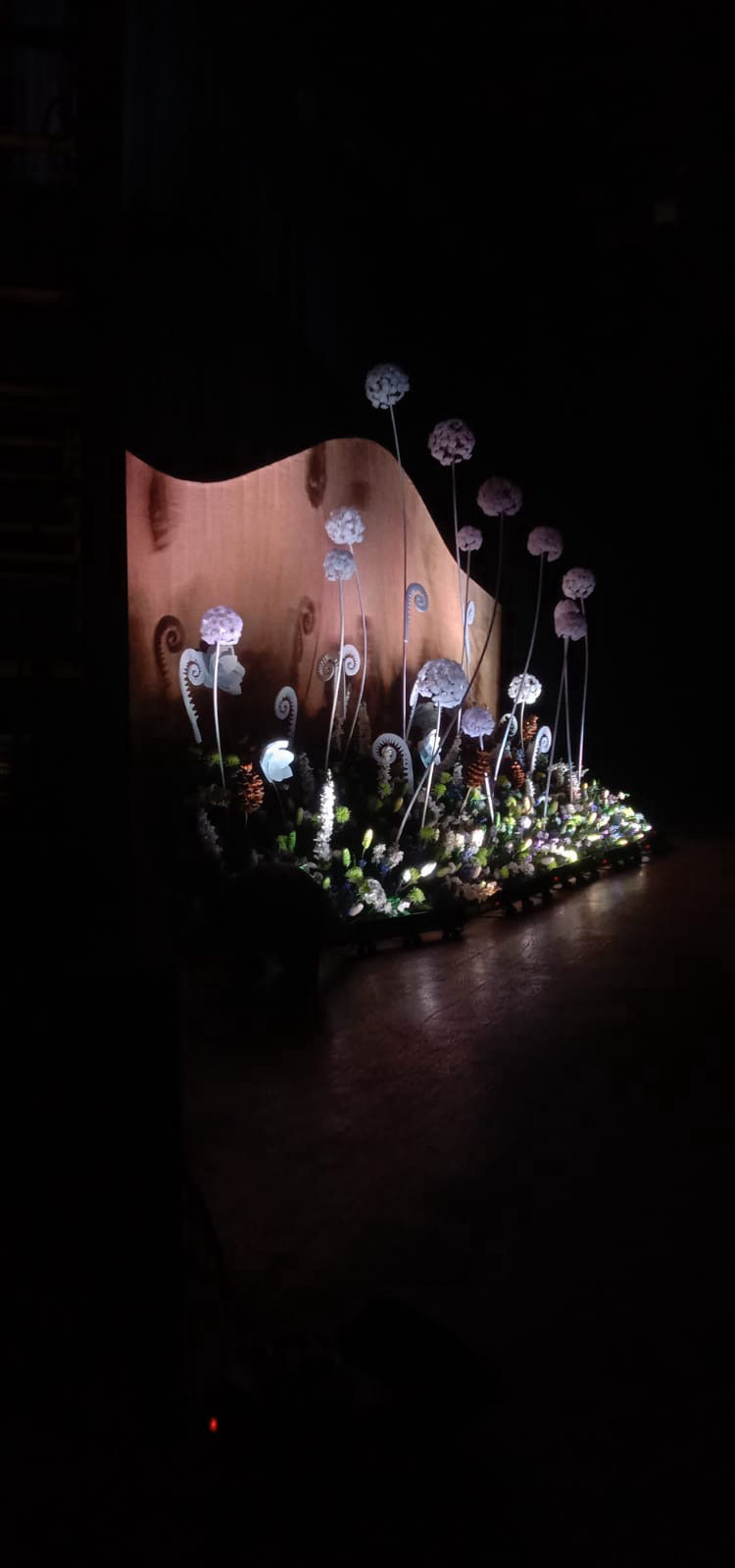
One detail that stood out across the reports was the installation work. Building a large floral sculpture out of individual paper components, piece by piece, under time pressure, is a good stand-in for what event production actually feels like: repetitive, detail-heavy work that has to look effortless by the time the audience arrives.
The Event and Management Skills Students Named as Takeaways
When asked what they learned, the students were specific rather than generic. Their own reflections, written straight after the event, listed skills that map closely to what any employer in the events industry actually looks for:
- Communication and interpersonal skills, sharpened by constant interaction with guests and staff
- Crowd and guest management, learned in real time rather than from a textbook
- Teamwork and coordination, especially where tasks depended on more than one person working in sync
- Practical experience in event planning and execution, seeing how a plan on paper turns into a room full of people
- Handling responsibilities under pressure, when timelines tightened close to session start
- Problem-solving and quick decision-making, when something did not go exactly as briefed
- Professional etiquette, specifically how to interact with clients and guests at a formal, subject-matter-heavy event
That last point matters more than it sounds. An education summit with panelists and policymakers is a very different room to manage than a college fest with 800 students dancing. Reading the room, adjusting tone, and staying invisible-but-available are skills that only get built through exposure, not lectures.
Why a Summit is a Different Kind of Training Ground
Most student event reports come from concerts, marathons or college fests, where energy and noise are the main variables to manage. InvokED 4.0 flipped that. The audience was smaller, quieter, and far more attentive to detail: seating comfort, session timing, sightlines in the auditorium, and how smoothly a guest could move from the lounge to their seat.
For students building a career in event and management, this kind of low-noise, high-precision event is arguably harder to execute well than a loud one, because there is nowhere to hide a mistake. A folding chair placed wrong, a guest kept waiting a few extra minutes, a wrong tone with a senior guest, all of it is noticed immediately. Working this event gave team I students a taste of that pressure in a controlled, mentored setting, which is exactly the kind of exposure classroom training alone cannot replicate.
How This Fits Into the CPEM Learning Path
At team I, live event exposure like InvokED 4.0 is treated as coursework, not extra credit. Students go in with a brief, work an assigned zone, and come back to write a structured report and reflection. That process is what turns a single day of volunteering into an actual, transferable skill set: crowd management, client interaction, backstage coordination, and the composure to keep working when a session runs late or a plan changes.
None of this replaces on-the-job learning entirely, and team I is upfront about that. What it does is compress the learning curve, so that by the time our students step into internships or their first job, terms like guest management and event execution are not theory, they are memory.
Frequently Asked Questions
What kind of event was InvokED 4.0?
InvokED 4.0 was an education-focused summit in Bangalore centred on the theme of catalysing education equity in India, featuring panel discussions, art installations and guest interactions rather than a typical entertainment fest.
What is event and management, in practical terms?
Event and management is the end-to-end work of planning, coordinating and executing a gathering, covering logistics, crowd handling, vendor and installation work, guest experience, and staying composed when timelines shift on the day.
What did team I students actually do at this event?
They helped assemble decorative installations, managed guest flow during sessions, supported backstage and green room coordination, and interacted directly with guests and clients in a formal setting.
Does working one event guarantee a job in event management?
No single event guarantees employment. team I’s CPEM programme offers a conditional placement guarantee built on consistent, structured live-event exposure like this, combined with classroom training, not a promise based on one show.
Why do students report on events they did not organise?
Reporting on events run by established organisers gives students first-hand exposure to professional standards and real client expectations, which is far more valuable than only studying case studies in a classroom.
Once again, thank you to the organisers and sponsors of InvokED 4.0 for trusting team I students with real responsibilities on the ground. If you want to build the same kind of hands-on foundation in event and management, explore the CPEM programme at team I.