
The National Academy of Event Management and Development Mumbai is a private institution established in 2000 that offers undergraduate, postgraduate, and diploma programmes in event management and public relations. It sits at the intersection of formal education and industry practice, training students for careers across corporate events, weddings, concerts, and large-scale productions in India. If you are searching for event management courses in Mumbai and want to understand exactly what NAEMD offers, how much it costs, and whether it suits your career goals, this guide gives you the complete picture.
What courses does the National Academy of Event Management and Development Mumbai offer?
NAEMD Mumbai runs a structured range of programmes across three levels. Each level targets a different stage of your academic journey, from school leaver to working professional.
Undergraduate programmes are the most popular entry point:
- BBA in Event Management and Public Relations
- BMS in Event Management and Public Relations
Postgraduate programmes suit graduates who want to specialise:
- MBA in Event Management
- PGDM in Event Management and Public Relations
Diploma programmes offer a faster route into the industry for those who want practical skills without a full degree commitment.
The fee structure at NAEMD breaks down as follows:
| Programme level | Approximate annual fee |
|---|---|
| BBA / BMS | INR 99,000 |
| MBA / PGDM | INR 1,80,000 to INR 3,37,000 |
| Diploma | INR 30,000 to INR 1,50,000 |

These figures position NAEMD’s diploma courses as competitively priced within Mumbai’s market, where diploma fees across the city typically span INR 30,000 to INR 1,50,000. That means NAEMD sits at the mid-to-upper end of the diploma range, which reflects its longer-standing reputation.
What are the eligibility criteria and admission process?
Eligibility at NAEMD Mumbai follows a straightforward academic progression model. The UG admission requirement is completion of 10+2 from a recognised board. Postgraduate admission requires a bachelor’s degree from a recognised university.
Key admission essentials to prepare:
- For BBA / BMS: 10+2 marksheet, school leaving certificate, passport-sized photographs, and identity proof
- For MBA / PGDM: Bachelor’s degree certificate, entrance exam scores where applicable (such as MAH CET for Maharashtra-based applicants), and a statement of purpose
- For diploma courses: 10+2 completion is generally sufficient, though specific requirements vary by programme duration
Applications typically open in the first quarter of the academic year, with admissions running through june and july. If you are applying for a postgraduate programme, check whether your entrance exam scores are current. Maharashtra’s MAH CET is widely accepted for MBA admissions in the state, and NAEMD may factor those scores into its selection process. Confirm the latest requirements directly with the admissions office before applying.
Pro Tip: Apply early in the cycle. Mumbai’s event management programmes fill quickly, and late applicants often miss out on preferred specialisations.
How does NAEMD Mumbai prepare students for real event roles?
NAEMD’s curriculum is built around industry exposure, not just classroom theory. The institute emphasises industry-focused curriculum and placement support as core pillars of its training model. That matters in a city like Mumbai, where the event industry runs at a pace that textbooks cannot replicate.
Here is how practical training typically unfolds for students:
- Live event projects: Students participate in real productions, from corporate award nights to college festivals, gaining hands-on experience in logistics, vendor coordination, and on-ground execution.
- Case study workshops: Sessions use real Mumbai event scenarios, including large-scale concerts and brand activations, to teach problem-solving under pressure.
- Industry internships: Placements with entertainment companies and corporate clients in Mumbai give students direct exposure to professional workflows and client management.
- Placement assistance: NAEMD provides career networking support, connecting graduates with employers across the Indian event sector.
The jobs available after event management training span roles such as event coordinator, production manager, public relations executive, and wedding planner. Mumbai’s density of entertainment companies, advertising agencies, and hospitality groups makes it one of the strongest cities in India for landing your first role after graduation.
Pro Tip: Use your internship to build a portfolio of real event deliverables, showflows, run-of-show documents, and vendor contracts. Employers in Mumbai hire on evidence, not just grades.
How does NAEMD Mumbai compare with other training options?
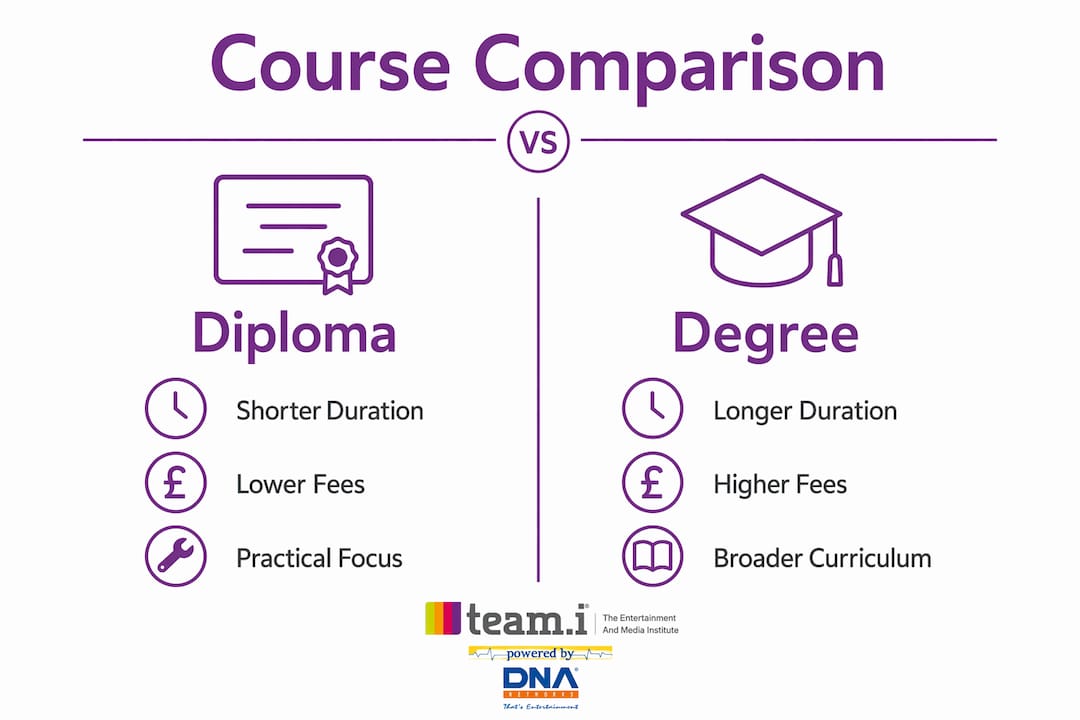
Choosing the right programme in Mumbai requires you to weigh several factors beyond brand name. The most critical distinction is between diploma and degree pathways, because they lead to different career trajectories.
One important nuance: NAEMD’s MBA and PGDM courses are not UGC-approved. That means they carry recognition from specific academic bodies, but not the University Grants Commission, which governs India’s formal university system. This is a significant consideration if you plan to pursue further academic qualifications or apply for government roles that require UGC-recognised degrees.
| Evaluation factor | Vocational diploma | Degree programme (UG/PG) |
|---|---|---|
| Duration | 6 months to 1 year | 3 to 2 years |
| Fee range in Mumbai | INR 30,000 to 1,50,000 | INR 99,000 to 3,37,000 per year |
| UGC recognition | Typically not applicable | Varies by institution |
| Industry entry speed | Faster | Slower but broader |
| Career ceiling | Coordinator to mid-level | Mid-level to senior management |
Prospective students should evaluate accreditation carefully before enrolling in any Mumbai programme. A diploma from a well-connected institute can open doors faster than a degree from an institution with weak industry ties. Conversely, a degree carries more weight if you want to move into corporate event management or international roles later in your career.
Pro Tip: Ask any institute you consider this question directly: “Which companies hired your last three batches?” The answer tells you more than any brochure.
For students who want to explore postgraduate event management courses across India, comparing NAEMD with other options in Delhi, Bangalore, and Hyderabad is worth the research time. Mumbai’s market is competitive, but the best training is the one that connects you to real work fastest.
What I have learned about choosing event management education in Mumbai
After years of working with students across India’s event industry, one pattern stands out clearly. Students who obsess over brand names and rankings often miss the more important question: does this programme put you in rooms where real decisions are made?
NAEMD Mumbai has a track record and a physical presence in one of India’s most active event markets. That counts for something. But the accreditation gap matters too. If you are a fresh 10+2 graduate, a BBA from NAEMD gives you a structured three-year foundation. If you are a graduate looking for a quick industry entry, the diploma route is faster and cheaper, provided you pair it with aggressive networking and live event experience.
The students who build the best careers are not always the ones with the most expensive degrees. They are the ones who treat every internship like a full-time job, who show up early at events and leave last, and who build relationships with vendors, clients, and production teams from day one. No institute, however reputed, can do that part for you.
— Teami
Teami’s event management programmes for serious aspirants
Teami brings 24 years of industry experience to event management education, with a curriculum built around real productions, not just theory. Whether you are studying at NAEMD Mumbai or evaluating your options, Teami’s certified event management courses offer practical skills in vendor management, production planning, and client coordination that complement any formal degree. Teami’s collaboration with DNA Entertainment Networks means students get access to live events, industry mentors, and placement networks across Bangalore, Mumbai, Delhi, and Hyderabad. If you want training that puts you on the ground before you graduate, Teami’s online event management programme is built for exactly that.
FAQ
What is NAEMD Mumbai and when was it established?
The National Academy of Event Management and Development Mumbai is a private institution established in 2000 offering event management and public relations programmes at undergraduate, postgraduate, and diploma levels.
Are NAEMD Mumbai’s MBA and PGDM courses UGC-approved?
No. NAEMD’s MBA and PGDM programmes are recognised by specific academic bodies but are not approved by the University Grants Commission. Confirm recognition status before enrolling if UGC approval matters for your career plans.
What are the fees for NAEMD Mumbai courses?
BBA and BMS programmes cost approximately INR 99,000 per year, while MBA and PGDM fees range from INR 1,80,000 to INR 3,37,000 annually. Diploma programmes fall between INR 30,000 and INR 1,50,000.
What eligibility do I need for NAEMD Mumbai’s undergraduate courses?
You need to have completed 10+2 from a recognised board. Postgraduate admission requires a bachelor’s degree from a recognised university.
How do diploma and degree programmes differ for event management careers in Mumbai?
Diplomas offer faster industry entry at lower cost, while degree programmes build broader management skills over a longer period. Students should weigh diploma versus degree options based on their target role, timeline, and whether UGC recognition matters for their career path.
Recommended
- Top 5 Event Planning Platforms in 2026 for Budding Event Managers – team I
- Top 5 Corporate Event Platforms in 2026 for Professionals in Event Management – team I
- 8 Best Event Management vs Hospitality Management – Expert Comparison 2025 – team I
- Best 8 Event Management Course in India – Expert Comparison 2026 – team I
Thinking about a career in event management?
team I is Bangalore’s only EEMA-certified event management institute, running for 24 years, where students work on real live events with real budgets and real deadlines rather than classroom simulations. See the full range of event management courses in Bangalore, or go straight to the flagship Certificate Program in Event Management (CPEM).